


Failure Analysis, Departures Side
Beaverton Airport Drop Off Four Ways A Goodbye Goes Wrong.
The airport send-off fails in four classic ways, and none of them is the traffic. The car circles up to the wrong level while the clock burns, the chauffeur pulls away thirty seconds before the bag counter finds a problem, the passport rides home in a trunk while its owner meets a checkpoint, and the item vanishes into the wrong one of three separate lost-and-found systems. TSA alone collects up to a hundred thousand left-behind items a month. This guide dismantles each error with the published rules and the professional habits that prevent them.
By Ilyas KhairiFounder, Marquee ChauffeurLicensed and permitted since 2018
- Licensed & Permitted
- $1M Insured
- 5.0 / 198 Reviews
- W-2 Chauffeurs
- 35-Point Inspection
Last updated: September 23, 2026
By Ilyas Khairi, Founder of Marquee Chauffeur · Licensed and permitted since 2018 · Updated September 23, 2026
TL;DR
Departures is the upper level; arrivals is below. Don't leave until bags are accepted and ID is in your traveler's hand, TSA destroys unclaimed checkpoint IDs after 30 days and, as of February 2026, charges $45 to verify travelers who arrive with none. Lost items route to three different systems, PDX's Level 3 office, TSA's checkpoint process, or the airline, depending on where they fell. Our drop-offs end with a cabin sweep, which is why they never end with a case number.
The predawn shift this checklist rides on lives on the departures curb guide, the cutoff arithmetic on the punctuality guide, and the arrivals-side mirror of these failures on the pickup failures guide.
01 Error One
The Wrong Level,
A Linguistic Booby Trap.
The first error is built into English. A beloved forum thread states the trap perfectly: when you show up to the airport to catch a flight, you have arrived, so why is your door called Departures? The confusion is universal enough that airports coach against it, and the fix is refusing the words in favor of the rule: PDX's ground-transportation guidance puts drop-offs on the departures level, the upper roadway by the ticket counters, with the inner upper roadway available for travelers with mobility needs. Getting it wrong at PDX costs one loop of the terminal; at multi-terminal airports it costs real damage, one traveler's cautionary tale of a wrong-terminal drop ran half an hour of wandering. Beaverton's mercy is that PDX has one terminal; the loop is the whole penalty, and even the loop is avoidable.
The rule without words
Going away means going up; coming home means coming down. Teach it to the household once and the signage debate ends forever, along with the last-minute lane change across three lanes of airport traffic that the debate usually produces.
The one-terminal mercy
PDX's single terminal, the arrival walkthrough guide tours it, means no wrong-terminal catastrophe is possible here, only wrong-level inconvenience. Travelers connecting through multi-terminal hubs later in the same trip should bank the lesson: confirm the terminal with the airline, not the chauffeur's assumption.
Airline-side positioning
The upper roadway is long, and the consolidated ticket hall sorts carriers into aisles, so the polished drop stops at the stretch of curb nearest the traveler's counter. It is a thirty-second detail that saves a three-minute walk with luggage, and it lives in the booking file, not the chauffeur's memory.
When arrivals-level is the move
Some airports openly coach drivers to invert levels at peak, an airport social account famously advised using arrivals for morning drop-offs when departure curbs jam. Treat that as advanced, airport-specific craft: at PDX, the published guidance stands, and the professional answer to a jammed curb is timing, not improvisation.
02 Error Two
Driving Away Thirty Seconds
Before The Problem Surfaces.
The second error is a timing illusion: the drop feels complete when the trunk closes, but the send-off isn't over until the traveler is truly in the system. The airline rules define truly: on United's published clocks, check-in closes 45 minutes out domestic and 60 international, boarding requires being on the aircraft 15 minutes before departure, and bags can't even be accepted more than four hours early. Between the curb and compliance sit the failure points, the overweight bag, the reservation that won't surface, the ID mismatch, and every one of them is easier with the car still nearby. The professional habit costs ninety seconds: hold at the curb's legal limit or loop once while the traveler clears the counter, and leave on a thumbs-up, not an assumption. The airport's own two-hour early-morning guidance exists precisely so that thumbs-up has margin behind it.
The bag-scale moment
The counter scale is where drop-offs die quietly: three pounds over, and the traveler is repacking on the floor while their ride merges onto Airport Way. A chauffeur within recall range converts that crisis into a shrug, the overflow rides home instead of paying an overweight fee, which is the whole argument for the thumbs-up protocol.
Curb rules versus the wait
Active loading rules mean the curb itself cannot host the wait, the departures-curb guide covers that constitution in full, so the professional version holds compliance and patience together: unload cleanly, release the curb, and stage nearby until the confirmation text. Rules kept, margin kept, everyone breathes.
The elderly-traveler variant
For travelers who move slowly or fluster easily, the correct send-off skips the curb entirely: garage, walk-in, counter-side company to the checkpoint line, gate pass from the airline when it qualifies. The curb drop is a tool for the competent-and-hurried; matching the send-off grade to the traveler is the actual skill.
Backward from the cutoffs
The doorbell time in Beaverton derives from the airline's clocks, not from optimism: cutoff, minus terminal budget, minus the westside drive, the full equation our punctuality guide runs. Households that compute it never experience the second error, because the margin absorbs the counter's surprises.
03 Error Three
The Passport In The Trunk,
Now Doing 55 On Highway 217.
The third error has a body count measured by the federal government: TSA estimates 90,000 to 100,000 items are left behind at its checkpoints every month, held a minimum of 30 days, unclaimed electronics destroyed, return shipping at the owner's expense. The costliest species is identification: an ID left at a checkpoint is destroyed after 30 days unclaimed, and as of February 2026, a traveler who reaches the checkpoint with no acceptable ID faces a $45 ConfirmID verification fee, and no guarantee of passage if identity can't be verified. The trunk version is worse: the passport that drives away in the drop-off vehicle is in none of the systems, just gone, at highway speed. The fix is a ritual, not a technology: pockets, passport, phone, spoken aloud before the car door closes, every send-off, no exceptions for people who are sure.
Our chauffeurs run that ritual as a script, and the trunk gets swept besides: (503) 706-8662.
The 30-day countdown
Checkpoint items live on a clock: thirty days minimum hold, then destruction for IDs and memory-wiped disposal for electronics. Travelers who realize mid-trip should file immediately rather than waiting to fly home, because the calendar was running from the moment the bin moved on without them.
The $45 lesson
The new ConfirmID fee converts the forgotten-wallet morning from an anecdote into an invoice, and it still requires successful verification: no verify, no checkpoint. The pocket ritual costs zero dollars and ten seconds, which is the kind of arithmetic this guide exists to make vivid.
Expired counts, absent doesn't
A quirk worth knowing at the door: TSA accepts IDs up to two years past expiration, so the expired license in the wallet beats the valid passport in the trunk by exactly the margin that matters. Renewal is a paperwork problem; absence is a travel-day problem, and only one of them boards.
The cabin sweep, professionalized
Every professional drop ends with a sweep, seat pockets, footwells, trunk corners, before the vehicle leaves the airport, because the cheapest possible recovery is the one made forty feet from the traveler. It is thirty seconds of habit that has returned more passports than any lost-and-found form ever will.

04 Error Four
Three Lost-And-Founds,
And The Maze Between Them.
The final error happens after the loss: filing with the wrong system. Airport property runs on jurisdiction, and the jurisdictions do not forward your case. Items lost in the terminal go to PDX's own lost and found, Level 3 of the terminal, weekday hours, free inquiries, an after-hours line reserved for essentials the airport names outright, passports, licenses, wallets, medications, keys, phones, car seats, and a daily discard policy for perishables. That essentials line runs 6:00 a.m. to 11:30 p.m.; overnight, PDX directs anyone already inside the terminal to a white phone. Items left at a checkpoint belong to TSA's separate national process. Items left on the aircraft belong to the airline's. And items left in the vehicle that drove you there belong to whoever operates that vehicle, which for app rides means a driver you cannot call directly. Four possible custodians, one distressed traveler: the fix is knowing the map before you need it, and the deeper fix is booking a PDX airport car service whose sweep protocol keeps you off the map entirely. Arrivals coming back the other way add a PDX arrival meet-and-greet, and the Hillsboro airport drop-off guide maps the same failure analysis one suburb west.
Filing fast, filing right
The recovery playbook in one breath: reconstruct where the item last existed, terminal, checkpoint, plane, or vehicle, file with that system's official inquiry portal the same day, and use the essentials line when the item is one. Speed beats thoroughness; the clocks are already running.
Our side of the maze
When something surfaces in our cabin sweep, the protocol is a callback before the client clears security, a curbside re-meet when minutes allow, and a documented hold when they don't. A dispatched operation with a phone number beats an app's lost-item form by exactly the margin a passport deserves.
The four errors, one product
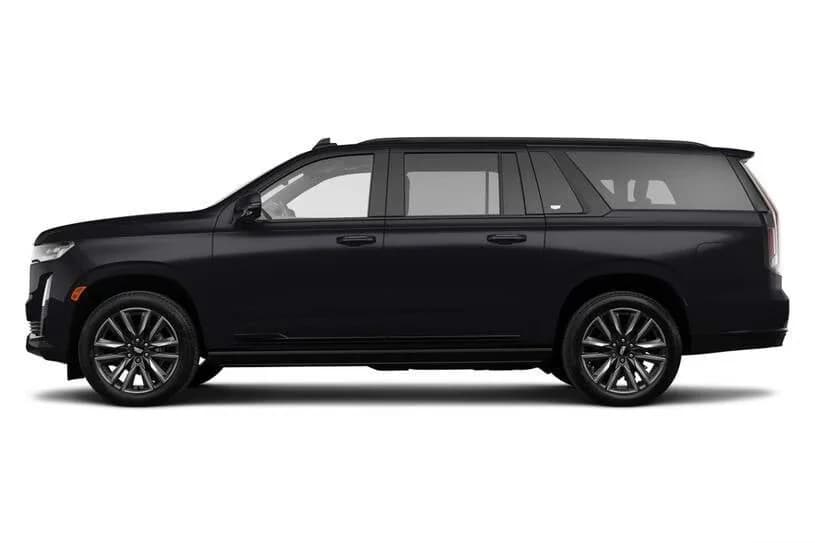
Tally the guide: right level by file, thumbs-up before release, the spoken pocket ritual, the cabin sweep. All four fixes ship inside the flat quote, about $150 in the Volvo S90, $210 in the Escalade ESV, $345 in the fourteen-seat Sprinter, which prices the entire error catalog at zero marginal dollars.
The standing send-off file
Beaverton households keep the checklist on file through Beaverton town car service: preferred airline aisle, the send-off grade each family member needs, the return pickup booked in the same call. Four errors, permanently retired, one file at a time.
Frequently Asked
Questions, Answered.
Do I go to arrivals or departures to drop someone off?
Departures, the upper roadway at PDX: your traveler is departing on a plane, so they enter where departing passengers check in. The confusion is genuinely linguistic, as one famous forum thread put it, when you show up to catch a flight you have arrived at the airport, and English is no help. The reliable rule ignores the words: dropping off means up, ticketing side; picking up means down, baggage side, though PDX allows either roadway for both.
What to do if you left something at the airport?
First determine which of three jurisdictions has it, because they do not talk to each other. Items lost in the terminal go to PDX's own lost and found on Level 3, weekday hours, free inquiries; items left at a security checkpoint belong to TSA's separate system; items left on an aircraft belong to the airline's. File with the right one quickly. The after-hours essentials line runs 6:00 a.m. to 11:30 p.m. only, and perishables are discarded daily.
Can someone who is not traveling with you accompany you to the gate when they are dropping off or picking up passengers at the airport?
Only with a gate pass, which the airline issues at its own ticket counter and entirely at its discretion, typically for unaccompanied minors and travelers who need assistance; there is no general escort privilege past security. The practical send-off boundary is therefore the checkpoint entrance, and the warm version of the goodbye happens in the public terminal after parking in the garage, never on a curb governed by active-loading rules.
How long before flight should I be at the airport?
PDX's own guidance is two hours before a domestic departure during the busy early-morning hours and three for international, and the airlines enforce harder floors underneath: bags must be checked by published cutoffs and you must be on board before the door closes, our punctuality guide runs the exact arithmetic. The drop-off translation: the doorbell time in Beaverton is the flight minus the terminal budget minus the drive, computed backward, never guessed forward.
What happens if I forget something in a rental car?
The same fate as anything forgotten in any vehicle that drives away: it enters the company's own lost-and-found process, entirely separate from the airport's and TSA's, and recovery depends on their sweep discipline. Which is the argument for the professional habit this guide ends on: a cabin sweep at every drop, before the vehicle leaves the curb, and an essential-items callback protocol when something surfaces anyway. The best lost-and-found is the one that never gets a case number.
What does a chauffeured Beaverton airport drop-off cost?
Quoted firm at booking, never metered: the working figures this guide uses run about $150 in the Volvo S90, $210 in the Escalade ESV, and $345 in the fourteen-seat Sprinter, flat. That number already carries the full send-off protocol, airline-aisle positioning, the thumbs-up release, and the cabin sweep. Gratuity is optional and never added on your behalf, and a car seat installs for $25.
How far ahead should a Beaverton airport drop-off be scheduled?
24 to 48 hours covers most departures; holiday weeks, summer Saturdays, and predawn flights deserve longer, since those windows book out first. Same-day requests run through (503) 706-8662 and depend on availability. Scheduling early buys the drop its craft: the airline aisle goes in the file, the doorbell time gets computed backward from the cutoff arithmetic, and nobody is guessing forward on the morning itself.
About the Author
Ilyas Khairi runs Marquee Chauffeur under Portland Bureau of Transportation certification held since 2018, with $1 million in commercial liability and W-2 chauffeurs on payroll. He has returned passports at curbs, taught the pockets-passport-phone ritual to hundreds of clients, and considers the thirty-second cabin sweep the highest-yield half minute in ground transportation.
Verified Google Reviews
What Portland clients say about Marquee Chauffeur.
I spent six hours touring the Columbia River Gorge with the owner of this service, and I was really impressed with his professionalism, attentiveness, and local knowledge. As he says, they really are like a chauffeur/concierge, not just taking you from one place to another but providing a full experience. I look forward to riding with them again on my next trip.
Edris — has absolutely hands down have to be the best driver ever. I would absolutely recommend his service! He's so professional, so efficient. On time and so respectful!
These guys are terrific. Two thumbs up. Found them online and got excellent personal service. Used them to get from PDX to about two hours away …. And then back to PDX a few days later. On time. Super professional drivers. Vehicles in spectacular shape. Brand new. They will be out go to service. We recommend them highly.
Marquee Chauffeur holds a 5.0 rating across 198 Google reviews. Read every review on Google.
Reserve Your Chauffeur
Reserve a Portland
Chauffeur Now.
Retire all four send-off errors with one booking: (503) 706-8662, available 24/7. Beaverton drop-offs at about $150 in the Volvo S90, $210 in the Escalade ESV, $345 in the fourteen-seat Sprinter, flat-quoted with airline-aisle positioning, the thumbs-up release protocol, a spoken pocket ritual, and a cabin sweep at every curb, under Portland private-for-hire permitting since 2018 with $1 million in commercial liability.