

Failure Analysis, Applied
Hillsboro Airport Pick Up Five Ways It Fails. Five Fixes.
Airport pickups fail the same five ways every night of the year: the chauffeur who timed to touchdown and circled for forty minutes, the curb stop that met the five-minute rule and its citation, the phone that died holding the whole plan, the bag that never surfaced, and the two people describing different pieces of the same curb. Every one of them is preventable with information that already exists, airline bag guarantees, the Port's own rulebook, taxi-in arithmetic, and this guide lays it all out, failure by failure, fix by fix, tuned for the fifty-minute Hillsboro run.
By Ilyas KhairiFounder, Marquee ChauffeurLicensed and permitted since 2018
- Licensed & Permitted
- $1M Insured
- 5.0 / 198 Reviews
- W-2 Chauffeurs
- 35-Point Inspection
Last updated: September 23, 2026
By Ilyas Khairi, Founder of Marquee Chauffeur · Licensed and permitted since 2018 · Updated September 23, 2026
TL;DR
Time to the gate, not the touchdown: taxi-in is its own leg, and both Alaska and Delta promise bags within 20 minutes of gate arrival, the real curb-ready clock. The Port's rules cite curb stops beyond five minutes and tow unattended cars. Global mishandling still runs about 4.9 bags per thousand passengers. And the dead phone defeats every app-based plan, which is why our pickups fix the meeting point in writing and hold a name board that needs no battery.
The full method-by-method rulebook lives on the methods audit, the gate-to-curb geography on the arrival walkthrough, and the tracking that prevents failure one entirely on the tracking guide.
01 Failure One
Timed To Touchdown,
Stranded By The Taxi-In.
The commonest failure is an off-by-one error in aviation vocabulary. Landed, on every tracking app, means wheels on runway; the FAA defines taxi-in as the difference between wheels-on and gate-in, and the traveler cannot even stand up until the second timestamp. Then come deplaning and the carousel. The forums' folk arithmetic, ten to fifteen minutes after landing with no bags, twenty to thirty with them, is astonishingly well calibrated, because it happens to match the airlines' own promises: both major carriers' bag guarantees run twenty minutes from gate arrival. The chauffeur who left Hillsboro at touchdown arrives in sync with all of it; the one who left at the flight's scheduled arrival time has been circling since before the seatbelt sign went off.
The Hillsboro synchronization trick
The westside drive is the buffer: at roughly fifty minutes from downtown Hillsboro, leaving at wheels-down puts you at the curb almost exactly as a checked-bag traveler clears the carousel. Geography that punishes departures politely repays pickups, one of the few free lunches in airport logistics.
Early arrivals, the sneaky variant
Padded schedules mean flights routinely beat their published times, so the chauffeur who timed to the ticket meets a traveler already twenty minutes cold on the curb. The fix is watching the actual aircraft, the tracking guide explains the feed, because the schedule is a forecast and the transponder is the weather.
The row-number wildcard
Between gate-in and curb stands the one interval no data feed publishes: deplaning, five minutes for row 8 and fifteen for row 34. Professionals absorb it by working the arrival off live flight data rather than a printed time, ready to roll on a text, which is what the tracking is actually for.
International, one sentence
Customs adds its own chapter with its own spread, our international-arrival guide walks it with real federal wait data, and even the bag guarantees exempt flights requiring customs clearance. For this guide the rule is simply: international pickups budget a different clock entirely.
02 Failure Two
The Five-Minute Curb,
Enforced In Writing.
The second failure is treating the curb as a waiting room when it is legally a conveyor. The Port of Portland's airport rules spell it out: no parking at the curb except active loading, defined as all customers and their luggage standing at curbside beside the vehicle; citations for loading beyond five minutes; drivers who leave a vehicle unattended cited, and unattended vehicles towed at the owner's expense, with parking control representatives and Port police holding explicit authority to keep the roadway moving. The Quora crowd's summary, at most airports you can only stop in front of baggage claim, undersells it: at PDX the stop has a stopwatch. The circling ritual that families mistake for a system is just failure two on a loop, burning fuel while the traveler texts from carousel four.
Why the rule is right
A curb that allowed waiting would gridlock in minutes, commercial vehicles make a million terminal trips a year, so the five-minute rule is what keeps the pickup possible at all. Fighting it is failure; choreographing inside it, arriving as your traveler does, is the entire game.
Where waiting actually lives
The legal waiting rooms are the cell phone lot, covered in our red-eye guide, and the short-term garage at $4 an hour, audited in the methods guide. Both convert circling into standing still, and the garage converts it into a warmer greeting besides. The roadway was never on the list.
The keep-moving officer, decoded
The wave-along from the vest at the curb is not mood; it is Chapter 10 of a published rulebook being enforced verbatim. Knowing the text turns the interaction from grievance into logistics: you were always going to need a real waiting plan, and the officer is just the reminder.
How the permit lane sidesteps it
Licensed operators run on the Port's dispatch system, the methods audit documents it, so the professional pickup neither circles nor gambles on the five-minute clock. The rules that stress amateur pickups are the same rules the permit system was built to satisfy.
03 Failure Three
The Plan That Lived
On A Dying Phone.
Failure three is architectural: the modern pickup runs entirely on a device that spent six hours in airplane mode streaming movies. The text-me-when-you-land protocol, the app summons, the pickup-zone directions, the chauffeur's face and plate, all of it lives on one battery, and the questions travelers ask, will Uber still work if my phone dies, what happens when the driver's phone dies mid-pickup, answer themselves grimly. The delightful Reddit thread asking how anyone managed airport pickups before cell phones contains the actual solution in its replies: fixed meeting points, agreed in advance. That technology still works flawlessly. A pickup whose meeting spot, time logic, and fallback all exist in writing before anyone flies is immune to the battery, and a chauffeur holding a printed name board at baggage claim is the fixed point perfected.
Every booking we run carries that written plan, and the board needs no charging: (503) 706-8662.
The single point of failure, mapped
Trace any app pickup and every edge runs through the same node: your screen. Request, match, zone directions, identification, payment, all one dead battery from zero. Reliability engineering has a name for that shape, and the fix it prescribes, redundancy outside the failing node, is exactly what a written plan is.
The family version of the fix
Borrow the protocol even for informal pickups: agree the spot before the flight, by number, the arrival walkthrough explains the Port's numbered pick-up locations, set a default time logic, gate arrival plus twenty-five, and name a fallback. Three sentences before departure beat any amount of charging-station improvisation after.
The greeter's quiet superpower
The meet-and-greet grade exists precisely for travelers whose connectivity cannot be assumed: arriving grandparents, international guests with no roaming, kids. The name board finds them; they never find anything. It is the oldest technology at the airport and still the most fault-tolerant.
Dispatch as the backstop
Because our side tracks the aircraft rather than the passenger, a silent phone changes nothing about staging: the car is at the agreed spot on the gate-arrival clock regardless. The traveler's only job survives any battery, walk to the number written in the confirmation they read at home.

04 Failures Four And Five
The Bag That Didn't Come,
And The Wait In The Wrong Place.
The last two failures are the long tail. Bags mostly arrive, and the industry's own data keeps honest score: the latest global baggage report counts 4.9 mishandled bags per thousand passengers, some 24 million bags a year, transfers causing 39 percent of cases, a $6.3 billion industry problem. When yours is the unlucky thousandth-odd, the pickup plan meets a baggage-office detour, and the guarantees, Alaska's twenty-minute promise and Delta's matching one, want claims filed within about two hours. Failure five is simpler: the wait in the wrong place, upper roadway for an arrival, far end of the curb, the confusion the search engines autocomplete nightly. Both dissolve under the same discipline that handled the first three: a written meeting point, a grace window with no meter, and somebody whose job is absorbing the abnormal night. Travelers who want a greeter inside the terminal book the PDX arrival meet-and-greet on the same reservation.
The grace window's real job
Our 60-minute post-arrival window exists for exactly these tails: the slow carousel, the baggage-office claim, the customs line. No meter runs, no renegotiation happens, the car simply waits the abnormal night out, which is what turning failure modes into line items looks like.
File fast, then ride home
Both bag guarantees run roughly two-hour claim clocks, so the correct order on a missing-bag night is baggage office first, compensation claim second, car third, and the car's patience makes the first two calm. Chauffeurs who have stood through this before make surprisingly good process guides.
The five fixes, one product
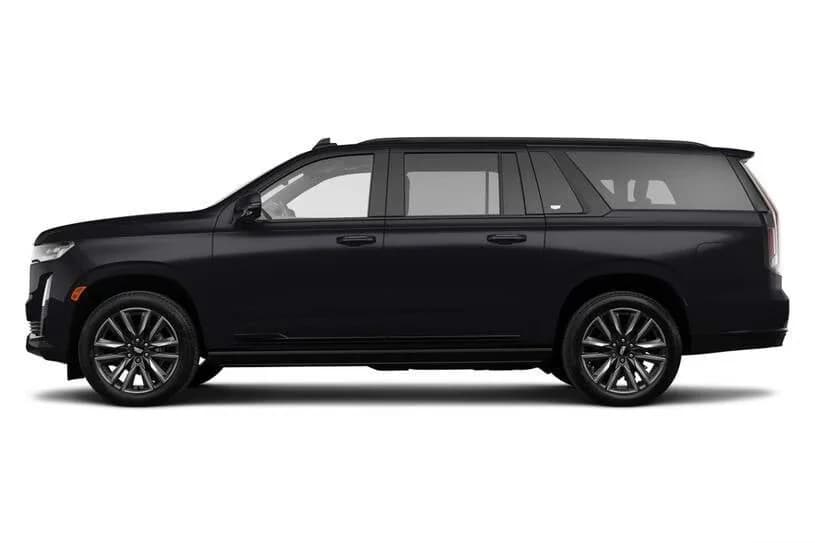
Tally the guide: gate-clock timing, permit-lane staging, written meeting points, battery-free identification, metered-nothing waiting. Every fix is a standard feature of the professional pickup at about $165 in the S90, $240 in the Escalade ESV, $400 in the Sprinter, flat, which is the audit's quiet conclusion.
The standing westside file
Hillsboro households that meet flights monthly keep the whole failure-proofing on file through Hillsboro town car service: usual airlines, preferred greeting grade, the relatives' annual patterns. The five failures keep happening nightly at the airport; they just stop happening to you.
Frequently Asked
Questions, Answered.
How long after a flight lands to pick someone up?
Count from the gate, not the touchdown: taxi-in takes minutes, deplaning takes more, and the crowd-sourced consensus, ten to fifteen minutes after landing without checked bags and twenty to thirty with them, matches the airlines' own arithmetic, since both major carriers' baggage guarantees promise bags within twenty minutes of gate arrival. From Hillsboro, leaving home at wheels-down usually lands you at the curb almost exactly when your traveler does.
Is it enough 30 minutes to collect the luggage after the plane landed?
Usually generous, occasionally tight: on normal nights carousels start rolling around twenty minutes after gate arrival, and thirty minutes covers the walk plus the wait. The outliers are real, travelers report the rare hour-plus night, and global data still counts millions of mishandled bags a year. Build the pickup to the normal case, and use a waiting arrangement that survives the abnormal one without circling.
What is the 20 minute baggage claim rule?
Two carriers turned it into a published promise: Alaska offers a $25 discount code or 2,500 bonus points if bags miss the carousel within 20 minutes of gate arrival, and Delta offers 2,500 bonus miles on domestic flights under the same clock, both requiring a claim within about two hours. The fine print matters for pickups too: the clock starts at the gate, which is precisely why smart pickups time to gate arrival, not touchdown.
How early should you be to pick someone up from the airport?
Early enough to be nearby, late enough not to circle: the curb allows only active loading, so the correct target is arriving at the curb when your traveler is standing on it with bags in hand. Work backward from gate arrival plus the bag window, add your own drive, and aim to wait out any gap in the cell phone lot or the garage rather than the roadway, where five minutes is the legal length of a hello.
Will Uber still work if my phone dies?
Not usefully: the request, the driver match, the pickup-zone directions, and the chauffeur's identity all live on your screen, and a dead phone at baggage claim means starting over at a charging station. It is the single most fragile link in app-based pickups, and the reason professional service fixes the meeting point in writing before anyone flies: a chauffeur holding a name board works perfectly at zero percent battery.
How much should I budget for a chauffeured pickup from PDX to Hillsboro?
About $165 in the Volvo S90, $240 in the Escalade ESV, and $400 in the Sprinter, each quoted firm at booking so the number survives a delayed flight untouched. That figure already carries the failure-proofing this guide lists: gate-clock timing, the name board, and the 30-minute grace window (45 on international arrivals) with no meter on the wait. Gratuity is optional and never added to the quote.
Can I book an airport pickup the same day my flight lands?
Yes, call (503) 706-8662 and dispatch will staff it if a vehicle is free, though 24 to 48 hours of notice is the standard that guarantees the full choreography, and holiday arrival waves want more. Advance booking lets dispatch load the flight number, fix the meeting point in writing, and have the chauffeur positioned 15 minutes before landing, which is how all five failures stay retired.
About the Author
Ilyas Khairi runs Marquee Chauffeur under Portland Bureau of Transportation certification held since 2018, with $1 million in commercial liability and W-2 chauffeurs on payroll. He has watched all five failures play out from the professional side of the curb, times every pickup to the gate clock on principle, and considers the printed name board the most reliable piece of technology his company owns.
Verified Google Reviews
What Portland clients say about Marquee Chauffeur.
I spent six hours touring the Columbia River Gorge with the owner of this service, and I was really impressed with his professionalism, attentiveness, and local knowledge. As he says, they really are like a chauffeur/concierge, not just taking you from one place to another but providing a full experience. I look forward to riding with them again on my next trip.
Edris — has absolutely hands down have to be the best driver ever. I would absolutely recommend his service! He's so professional, so efficient. On time and so respectful!
These guys are terrific. Two thumbs up. Found them online and got excellent personal service. Used them to get from PDX to about two hours away …. And then back to PDX a few days later. On time. Super professional drivers. Vehicles in spectacular shape. Brand new. They will be out go to service. We recommend them highly.
Marquee Chauffeur holds a 5.0 rating across 198 Google reviews. Read every review on Google.
Reserve Your Chauffeur
Reserve a Portland
Chauffeur Now.
Retire all five failures with one booking: (503) 706-8662, available 24/7. Hillsboro pickups at about $165 in the Volvo S90, $240 in the Escalade ESV, $400 in the Sprinter, flat-quoted with gate-clock timing, a written meeting point, a name board that needs no battery, and a 30-minute grace window (45 on international arrivals) for the abnormal nights, under Portland private-for-hire permitting since 2018 with $1 million in commercial liability.