

Operational Deep Dive
Portland Hotel-Block Multi-Sprinter Convoy.
Picture thirty to fifty guests scattered across the Sentinel, the Heathman, and the Nines, all headed to one place: a vineyard reception in Newberg, a keynote at the Oregon Convention Center, or a client campus in Beaverton. The arrangement that holds up puts three Sprinters on a staggered loop, one dispatcher watching every vehicle, and one planner contact texting a single number. The arrangement that unravels leans on three separate rideshares, each with its own ETA, and guests waiting at doors nobody sent a car to. What follows is the working playbook for the multi-Sprinter convoy, written for the wedding planners, executive assistants, and corporate event leads who carry the manifest from the first pickup through the last return.
By Ilyas KhairiFounder, Marquee ChauffeurLicensed and permitted since 2018
- Licensed & Permitted
- $1M Insured
- 5.0 / 198 Reviews
- W-2 Chauffeurs
- 35-Point Inspection
Last updated: September 14, 2026
By Ilyas Khairi, Founder of Marquee Chauffeur · Licensed and permitted since 2018 · Updated September 14, 2026
TL;DR
A three-Sprinter Portland convoy carries forty-two guests per loop at $495 per hour combined, run by one dispatcher on one consolidated invoice. Swap a Sprinter for a Cadillac Escalade ESV at $135 per hour when a principal needs separation, which drops the combined rate to $465. Book about two weeks ahead for weddings and two to four weeks ahead for weekday corporate work.
Related reading: Portland group transportation for the standard service overview, wedding chauffeur services for wedding-day detail, and the Oregon Convention Center transportation guide for OCC-specific routing.
01 The Convoy Mechanic
Three Sprinters,
One Loop, Staggered Cadence.
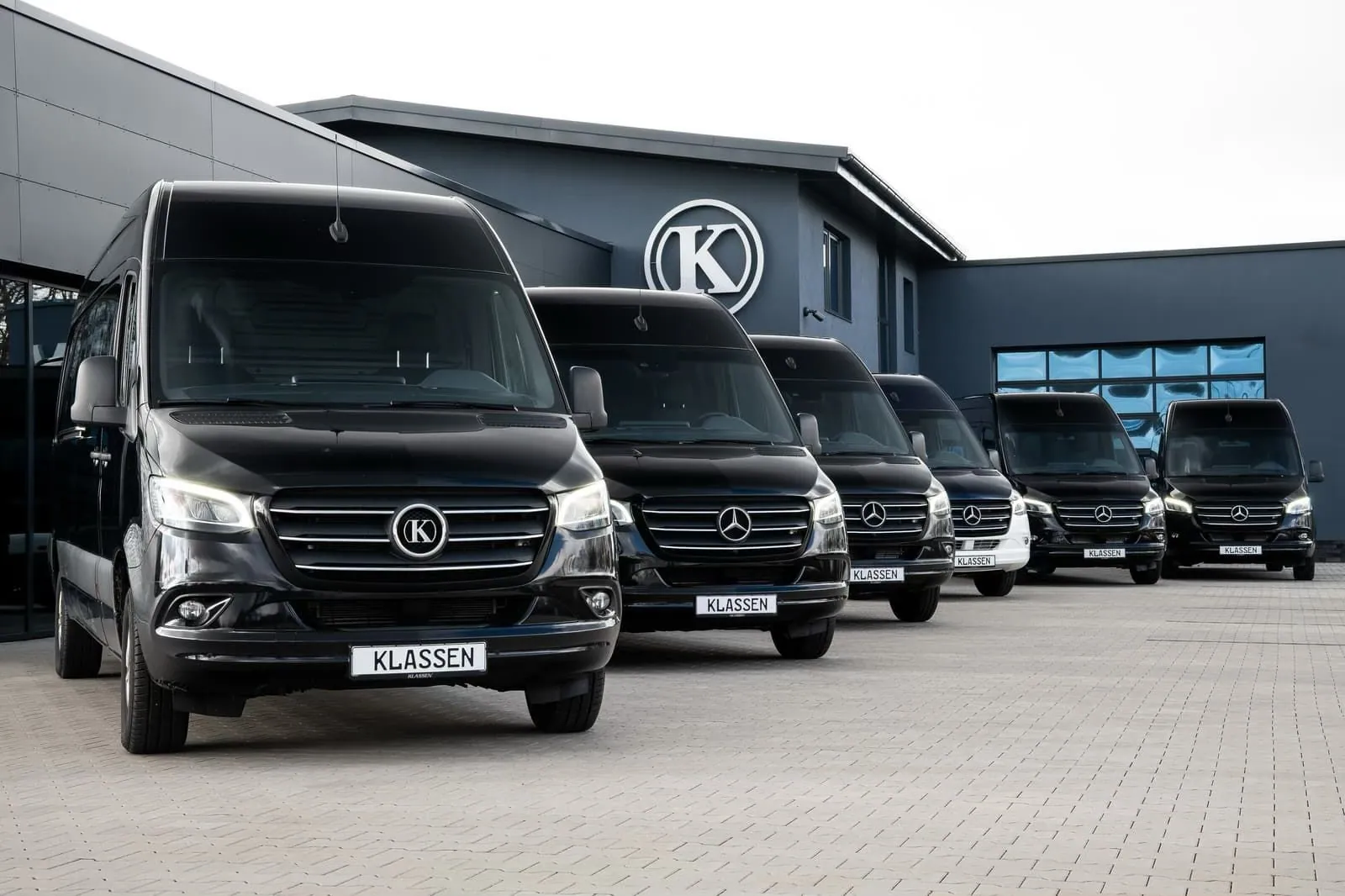
A three-Sprinter convoy is not three separate bookings taped together. It is a single booking: three vehicles on the same loop, running a staggered departure schedule against one manifest, watched by one dispatcher in real time. Each Mercedes-Benz Sprinter, at $165 per hour, seats fourteen guests in forward-facing bench seating with luggage room behind the rear row. Put three of them on a synchronized loop and you move forty-two guests, which is the working unit of measure for Portland hotel-block convoy work. The combined rate lands at $495 per hour, and behind it sits the same dispatcher, the same radio channel, and the same single contact the planner talks to.
The staggered departure cadence is what makes it a convoy rather than three cars going the same way. On a long loop, when the one-way runs forty-five to sixty minutes for a downtown block feeding a Willamette Valley vineyard reception, the three Sprinters leave on a fifteen-minute interval, so a vehicle pulls away from the porte-cochere every quarter hour across the pickup window. On a short loop, such as the five-to-eight-minute Steel Bridge run from a Broadway hotel to the Oregon Convention Center, the interval tightens to five minutes. That drops fourteen attendees at the OCC south entrance every five minutes and clears a 200-person morning arrival inside seventy minutes.
One screen holds the manifest and three loop counters. The dispatcher calls each chauffeur at the half-loop mark and reworks the cadence the moment a Sprinter meets a Steel Bridge lift or a slow stretch of Highway 99W toward Newberg. The lead chauffeur in Sprinter One keeps the dispatch radio for any rider-side question the planner sends in, while the other two chauffeurs simply run the loop and stay off the planner thread. It is the same one-dispatcher, one-invoice model laid out on the Portland group transportation service page, narrowed here to the three-Sprinter case. For how pricing works across the wider Marquee fleet, see the Portland chauffeur pricing guide for 2026.
Combined hourly rate
Three Sprinters at $165 per hour each come to $495 per hour combined on one consolidated invoice. A four-hour wedding hotel-block window sits at $1,980 before gratuity and regulatory fees. A six-hour conference attendee day runs near $2,970. Because the three-hour Sprinter minimum carries over to the convoy, the floor on a three-Sprinter booking is $1,485.
Staggered departure cadence
Long-loop weddings, at 45 to 60 minutes one-way, run on a fifteen-minute departure interval. Short-loop conference work, at 5 to 10 minutes one-way, runs on a five-minute interval. The dispatcher follows every loop on the run sheet and resets the cadence on the fly whenever a vehicle meets unexpected traffic, a Steel Bridge lift, or a slow guest queue at the porte-cochere.
Capacity per synchronized loop
Three Sprinters carry forty-two guests in a single loop. A fifty-person event finishes in one loop plus a short overflow, with that overflow timed to land ahead of the ceremony cue. A 200-person conference morning empties across a run of short-loop departures within the first hour of the keynote window. When a headcount tops forty-two on one tight delivery, a fourth Sprinter fits better than a second loop.
Mixed-fleet variant
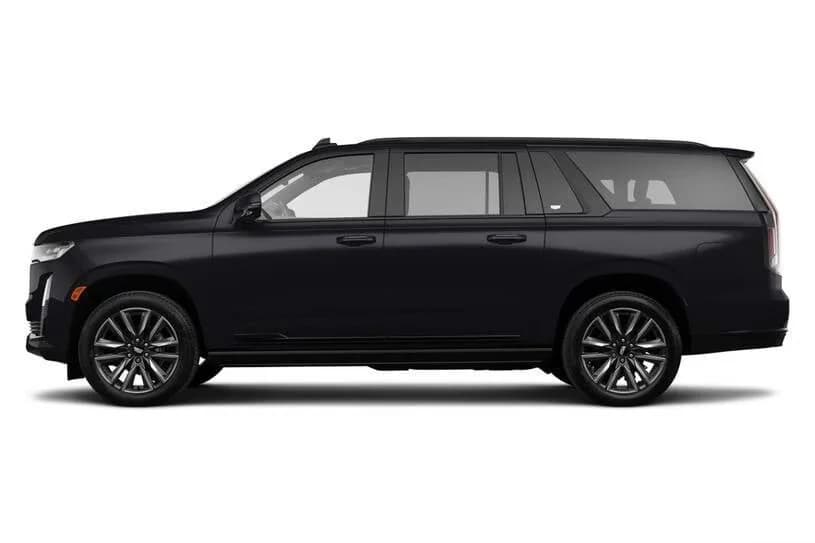
Two Sprinters plus a Cadillac Escalade ESV run $465 per hour combined and carry thirty-four passengers per loop, with the Escalade reserved for the principal: the bride and parents on a wedding day, the CEO on a corporate offsite, the visiting board chair at a conference. Reach for the mixed format when the principal wants real separation from the group rather than a bench seat on the second Sprinter.
02 Use Case One
Wedding Block at the Sentinel,
Heathman, the Nines.
The booking that shows up most on the Marquee calendar is a wedding hotel block spread across the Sentinel at SW 11th and Alder, the Heathman at SW Broadway and Salmon, and the Nines at SW 5th and Morrison, all feeding a Willamette Valley vineyard reception in Newberg, Dundee, or Carlton. The geography does not move. The Sentinel sits four blocks west of the Heathman; the Heathman sits five blocks east of the Sentinel and three blocks west of the Nines; and the Nines anchors the Pioneer Place corridor. No guest is walking three blocks in heels from the Heathman to the Sentinel at 4:30 p.m. on a Saturday, so the convoy stages at all three porte-cocheres instead of herding everyone to one anchor hotel.
In the standard playbook, Sprinter One works out of the Nines, Sprinter Two out of the Heathman, and Sprinter Three out of the Sentinel. Each vehicle owns its own pickup curb, leaves on the fifteen-minute staggered cadence, and runs the forty-five to sixty minute loop south on Highway 99W to the vineyard. Fifteen minutes before each scheduled departure the lead chauffeur calls the hotel bell stand so the doorman opens curb space and rolls out a luggage cart for any guest carrying an overnight bag toward a Willamette Valley hotel transfer after the reception. Through the ceremony the convoy waits at the vineyard, then runs the return on the same staggered cadence as the reception winds down and guests call for the hotel shuttle at their own moments across the late evening.
For a wedding day the principal-protection split with the Cadillac Escalade ESV is the more common variant: the bride, the maid of honor, two to four bridesmaids, and a planner or parent all ride together in one Escalade from the bridal suite to the ceremony lawn while the two Sprinters carry the guest load from the Sentinel and the Heathman. When a hotel block spills across more than three downtown anchors, a fourth Sprinter or a second Escalade ESV layers in. For the routing that swaps a Columbia Gorge wedding in for a Willamette Valley vineyard, see the Columbia Gorge wedding shuttle guide. For the wider planning frame across the vehicle stack and guest-list math, see the Oregon wedding venue transportation checklist.
The Sentinel porte-cochere
The Sentinel at SW 11th and Alder has a covered drive on Alder with a single curb cut, wide enough for two Sprinters nose-to-tail. On a three-Sprinter day the third vehicle waits around the block on SW Park Avenue between loops. The Sentinel bell stand answers a lead-chauffeur call fifteen minutes ahead of the scheduled departure window.
The Heathman porte-cochere
At SW Broadway and Salmon, the Heathman shares its porte-cochere with the Heathman Restaurant valet, so dispatch pins down the convoy window with the bell stand the morning of the wedding. When the pickup is at the Heathman, the third Sprinter holds on SW Park between Salmon and Main during the staggered cadence. Its downtown footing makes the Heathman the most common of the three anchors for out-of-town wedding guests on a corporate-account hotel hold.
The Nines porte-cochere
The Nines at SW 5th and Morrison holds the deepest porte-cochere of the three downtown hotels, deep enough to line up all three Sprinters under the awning at standard load times. Its bell stand keeps a dedicated valet captain who handles multi-vehicle staging without a separate dispatch call. When the wedding-party block sits in one hotel rather than splitting across three, the Nines becomes the anchor.
Willamette Valley loop math
The hotel-to-vineyard one-way runs forty-five to sixty minutes on Highway 99W south through Tigard and Sherwood into Newberg and Dundee. The convoy waits at the venue through the ceremony and the cocktail hour, then runs return loops as guests call for the hotel shuttle on their own cadence. Past 10:30 p.m. the late-night returns shift from a staggered cadence to a continuous loop as demand bunches up toward the close.
02b Use Case Two
Conference Attendee Block,
OCC Steel Bridge Loop.
The Oregon Convention Center on NE MLK pulls conference attendee blocks from the downtown hotel cluster on SW Broadway, the Pearl District, and the Lloyd District. On a 200-attendee conference morning the three-Sprinter convoy works the Steel Bridge eastbound loop at a five-to-eight-minute departure cadence, cycling between the Hyatt Regency Portland at OCC, the Heathman, the Nines, and the OCC south entrance at NE Holladay. Outside rush hour the bridge clears the hotel-to-convention run in seven to eight minutes, which is what lets the convoy set down fourteen attendees at the south entrance every five minutes.
For the Steel Bridge lift schedule the dispatcher watches PBOT camera feeds, because the bridge raises on demand for Willamette River traffic and the loop shifts to the Burnside Bridge or the Morrison Bridge whenever a lift is under way. On lift days the third Sprinter runs a slightly different cadence to soak up the rerouted traffic and hold the OCC south-entrance arrival flow steady through the keynote window. As the conference day settles in, the convoy moves to a held-vehicle hourly rate, with the three Sprinters parked at the OCC ramp or sent back to a downtown standby point depending on the agenda.
This same format carries to the Moda Center for visiting-team blocks, the Veterans Memorial Coliseum for Lloyd District conference annexes, and the Portland Expo Center for North Portland trade-show inbound. For the OCC-specific routing and keynote-day staging, the sister post at the Oregon Convention Center transportation guide walks through the venue-side flow in depth. For the wider event picture across the convention venue map, see Portland event transportation.
03 Use Case Three
Corporate Offsite Block,
Heathman to Beaverton Campus.
The third standard pattern carries a corporate offsite block from the Heathman or the Nines to a Beaverton client campus on a thirty-minute Westside loop. The route leaves the downtown core on Highway 26 West, threads the Vista Ridge tunnel, passes the Sylvan exit, and drops into the Beaverton tech corridor. Three Sprinters cover forty-two attendees on one morning delivery, timed so every rider reaches the campus security gate within a five-minute spread. Through the offsite day the convoy parks in the campus visitor lot, then runs the return to the Heathman porte-cochere once the agenda wraps.
For multi-day offsites the Sprinters go on a held-vehicle hourly rate, parked at the Beaverton campus or sent back to a downtown standby point depending on the day's schedule. Net-30 corporate billing through QuickBooks export, with cost-center coding split across departments, prints on one statement, so the AP team books the full offsite week as a single transaction instead of chasing six driver receipts across two cost centers. Booking runs through a corporate account that the executive assistant or corporate travel manager opens once and reuses across quarterly offsites.
The same Westside convoy reaches the Hillsboro Tech Corridor, including Intel Ronler Acres, Salesforce, and the surrounding campuses, on a slightly longer forty-minute one-way loop, and the Lake Oswego corporate corridor on a twenty-minute run south on I-5. For the corporate-account onboarding behind net-30 billing, see the how to book a corporate chauffeur page. For the executive service that backs the Escalade principal-protection variant on a mixed convoy, see Portland executive car service.
The Westside loop pattern
Highway 26 West through the Vista Ridge tunnel covers the one-way to Beaverton in thirty minutes outside rush windows and forty minutes inside them. Departing in a synchronized window means the campus security gate sees forty-two attendees land within five minutes of each other instead of trickling in across an hour.
Held-vehicle hourly
Multi-day offsites keep the Sprinters on an hourly contract, held at the campus visitor lot or a downtown standby point as the schedule dictates. A mid-day vehicle swap lets a chauffeur rotate out without touching the offsite agenda. On overnight retreats, chauffeur lodging folds into the same single line item as the convoy hours.
Net-30 corporate billing
Corporate accounts run net-30 monthly invoicing through QuickBooks export, with a W-9 on file and cost-center coding split across departments on one statement. The whole multi-day offsite week shows up as a single line item on the monthly invoice, not dozens of per-ride receipts, which keeps AP reconciliation clean for the corporate finance team.
Wider Westside extensions
The same pattern stretches west to the Hillsboro Tech Corridor on a longer forty-minute loop and south to the Lake Oswego corporate corridor on a twenty-minute I-5 South loop. Repeat clients on a quarterly offsite cadence lock standing dates well ahead and skip the lead-time question altogether.
04 Booking Mechanics
Lead Time, One Invoice,
One Planner Contact.
Lead time on a three-Sprinter Portland convoy splits two ways. Wedding hotel-block convoys lock in about two weeks out for the standard three-Sprinter format, May through October Saturday dates included. Corporate offsite or conference attendee blocks on a Tuesday or Wednesday weekday call usually book inside two to four weeks for most dates, with shorter notice available outside the OCC conference peak weeks. Both tracks can take last-minute bookings inside fourteen days, though that thins out vehicle and chauffeur continuity.
The convoy invoices as one consolidated statement, not three loose receipts. Wedding bookings bill through the planner account or straight to the couple as a single line item showing the vehicle count, the contracted hours, and the gratuity broken out for easy review. Corporate bookings run net-30 monthly with QuickBooks export and cost-center splits. The single planner contact gets one pre-event quote, one signed agreement, and one post-event invoice. The dispatcher carries the manifest through the run and the invoice through the close, so no planner ends up sorting three driver receipts for a wedding weekend or a multi-day offsite.
What structurally separates a Marquee convoy from three independent rideshares on the same loop is the single point of contact. The planner texts one number and the whole convoy answers. The dispatcher tracks every loop in real time. The lead chauffeur holds the radio. The planner reads one stream of updates, not three. For the fuller picture of how single-dispatcher coordination runs across the Marquee fleet, the Portland group transportation page details the multi-vehicle billing model, and the chauffeur versus black car service comparison explains why it differs from rideshare or per-ride bookings.
| Convoy format | Combined hourly | Capacity per loop | Use case fit |
|---|---|---|---|
| Three Sprinters | $495/hr | 42 passengers | Wedding hotel block, conference attendee block, corporate offsite block when no principal-protection split is needed. |
| Two Sprinters + Escalade ESV | $465/hr | 34 passengers | Same use cases plus principal-protection split: bride and parents on a wedding day, CEO on a corporate offsite, visiting board chair on a conference. |
| Four Sprinters | $660/hr | 56 passengers | Headcounts above forty-two on a single tight delivery window where a second loop is not viable. |
What It Costs
| Vehicle | Hourly | Typical booking | Best for |
|---|---|---|---|
| Volvo S90 | $110 / hr | By quote | Solo or 2-3 |
| Cadillac Escalade ESV | $135 / hr | By quote | Group of 4-6 |
| Passenger Sprinter | $165 / hr | By quote | Group of 8-14 |
| VIP Lounge Sprinter | $190 / hr | By quote | Principal split, group of 7-10 |
The 20 percent service fee is already included. Held-vehicle rate covers the wait. Marquee holds Portland private-for-hire permitting (since 2018) and $1 million commercial liability.
Frequently Asked
Questions, Answered.
How much does a three-Sprinter Portland convoy cost per hour?
A three-Sprinter convoy books at $495 per hour combined ($165 per hour per Sprinter, three vehicles in parallel) on a single consolidated invoice. A typical four-hour wedding hotel-block window therefore lands around $1,980 before gratuity and regulatory fees, while a six-hour conference attendee day runs closer to $2,970. Mixed-fleet convoys swap one Sprinter for a Cadillac Escalade ESV at $135 per hour for principal-protection use, bringing the combined hourly rate to $465 instead of $495. The three-hour Sprinter minimum applies to the convoy, so the floor on a multi-Sprinter booking is $1,485 with the 20 percent service fee included. All vehicles run on one dispatcher, one manifest, and one billing line.
How do you stagger the schedule across three Sprinters running the same loop?
The three-vehicle loop runs on a fifteen-minute departure interval out of the hotel porte-cochere when the loop one-way is forty-five to sixty minutes (Willamette Valley wedding pattern), and on a five-to-eight-minute interval when the loop is short (Oregon Convention Center, Steel Bridge pattern). Each Sprinter holds a slot in the rotation, so a wedding guest who reaches the lobby at 4:12 p.m. boards the next Sprinter at 4:15 rather than waiting for an empty seat on a single vehicle that left at 4:00. The dispatcher tracks every loop on the run sheet, calls each chauffeur at the half-loop mark, and adjusts the staggered departure if one vehicle hits unexpected traffic on the Steel Bridge or on Highway 99W into Newberg. The single planner contact reads one stream of updates rather than three.
Is the planner texting one chauffeur or three?
One. The planner has a single point of contact at Marquee, typically the lead dispatcher who built the manifest, and that contact relays to all three Sprinter chauffeurs on a private radio channel. The lead chauffeur in Sprinter One holds the dispatch line for the convoy and answers any rider-side question that escalates from the planner. The other two chauffeurs run the loop without taking direct planner texts. This keeps the planner out of a three-way chauffeur thread and keeps every routing change consolidated through one operator who can re-stage all three vehicles on the same cue.
What happens at a fifty-person event when the convoy seats forty-two in one loop?
Three Sprinters carry forty-two passengers in one synchronized loop (fourteen per vehicle). For a fifty-person event the convoy clears the first forty-two on the first departure window, then runs a second tight loop that returns to the hotel for the remaining eight guests within fifteen to twenty-five minutes depending on the route distance. For wedding hotel-block work where the ceremony start is fixed, the dispatcher pulls the first departure forward by twenty minutes so the second-loop overflow still arrives before the ceremony cue. For conference work where guests arrive in waves, the second loop is invisible because the convoy is already running continuous shuttle patterns through the morning. Headcounts above forty-two on a tight one-shot delivery typically scale to a fourth Sprinter rather than a second loop.
Can the convoy run two Sprinters plus an Escalade ESV instead of three Sprinters?
Yes. The mixed-fleet convoy is one of the more common bookings for weddings and corporate offsites where a principal needs separation from the rest of the group. Two Sprinters carry twenty-eight guests across the loop at $330 per hour combined, and the Cadillac Escalade ESV at $135 per hour holds the bride and the parents, the CEO and the senior executive team, or the chairman and the visiting board chair on a private vehicle that stages out of the main convoy formation. Combined hourly rate is $465 for the mixed pair, against $495 for the three-Sprinter format. Capacity drops from forty-two to thirty-four per loop, which works for guest counts up to about forty with a short overflow loop. Dispatch maps the split on the first call based on guest list, principal preferences, and loop math.
How does hotel valet coordination work at the Sentinel, the Heathman, and the Nines?
Each of the three downtown hotels has a different porte-cochere geometry. The Sentinel at SW 11th and Alder has a covered drive on Alder with a single curb cut that fits two Sprinters nose-to-tail, and the third stages around the block on SW Park Avenue between loops. The Heathman at SW Broadway and Salmon shares the porte-cochere with the Heathman Restaurant valet, so dispatch confirms the convoy window with the bell stand the morning of the event and the third Sprinter stages on SW Park between Salmon and Main. The Nines at SW 5th and Morrison has the deepest porte-cochere of the three, fitting all three Sprinters in line under the awning when the event runs at standard load times. The lead chauffeur calls the bell stand fifteen minutes before each scheduled departure so the doormen clear curb space and stage the cart for luggage transfer if the loop carries any rollaboards.
What does the OCC Steel Bridge loop look like for a conference attendee block?
The downtown hotel cluster on SW Broadway sits five to ten minutes from the Oregon Convention Center on NE MLK depending on the bridge crossing and the time of day. The convoy default is the Steel Bridge eastbound from Burnside through the Lloyd District to NE Holladay and up the OCC ramp, which clears the hotel-to-convention loop in seven to eight minutes outside rush hour. The return loop runs westbound across the Burnside Bridge or the Morrison Bridge depending on which downtown drop the chauffeur is making first. With three Sprinters on a five-minute departure cadence, the convoy delivers fourteen riders every five minutes at the OCC south entrance, which clears a 200-attendee morning arrival inside seventy minutes. The dispatcher monitors PBOT camera feeds for the Steel Bridge lift schedule, since the bridge raises on demand for Willamette River traffic and the convoy pivots to the Burnside Bridge if a lift is in progress.
Does the convoy bill on one invoice through the planner account?
Yes. A three-Sprinter convoy or a Sprinter-Sprinter-Escalade mixed convoy bills as one consolidated invoice rather than three separate receipts. Wedding bookings invoice through the planner account or directly to the couple as a single line item with the vehicle count, the contracted hours, and the gratuity broken out for clean review. Corporate bookings run net-30 monthly invoicing through QuickBooks export with cost-center coding split across departments on one statement. The planner sees one pre-event quote, one signed agreement, and one post-event invoice. AP teams reconcile a multi-vehicle event week as one transaction rather than reconciling six driver receipts across two cost centers.
What's the lead time for a peak-season wedding versus a corporate booking?
Wedding hotel-block convoys lock in about two weeks ahead of the event for the standard three-Sprinter format, May through October Saturday dates included. A corporate offsite or conference attendee block with a Tuesday or Wednesday weekday call books inside two to four weeks for most dates, with shorter lead time available outside of the conference peak weeks at the OCC. Repeat clients on standing weekly or quarterly retainers reserve dates further out and skip the lead-time question entirely. The booking line at (503) 706-8662 confirms availability against the live calendar on the first call.
Do you handle the corporate offsite block from a downtown hotel to a Beaverton client campus?
Yes. The Heathman or the Nines to a Beaverton client campus runs a thirty-minute one-way loop via Highway 26 West out of the Vista Ridge tunnel, with the convoy departing in a synchronized window so all attendees arrive within a five-minute spread at the campus security gate. Three Sprinters cover forty-two attendees on a single morning delivery, with the same convoy running the return loop at the end of the offsite day. For multi-day offsites the convoy holds a held-vehicle hourly rate with the Sprinters staged at the Beaverton campus or routed back to a downtown standby point depending on the day's schedule. The Beaverton run is the standard west-side offsite pattern and dispatch knows the security check-in flow at most major Westside campuses without a planner having to brief the chauffeur.
About the Author
Ilyas Khairi is the founder of Marquee Chauffeur, a Portland luxury black car and chauffeur service operating under Portland Bureau of Transportation certification since 2018 with $1 million in commercial liability coverage. He and his team of fully employed, background-checked chauffeurs run multi-Sprinter hotel-block convoys across Portland through every season.
Verified Google Reviews
What Portland clients say about Marquee Chauffeur.
I spent six hours touring the Columbia River Gorge with the owner of this service, and I was really impressed with his professionalism, attentiveness, and local knowledge. As he says, they really are like a chauffeur/concierge, not just taking you from one place to another but providing a full experience. I look forward to riding with them again on my next trip.
Edris — has absolutely hands down have to be the best driver ever. I would absolutely recommend his service! He's so professional, so efficient. On time and so respectful!
These guys are terrific. Two thumbs up. Found them online and got excellent personal service. Used them to get from PDX to about two hours away …. And then back to PDX a few days later. On time. Super professional drivers. Vehicles in spectacular shape. Brand new. They will be out go to service. We recommend them highly.
Marquee Chauffeur holds a 5.0 rating across 198 Google reviews. Read every review on Google.
Reserve Your Chauffeur
Reserve a Portland
Chauffeur Now.
Lock your Portland hotel-block multi-Sprinter convoy about two weeks ahead for weddings and two to four weeks ahead for corporate weekday work. Call Marquee Chauffeur at (503) 706-8662, available 24/7. Three Sprinters run $495 per hour combined, the mixed-fleet variant with the Escalade ESV runs $465 per hour, and the four-vehicle scale runs $660 per hour. We stage the Sentinel, the Heathman, and the Nines porte-cocheres feeding Willamette Valley vineyards, the Oregon Convention Center on the Steel Bridge loop, and Beaverton client campuses on the Westside loop. One dispatcher, one planner contact, one consolidated invoice. Every vehicle runs under Portland private-for-hire permitting with $1 million in commercial liability coverage.