

The Word And The Work
Portland Airport Limousine A Word With A Century Of Craft In It.
Here is a fact that surprises almost everyone who books one: limousine has officially meant an airport vehicle since 1959, by the dictionary's own record, and Merriam-Webster's second definition of the word is simply a vehicle carrying passengers to and from an airport. The long car came later and will leave sooner. This is the real history of the word, the strange steam-engine origin of chauffeur, and what all of it still obligates us to when a Portland airport limousine booking comes in.
By Ilyas KhairiFounder, Marquee ChauffeurLicensed and permitted since 2018
- Licensed & Permitted
- $1M Insured
- 5.0 / 198 Reviews
- W-2 Chauffeurs
- 35-Point Inspection
Last updated: September 23, 2026
By Ilyas Khairi, Founder of Marquee Chauffeur · Licensed and permitted since 2018 · Updated September 23, 2026
TL;DR
Limousine entered English in 1902 for an enclosed car with an open driver's seat, named for the Limousin region of France for reasons scholars still dispute. By 1959 it had a second dictionary sense: an airport passenger vehicle. Chauffeur literally means one who heats, from the steam era. Booking a Portland airport limousine today buys the arrangement those words always described: a professional, a pre-arranged pickup, a quiet closed cabin.
What the modern versions cost sits on the Portland limo cost guide. The vehicle-shape decision lives on the limo, sedan, or Sprinter guide, and the general comparison on town car vs. limo.
01 The Etymology
What Does Limousine
Actually Mean?
The dictionary record starts in 1902: an enclosed automobile with an open driver's seat, named from Limousin, a region of central France whose chief city gave us Limoges. Why a French province lent its name to a car body is genuinely unsettled: the popular theory sees the car's profile in the region's hooded cloak, Merriam-Webster calls the motivation never satisfactorily established, and a 1904 Paris account credited an engineer born in Limoges instead. A century on, the French dictionary Larousse still lists the shepherd's wool cape as a living sense of the same word.
The original body style
The first limousines enclosed the passengers and left the chauffeur under a roof extension, exposed to the weather he was paid to endure. The luxury was the separation and the quiet cabin. Note what the definition never mentions: length.
The cloak in the closet
Larousse still defines limousine three ways: the old closed-passenger body, the standardized modern four-door designation, and the big wool cape worn by shepherds and wagoners. Every ride we run carries a little of all three: enclosure, standard, and shelter.
The myths that circulate
Internet etymology threads have credited the name to a French horse breed, among other confident inventions, and their own commenters usually arrive with the dictionary correction. The honest version is better anyway: a luxury category named, possibly by accident, after working shepherds' weather gear.
Why the history matters here
Because the word has always described an arrangement rather than a silhouette, it survived every vehicle underneath it. The 1902 sense, the 1930s luxury-car sense, and the sense you are using when you search Portland airport limousine are one continuous idea wearing different bodies.
02 The Airport Sense
Why Is The Airport
Written Into The Word?
Because the language noticed the job before the industry branded it. The etymological record shows limousine applied from 1959 to the vehicles ferrying passengers to and from large airports, and Merriam-Webster carries it as the word's second full sense: a large vehicle for transporting passengers to and from an airport. When you type airport limousine into a search box, you are not stretching the word; you are using one of its two official meanings, and the older luxury sense simply rides along.
1959, the jet age names its ride
Commercial jets shrank the world in the late fifties, airports became the new grand terminals, and the vehicles serving them inherited the most dignified word available. The airport limousine is not a marketing coinage; it is the dictionary keeping up with travel.
Two senses, one booking
The modern airport booking fuses both dictionary senses: the luxury arrangement of the first and the airport function of the second. That fusion is literally our product description, which is why this page exists on a chauffeur company's site and not just in a dictionary.
The words that came and went
The language also produced limousine liberal in 1969 and a fleet of hourly coinages since. The durable terms are the ones tied to work rather than fashion, and airport limousine has outlived most of its cousins for exactly that reason.
Portland's version of the sense
At PDX the airport limousine of 1959 survives as the pre-arranged chauffeured transfer: tracked flight, staged vehicle, quiet ride into the city. The mechanics of that booking live on PDX airport car service; this page is its birth certificate.
03 The Title
What Does Chauffeur
Literally Mean?
One who heats. French chauffeur meant a stoker, the crewman who fed a steam engine's fire, and since the first automobiles were steam-driven, French speakers hung the nickname on early motorists around 1896. By 1902 it had narrowed to the modern profession: a person paid to drive someone else's car with skill. Merriam-Webster traces the root through chauffer, to heat, back to the Latin for being warm, and English briefly tried the joke translation shover before good sense prevailed.
Curious what the modern version of the craft looks like on a dispatch board? One call walks you through it: (503) 706-8662.
From fire-tender to professional
The stoker's job was invisible competence: keep the machine ready so the passengers never think about it. The title migrated but the job description never did, which is the most accurate etymology in this whole story.
Driver versus chauffeur, settled by history
The question fills forums, and the word's own record answers it: driving is the smallest part. The 1902 sense meant a retained professional, accountable for the vehicle, the route, and the passenger's whole experience. A century later that remains the entire distinction.
The craft that transferred
Steam gave way to gasoline, gasoline to the current fleet, and the constants held: vehicle readiness before the passenger wakes, weather judgment, discretion in the cabin, and the door held at both ends. Our W-2 chauffeurs inherit a 130-year-old job description with better tools.
The trade's own name for itself
The National Limousine Association styles itself the voice of the chauffeured transportation industry, and the phrasing is deliberate: the industry defines itself by the chauffeur, not the wheelbase. So do we.
04 The Modern Definition
What Counts As A
Limousine In 2026?
Run the taxonomy and the answer lands cleanly. The coachbuilding era sorted closed cars by driver arrangement: the limousine enclosed passengers behind a partition, the town car of 1906 left the chauffeur's compartment open, the landaulet folded its rear roof. Every one of those distinctions has dissolved except the one that mattered: who is driving, and on what terms. The surviving definition, the dictionary's and the trade's alike, is a pre-arranged, professionally chauffeured private car. Length is a costume. Service is the species.
The partition's descendants
The glass divider's job was acoustic and social privacy, and modern executive cabins deliver both without the pane: a quiet interior, a chauffeur trained to be present only when wanted. The partition was hardware; discretion was always the feature.
Why the stretch is not the standard
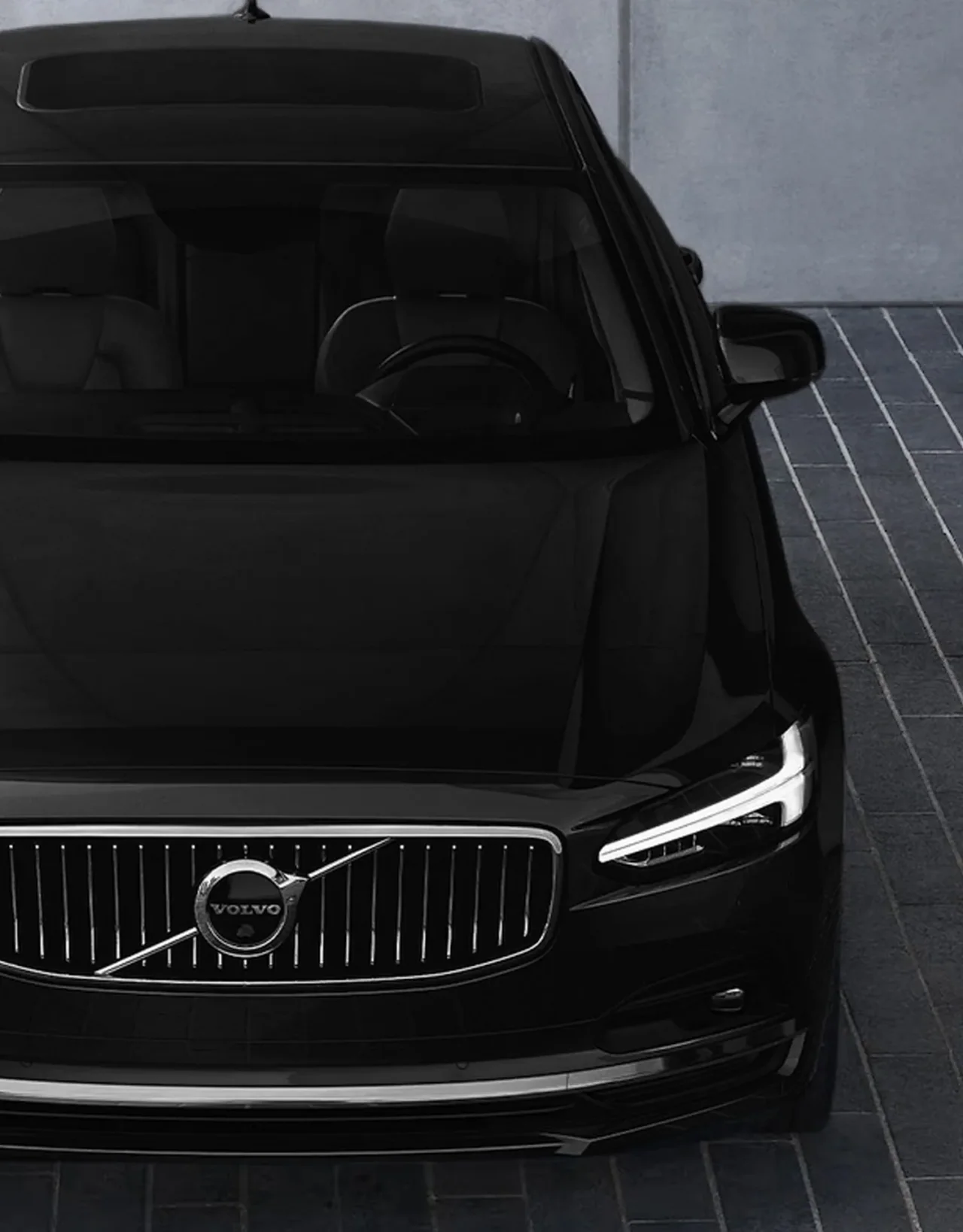
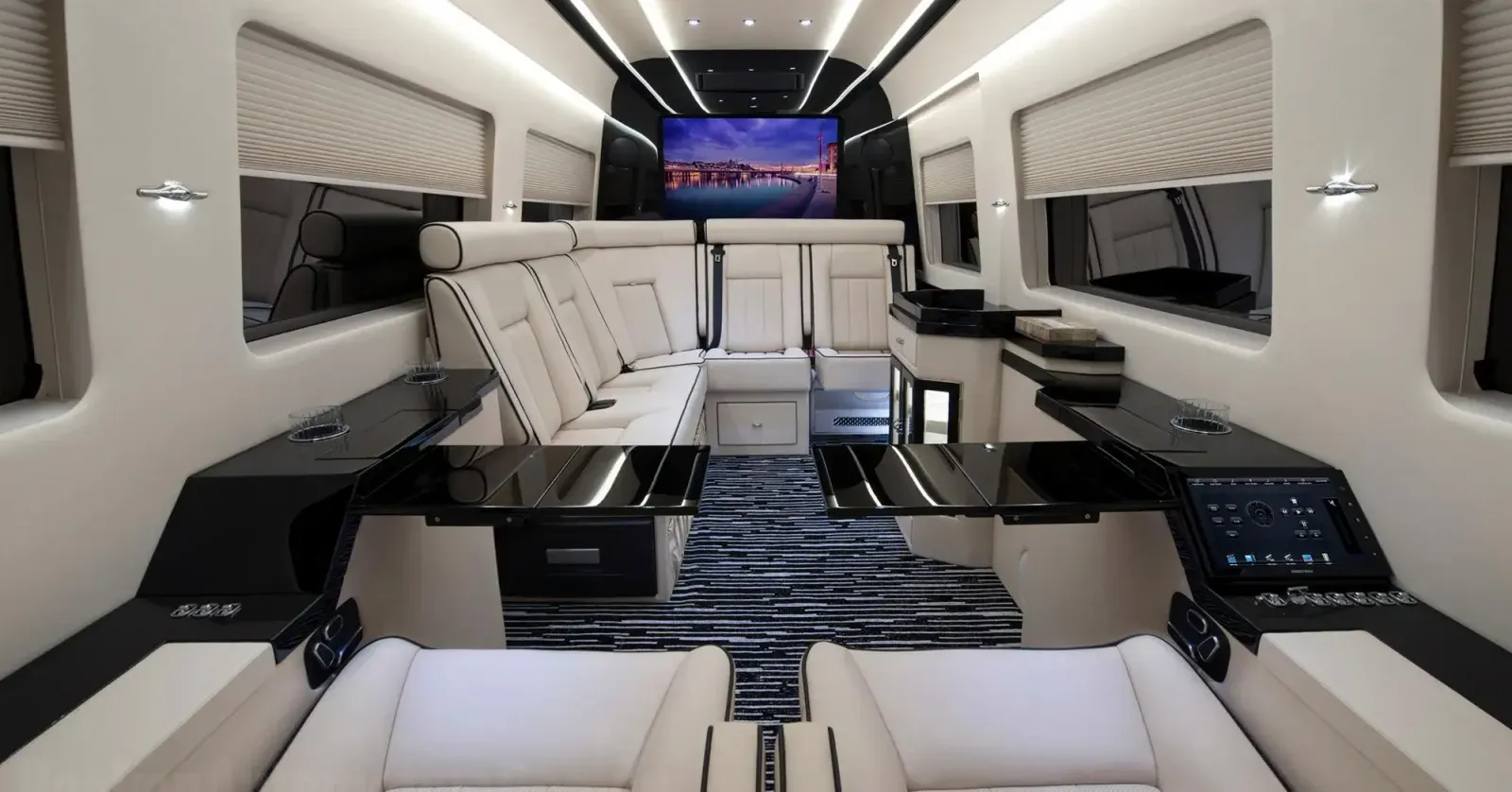
The elongated car is one twentieth-century body style inside a much older category, and we say plainly that Marquee fields a Sprinter, an Escalade ESV, and an S90 rather than a stretch limousine. By the word's own hundred-year record, nothing about that departs from limousine service; it returns to it.
The test that still works
Ask of any vehicle: was it arranged before the trip, is a professional accountable for it, and does the cabin belong to the passenger? Three yeses make a limousine in 1902, 1959, and this morning at PDX. Anything less is a ride.
What arrives when you book one
A Portland airport limousine booking with us sends the S90 at $110 per hour, the Escalade ESV at $135, or the Sprinter at $165, each pre-arranged, tracked against your flight, and staffed by a W-2 chauffeur. The full rate structure sits on the 2026 pricing guide.
Frequently Asked
Questions, Answered.
How did the limousine get its name?
From Limousin, a region of central France, though scholars still argue about why. The leading theory says the car's enclosed profile resembled the hooded cloak worn in that province; Merriam-Webster notes the motivation was never satisfactorily established, and a rival 1904 account credits an engineer born in Limoges. The word stuck; the mystery stayed.
Is there a difference between a limo and a limousine?
Only formality. Limo is simply the clipped form, and both cover the same range: the dictionary definition runs from a chauffeur-driven sedan with a partition to, in its second sense, a vehicle carrying passengers to and from an airport. The stretch is one body style inside the word, not the word itself.
What does the word chauffeur actually mean?
Literally, one who heats. French chauffeur meant a stoker, the person who kept a steam engine fed, and the earliest cars were steam-driven, so the nickname transferred to motorists in the 1890s. By 1902 it had settled on its modern sense: a professional paid to drive someone else's car well.
What qualifies as a limousine?
Service, not length. The dictionary's core sense is a large, luxurious, chauffeur-driven car, historically with a partition; the working trade definition is a pre-arranged, professionally chauffeured private vehicle. By that standard an executive sedan booked in advance qualifies fully, and a long car driven badly does not.
Can any car be a limousine?
Any car of sufficient comfort operated the right way, yes. The category has survived every body-style change since 1902 precisely because it describes an arrangement: a professional at the wheel, a passenger who booked ahead, a closed and quiet cabin. Our Volvo S90 is a limousine on Tuesday and a sedan in the parking lot on Sunday.
Why is it called a chauffeur?
Because early French motorists inherited the steam-era word for the man who tended the fire. It traces to the verb chauffer, to heat, and further back to Latin roots meaning to be warm. English borrowed it in the late 1890s, and British drivers briefly nativized it as the joke title shover, which mercifully did not survive.
About the Author
Ilyas Khairi runs Marquee Chauffeur under Portland Bureau of Transportation certification held since 2018, with $1 million in commercial liability and W-2 chauffeurs on payroll. He wrote this one for the pleasure of it, and because an operator who knows his trade descends from steam-engine stokers and shepherds' cloaks tends to hold the standard a little higher on a rainy PDX morning.
Verified Google Reviews
What Portland clients say about Marquee Chauffeur.
I spent six hours touring the Columbia River Gorge with the owner of this service, and I was really impressed with his professionalism, attentiveness, and local knowledge. As he says, they really are like a chauffeur/concierge, not just taking you from one place to another but providing a full experience. I look forward to riding with them again on my next trip.
Edris — has absolutely hands down have to be the best driver ever. I would absolutely recommend his service! He's so professional, so efficient. On time and so respectful!
These guys are terrific. Two thumbs up. Found them online and got excellent personal service. Used them to get from PDX to about two hours away …. And then back to PDX a few days later. On time. Super professional drivers. Vehicles in spectacular shape. Brand new. They will be out go to service. We recommend them highly.
Marquee Chauffeur holds a 5.0 rating across 198 Google reviews. Read every review on Google.
Reserve Your Chauffeur
Reserve a Portland
Chauffeur Now.
Book the arrangement the word has always meant. Call Marquee Chauffeur at (503) 706-8662, available 24/7: a pre-arranged pickup, a professional chauffeur, a quiet closed cabin, and a flight tracked from wheels-up with a 30-minute arrival grace window (45 on international arrivals). Volvo S90 at $110 per hour, Escalade ESV at $135, Mercedes-Benz Sprinter at $165, under Portland private-for-hire permitting since 2018 with $1 million in commercial liability.