

For The Parents On The Sideline
Lake Oswego Airport Shuttle Service Vet The Vehicle Like The State Does.
Before a Lake Oswego team boards anything, some parent in the group chat asks the licensing question, and the honest answer is unsettling: the federal commercial-license line sits at sixteen seats including the driver, so most of the vehicles youth groups actually ride require no special license at all. The license was never the real test. Oregon's own rules for schools contain the real test, a seven-item carrier checklist, and this guide hands it to every parent, with our own answers attached.
By Ilyas KhairiFounder, Marquee ChauffeurLicensed and permitted since 2018
- Licensed & Permitted
- $1M Insured
- 5.0 / 198 Reviews
- W-2 Chauffeurs
- 35-Point Inspection
Last updated: September 23, 2026
By Ilyas Khairi, Founder of Marquee Chauffeur · Licensed and permitted since 2018 · Updated September 23, 2026
TL;DR
The CDL line is sixteen seats including the driver, so licensing alone clears almost every vehicle your kids will ride. The questions that matter come from Oregon's own school-charter rules: approved carrier, certified and randomly tested drivers, current inspection, insurance verified at the federal source, chaperone policy, and parent notification. Ask all seven of any operator, including us; this page is our answer sheet.
Group cost math lives on the group cost guide, loop engineering on the loop playbook, and general operator vetting on the red flags guide.
01 The License Line
What Does The CDL Question
Actually Tell You?
Less than the group chat hopes. Federal rules define the commercial-passenger threshold by design capacity: sixteen or more people including the driver, and Oregon draws the same line, with the passenger endorsement and its separate tests kicking in above it. A fourteen-passenger Sprinter plus driver totals fifteen positions, legally under the line. So the licensing question, asked alone, approves nearly everything; the vetting that matters starts where the license ends.
Design capacity, not headcount
The threshold counts seats built, not riders aboard: a sixteen-seat vehicle needs a CDL driver even half-empty, and a fifteen-seat one does not even when full. Parents comparing quotes should ask what the vehicle is designed for, because that number, not the roster, decides which rulebook applies.
What sits under the line
Nearly the whole youth-travel fleet of America: minivans, twelve- and fifteen-seat vans, and our Sprinter. Under-the-line does not mean unregulated, commercial operators still carry permits, inspections, and insurance, but it means the chauffeur's license class is the weakest possible proxy for safety.
The question worth substituting
Replace "does the chauffeur have a CDL" with "who employs, screens, tests, and insures this driver, and who inspected this vehicle, when." Every strong answer to that question is checkable paper, and the rest of this guide is the checklist for it.
Our card, face up
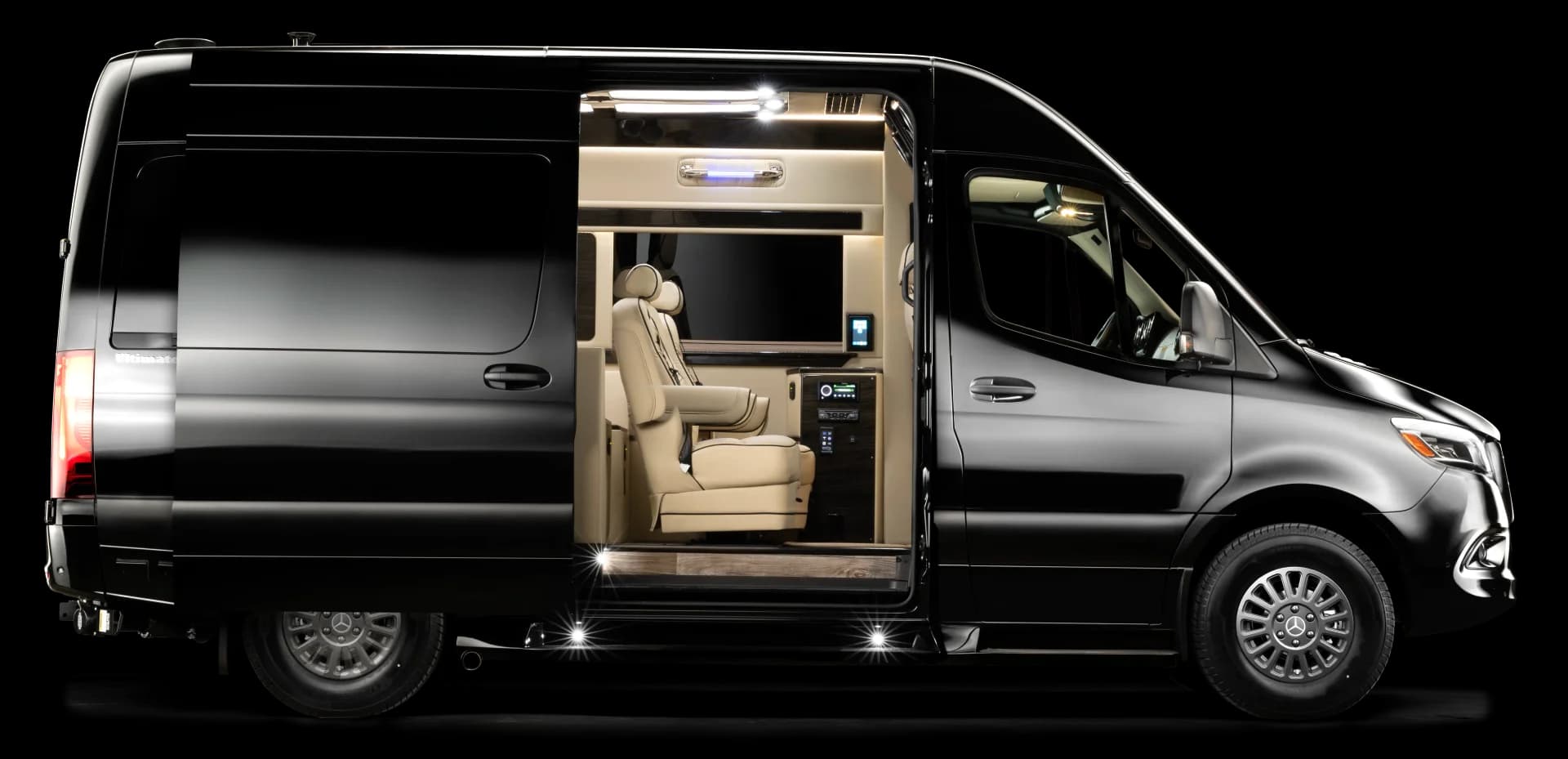
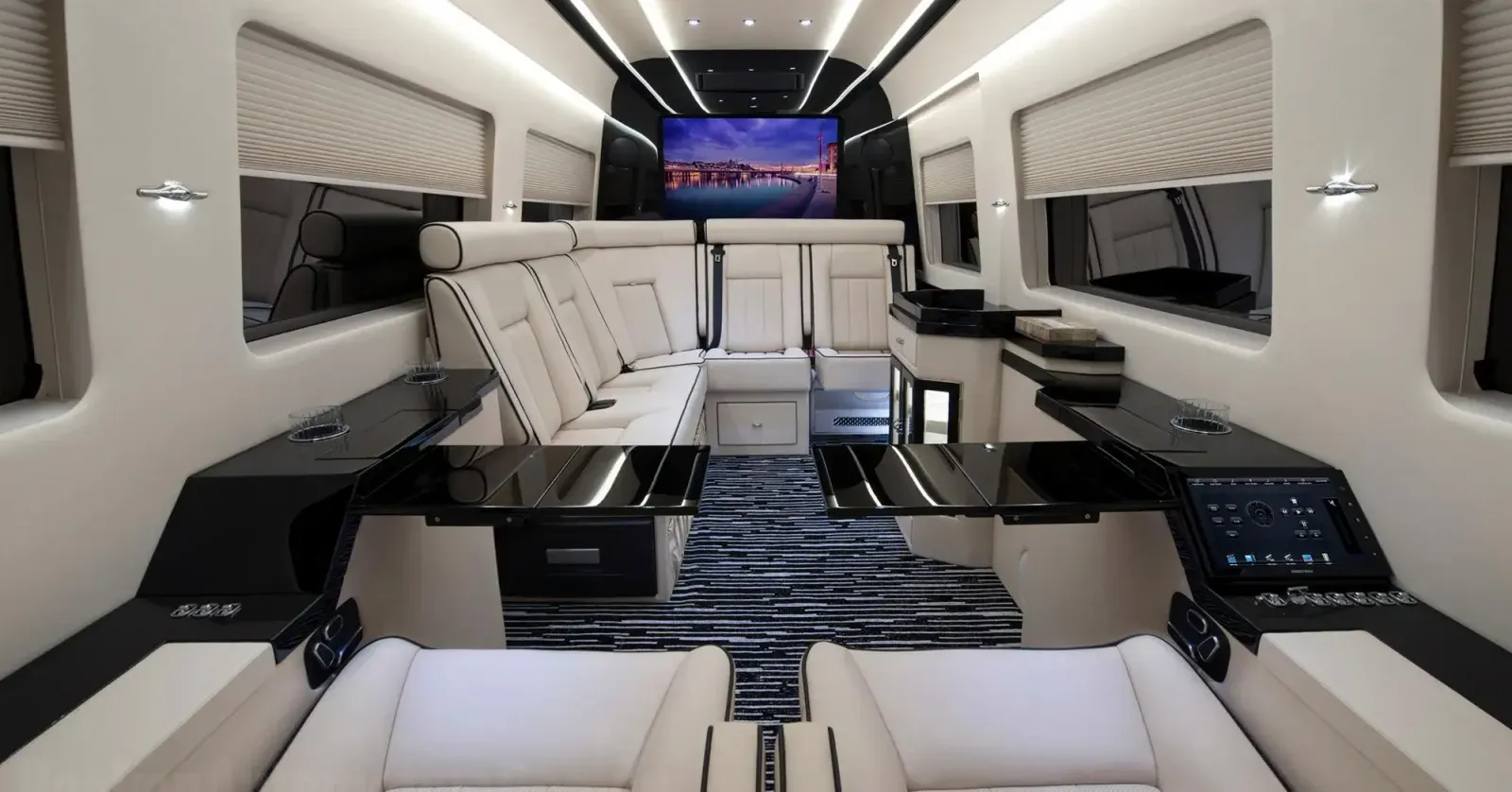
Our Sprinter seats fourteen plus a W-2 chauffeur, under the federal line, operated under city for-hire permits with annual vehicle certification, daily inspections, and $1 million in commercial liability. Hold that against the checklist below; that is precisely what it is for.
02 The History
Why The 15-Passenger Van
Earned Its Reputation.
Because the federal record is grim and public. NHTSA's safety page reports that 57 percent of the 235 occupants killed in 15-passenger van rollovers across a decade were ejected, that an unrestrained occupant in a single-vehicle crash is roughly four times likelier to die than a belted one, and that tire failures lead the rollover causes, which is why the agency wants tires checked weekly and experienced, regular drivers at the wheel. Congress went further for schools: federal statute bars them from buying new 15-passenger vans for student transport unless the vans meet school-bus standards. The agency also notes the balance point honestly, that electronic stability control has largely tamed rollover in newer vans. The segment's lesson survives anyway: vehicle, maintenance, and driver quality decide everything the license class does not.
What the ban teaches parents
When Congress forbids schools from buying a vehicle class for kids, the message to private groups is free: the questions schools were forced to answer, vehicle standards, driver quality, maintenance, are the same ones a soccer club should ask before renting the identical van with a volunteer at the wheel.
The volunteer-driver gap
NHTSA's ideal driver operates the vehicle type regularly; the rental-counter volunteer, by definition, does not. The riskiest common configuration in youth travel is a maximal van, a one-day driver, and a long dark drive, and every element of it is avoidable by hiring the vehicle with its professional attached.
The modern-platform difference
Stability control, belted seating throughout, and commercial maintenance schedules changed the arithmetic the bad years were built on. A current-platform Sprinter under daily inspection is a different machine from the church van of the statistics, and the difference is documented, not asserted.
Belts, enforced kindly
The single strongest number on NHTSA's page is the four-fold difference belts make. Our youth-group protocol treats the pre-departure belt check as non-negotiable and unembarrassing, chaperones confirm rows, the chauffeur confirms the chaperones, and then the vehicle moves.
03 The Borrowed Checklist
Ask What Oregon Makes
Its Schools Ask.
Oregon already wrote the vetting sheet, in its school activity-vehicle rules: districts hiring passenger vehicles for students may only use carriers holding a state Certificate of Carrier Approval, renewed annually, with drivers individually certified by the education department, all drivers enrolled in random drug-and-alcohol testing, insurance verified through the federal carrier database, a current roadside-inspection decal, a chaperone present whenever students ride, and parents notified. No private team is bound by that rule, and every private team can borrow it: seven questions, each answerable with a document, each fatal to a bad operator and effortless for a good one.
Ask us all seven on one call and collect the paperwork before you hang up: (503) 706-8662.
The seven, in plain parent
Who approved you and when does it expire? Who certifies your chauffeurs? Who tests them, randomly, for what? When was this vehicle inspected and by whom? Show the insurance certificate. Who rides as the adult besides the chauffeur? And how do parents get told? Seven questions, ten minutes, everything.
Verify at the source
Oregon's rule points districts to the federal carrier database for insurance verification rather than trusting paper, and parents hold the same power: any interstate carrier's record is publicly searchable by DOT number. The full lookup walkthrough lives on our first-charter guide.
The insurance tiers, decoded
Federal minimums for hired interstate passenger carriers run $1.5 million under sixteen seats and $5 million at or above, while risk advisors tell travel teams to carry one to two million in their own general liability. The certificate a carrier sends should make sense against those numbers, and a carrier who will not send one has answered differently.
The carpool exposure
The default alternative, parent drivers, quietly concentrates risk on volunteers: legal guidance suggests carpooling parents carry half a million dollars or more in personal liability, and most do not know it. Teams choose hired transport partly so no family's home policy is the backstop for the roster.

04 The Local Circuit
Lake Oswego's Youth Machine,
And Our Answer Sheet.
The city's youth circuit is substantial: a district of roughly 6,900 students across two high schools, a city roster of youth sports organizations spanning baseball, softball, football, lacrosse, and aquatics, and a soccer club fielding players from pre-K through senior year. All of it travels, tournaments, showcase weekends, and the airport runs when the bracket is a flight away. For those trips, our answer sheet reads: city for-hire permits with annual certification, W-2 chauffeurs screened annually, daily inspections plus the annual certified test, $1 million commercial liability with the certificate sent on request, chaperones welcomed and belted, and parents copied on confirmations whenever the organizer asks. The exact curb-by-curb layout lives in the PDX airport pickup location guide.
The tournament-flight run
Fourteen athletes, gear, and two coaches to PDX at 5 a.m. is the Sprinter's home fixture: one manifest, one belt check, one vehicle the team boards together. Per seat it runs under what the families spent on last weekend's tournament meals, with the math itemized on the group cost guide.
The organizer's packet
Team managers get the vetting documents unasked: insurance certificate, permit standing, and the protocol sheet, because the parent group chat is going to request them anyway and the operator who anticipates the chat is telling you something about how the trip will run.
Chaperones, by design
Oregon's school rule requires an adult beyond the chauffeur, and we treat it as wisdom rather than red tape: youth bookings reserve chaperone seats in the count, the chauffeur drives, and supervision belongs to the adults who know the kids. Two jobs, cleanly split, the way both are done well.
Where the details live
Standing team arrangements run through Lake Oswego town car service, the compliance file behind the operation sits on the operator's view guide, and rates hold fleet-wide: Sprinter $165 per hour, ESV $135, S90 $110.
Frequently Asked
Questions, Answered.
What is the largest passenger van you can drive without a CDL?
Federal rules draw the line at design capacity: a commercial license with passenger endorsement is required for vehicles built for 16 or more people including the driver, and Oregon mirrors the threshold exactly. A fourteen-passenger Sprinter plus its driver totals fifteen positions, one seat under the line, which is why the license question alone tells a parent almost nothing.
Are 15 passenger vans illegal?
Not for adults, but for schools the law is blunt: federal statute bars schools from buying or leasing new 15-passenger vans for student transport unless they meet school-bus standards. That ban exists because of the segment's documented rollover history, and it is why districts moved student travel to buses and vetted charters.
Can schools use 15 passenger vans?
Oregon's answer is a system, not a yes or no: districts hiring passenger vehicles for students may only use carriers holding a state Certificate of Carrier Approval, with department-certified drivers, chaperones aboard, parent notification, and insurance verified at the federal source. That checklist is public, and this guide hands it to parents.
What kind of insurance do you need for a travel baseball team?
Risk advisors recommend teams carry general liability of one to two million dollars, and the vehicle side has federal tiers of its own: hired interstate passenger carriers need $1.5 million minimum under sixteen seats and $5 million at sixteen or more. Ask any operator for their certificate; the honest ones send it before you finish asking.
Is it illegal for teachers to drive students?
Usually it is district policy rather than criminal law that decides, and the policies exist because volunteer chauffeurs carry the exposure personally: legal guidance suggests carpooling parents hold half a million dollars or more in liability coverage. The vetted-carrier system exists precisely so no teacher's or parent's personal policy is the safety net for a team.
What should a Lake Oswego team budget for the airport shuttle?
The Sprinter that passes the seven questions runs $165 per hour with fourteen belted seats, all-in including the 20 percent service fee; the Escalade ESV books at $135 and the S90 at $110. Hourly work carries a three-hour minimum, straight airport transfers do not, and Lake Oswego fares are quoted firm at booking, one number the team manager's ledger can carry. Gratuity is optional and never added.
How much notice does a youth-team airport shuttle need?
Book 24 to 48 hours ahead for a standard run and the Sprinter is assigned the night before with the manifest attached. Tournament season is the caveat: showcase weekends and holiday brackets book against every other team's calendar, so give those dates as much runway as the roster allows. Same-day departures are handled by phone at (503) 706-8662, and the vetting packet rides with the confirmation either way.
About the Author
Ilyas Khairi runs Marquee Chauffeur under Portland Bureau of Transportation certification held since 2018, with $1 million in commercial liability and W-2 chauffeurs on payroll. He wrote this guide the way he answers team managers on the phone: checklist first, sales pitch never, because an operator who welcomes the seven questions has already passed them.
Verified Google Reviews
What Portland clients say about Marquee Chauffeur.
I spent six hours touring the Columbia River Gorge with the owner of this service, and I was really impressed with his professionalism, attentiveness, and local knowledge. As he says, they really are like a chauffeur/concierge, not just taking you from one place to another but providing a full experience. I look forward to riding with them again on my next trip.
Edris — has absolutely hands down have to be the best driver ever. I would absolutely recommend his service! He's so professional, so efficient. On time and so respectful!
These guys are terrific. Two thumbs up. Found them online and got excellent personal service. Used them to get from PDX to about two hours away …. And then back to PDX a few days later. On time. Super professional drivers. Vehicles in spectacular shape. Brand new. They will be out go to service. We recommend them highly.
Marquee Chauffeur holds a 5.0 rating across 198 Google reviews. Read every review on Google.
Reserve Your Chauffeur
Reserve a Portland
Chauffeur Now.
Ask us the seven questions before you book anyone, including us: (503) 706-8662, available 24/7. Youth-group bookings come with the vetting packet unasked, insurance certificate, permit standing, belt protocol, chaperone seating, and parent-copied confirmations. Sprinter at $165 per hour for fourteen, Escalade ESV at $135, every Lake Oswego team booking with FlightAware tracking on airport legs, under Portland private-for-hire permitting since 2018 with $1 million in commercial liability.