

Loop Engineering, Explained
Beaverton Airport Shuttle Service The Loop Is The Product.
A planner in a wedding group recently asked the whole question in one breath: how do you move about 150 guests between a hotel and a venue ten minutes apart when everyone must arrive in the same twenty-minute window? That is not a transportation request; it is an engineering problem, waves, load windows, call sheets, and a federal clock on the chauffeur's hours. Beaverton generates that problem weekly, weddings, corporate cohorts, event nights, airport groups, and this is the playbook we solve it with.
By Ilyas KhairiFounder, Marquee ChauffeurLicensed and permitted since 2018
- Licensed & Permitted
- $1M Insured
- 5.0 / 198 Reviews
- W-2 Chauffeurs
- 35-Point Inspection
Last updated: September 23, 2026
By Ilyas Khairi, Founder of Marquee Chauffeur · Licensed and permitted since 2018 · Updated September 23, 2026
TL;DR
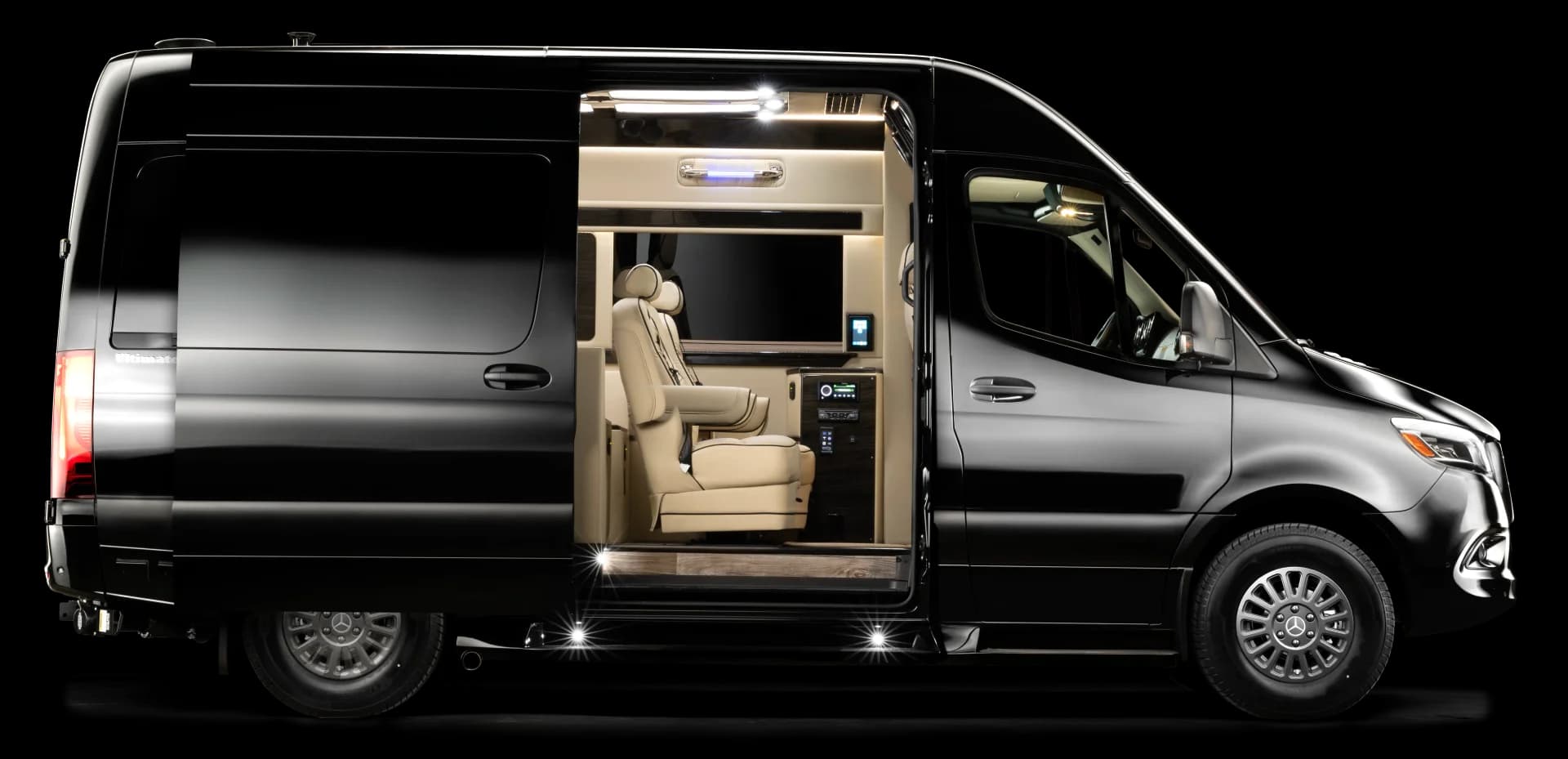
A shuttle is a loop: fixed points, repeating schedule, one client's riders. The engineering is fourfold, assume about half of invited guests actually ride, size waves to the vehicle, pad each loop by twenty to thirty minutes of real-world friction, and respect the federal ten-hour driving limit for passenger carriers that shapes every all-day contract. The Sprinter at $165 per hour runs the waves; the playbook below runs the Sprinter.
The one-off group transfer lives on the group booking guide, the shared-shuttle landscape on the Portland shuttle reality check, and corporate accounts on Beaverton town car service.
01 The Definition
What Makes A Shuttle A Shuttle,
And Not Just A Big Ride?
Industry glossaries define it cleanly: a shuttle runs vehicles between two or more fixed points on a scheduled, repeating basis, multiple passengers per trip. The repetition is the whole distinction, one Sprinter run to PDX is a group transfer; the same Sprinter cycling hotel-venue-hotel for four hours is a shuttle, and the second product is engineered, not just driven. Beaverton buys the engineered version constantly: wedding circuits, conference-day loops, training cohorts moving between hotels and the Nimbus corridor's seven hundred thousand square feet of office park, and event-night waves.
Loop, wave, window
Three words carry the whole craft. The loop is the circuit and its round-trip time. A wave is one vehicle-load of riders. The window is when everyone must have arrived. Every shuttle question, cost, count, feasibility, reduces to those three numbers within a minute of honest math.
Why free shuttles feel free
Hotel and employer shuttles trained everyone to expect shuttles without invoices, but the loop always has a buyer; the rider just is not it. Private events invert the view: the host meets the machine's real cost, which is why hosts deserve the math rather than a quote in a vacuum.
What rideshare cannot loop
Apps move sixes on demand; they cannot promise the same vehicles returning on a schedule, a driver briefed on the venue's loading zone, or a call sheet honored in order. Planners who try to shuttle a wedding by voucher discover this at wave two, in formal wear.
The Beaverton loop map
The city's recurring circuits draw themselves: the hotel cluster at Beaverton Central, the Nimbus and 217 office corridor, wedding venues west and south, the Night Market at The Round each August, and PDX anchoring every airport wave. Most quotes are a known loop with new names.

02 The Math
The Guest-Count Arithmetic
Every Planner Needs.
Start from the industry's working assumption: plan capacity for about half your invited guests at any given time, the load factor wedding-shuttle guides publish and our seasons confirm. Then run the wave math. One hundred guests yields roughly fifty riders; a fourteen-passenger Sprinter on a fifteen-minute hotel-venue loop delivers a wave every quarter hour, so four waves, about an hour, clears the list, and a second vehicle halves the window. Pad the loop time the way planning guides insist, twenty to thirty minutes of loading, lingering, and lost-shoe friction per cycle, and build the call sheet naming who rides which wave. The 150-guests-in-twenty-minutes problem from the forums has exactly one honest answer: more vehicles, earlier waves, or a gentler window, and a planner who knows it three months out can choose calmly.
| Guests invited | Likely riders (~50%) | One Sprinter, 15-min loop | Two Sprinters |
|---|---|---|---|
| 60 | ≈ 30 | ≈ 2–3 waves · 45 min | ≈ 25 min |
| 100 | ≈ 50 | ≈ 4 waves · 60 min | ≈ 35 min |
| 150 | ≈ 75 | ≈ 6 waves · 90 min | ≈ 50 min |
| 240 | ≈ 120 | plan three vehicles | ≈ 70 min; three cuts to ≈ 50 |
Computed from the industry ~50 percent ridership assumption, a 14-passenger Sprinter, and a padded 15-minute loop; longer venue distances stretch every cell. Return loops after the event run the same math in reverse, usually gentler. Dispatch runs your exact version free.
03 The Clock
The Federal Hours Behind
Every All-Day Loop.
Here is the constraint most hosts never see priced in: under federal passenger-carrier rules, a driver may not drive more than 10 hours following 8 consecutive hours off, nor drive at all after 15 hours on duty, with weekly caps stacked above. A wedding day that starts with 10 a.m. setup shuttles and ends with a 1 a.m. last call is not one driver's day; it is a shift plan, and a quote that pretends otherwise is either illegal or fictional. The clock is why serious loop quotes name driver changes, and why ours do.
Want your event's loop plan with the clock already solved? (503) 706-8662.
Ten and fifteen, memorized
Passenger carriers get ten driving hours inside a fifteen-hour duty window, one hour less driving than freight, because the cargo is people. Any loop spanning morning setup and midnight return crosses the window, and the fix is staffing, planned at quote time rather than discovered at 11 p.m.
What the shift change looks like
Done properly, riders never notice: a second chauffeur takes the vehicle at a scheduled wave gap, briefed on the call sheet, the venue quirks, and the couple's send-off time. The handoff is a dispatch artifact, not a guest experience, which is the entire point of planning it.
The quote-reading tell
Ask any shuttle bidder one question: who drives the last loop, and when did they start? A confident answer means the operator prices the clock; a pause means the 1 a.m. wave is running on hope. It is the loop world's version of the insurance question, and it filters just as fast.
Pricing against the benchmarks
National charter benchmarks run full buses at roughly $130 to $180 an hour and minibuses $110 to $160, with multi-hour minimums. The Sprinter at $165 sits inside that band with fourteen seats, no 36-seat commitment, and waves sized to how guests actually flow. Most Beaverton events need rhythm, not tonnage.
04 The Circuits
Beaverton's Standing Loops,
And How They Book.
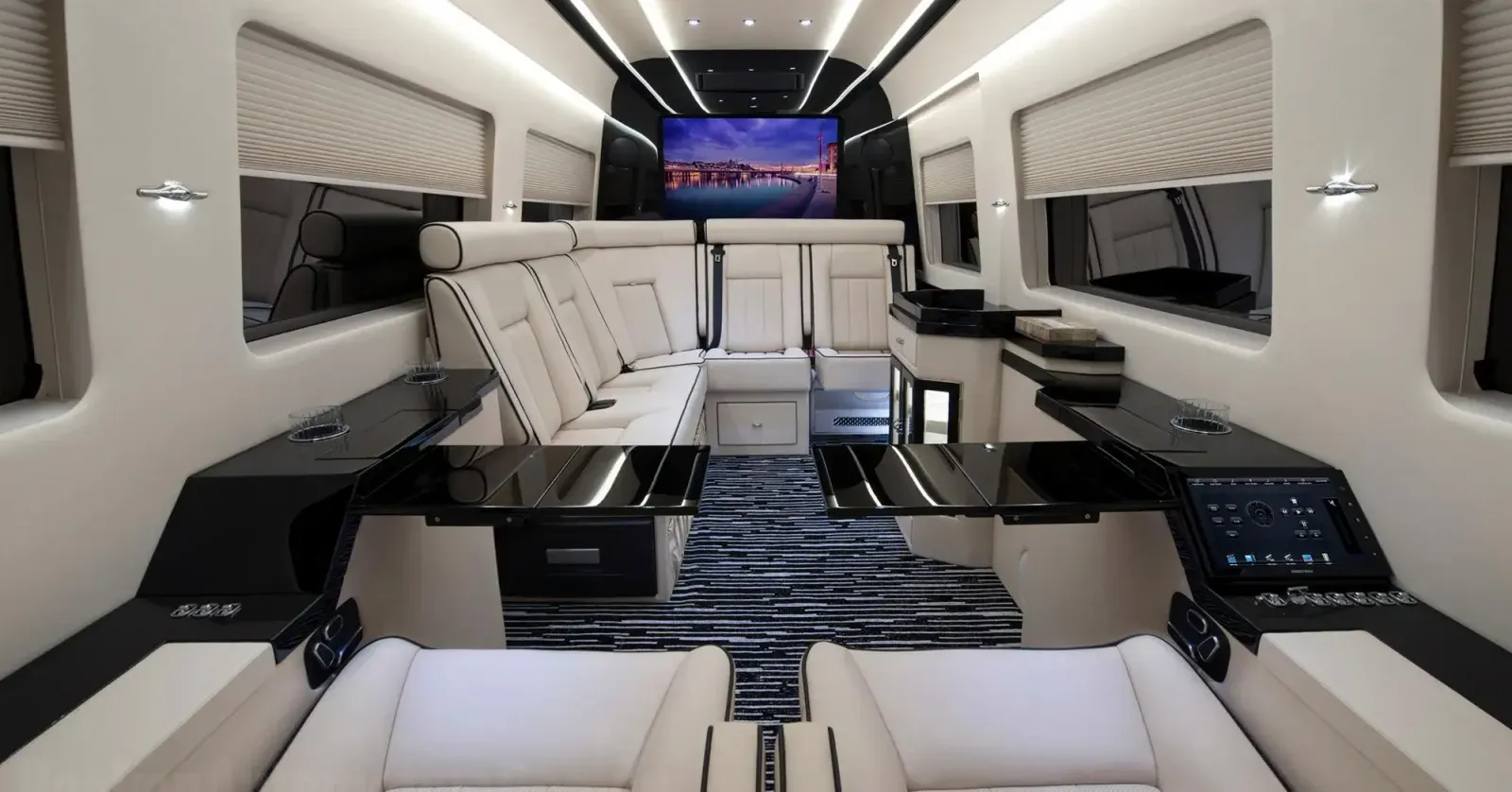
The city's loop demand clusters into four recurring circuits. Wedding season runs hotel-to-venue waves with the call-sheet discipline above. Corporate cohorts, trainings and visiting teams around the Nimbus corridor and Beaverton Central, book weekday airport waves and daily campus runs, with the hotel cluster at The Round, whose flagship property markets itself directly to the area's tech and sports travelers, as the natural hub. Event nights, the August Night Market above all, run evening waves that spare a whole street of parking. And airport groups, the original shuttle use, ride scheduled waves to PDX whenever a single vehicle's fourteen seats will not hold the manifest. Matching the cabin to bags and bodies runs through the PDX vehicle selection guide.
The cohort contract
A two-week training cohort books as one arrangement: arrival-day airport waves, a daily hotel-office loop timed to the agenda, and departure waves at the end, one manifest, one invoice, one dispatcher who knows the agenda changed on Tuesday. Recurring corporate structure lives on the corporate playbook.
The wedding file
The planning guides put wedding transport at three to six months out; a Marquee wedding loop books about two weeks ahead, and the file holds the call sheet, the venue's loading quirks, the photographer's do-not-block list, and the last-wave hour. The couple approves the plan once; the day runs it without them, which is the gift.
The event-night wave
Neighborhood groups and companies book Night Market and event-evening waves the way they once booked designated drivers: one Sprinter, a pickup circuit, a return sweep at close. It is the loop craft at its most cheerful, and August books it out first.
Rates, loop-ready
Loops bill the same honest card as everything else: Sprinter at $165 per hour, Escalade ESV at $135, S90 at $110, hours quoted to the plan with shift staffing named where the clock demands it. The engineering is free; it arrives attached to the quote.
Frequently Asked
Questions, Answered.
How much does a wedding shuttle typically cost?
Industry planning guides put average wedding transportation at roughly $700 to $1,200, with large buses billing $120 to $250 an hour against multi-hour minimums. Our Sprinter runs loops at $165 per hour with no bus-sized commitment, which is why weddings under about 150 guests usually price better on repeated fourteen-seat waves than on one large coach.
How many shuttles do I need for my wedding?
Start with the industry rule of thumb that about half your guests ride, then divide by capacity per wave and the loop time between hotel and venue. One hundred guests means roughly fifty riders; a fourteen-passenger Sprinter on a fifteen-minute loop moves them in about four waves inside an hour, and two vehicles halve it. The math is the answer, and dispatch runs it free.
How do shuttle services work?
A true shuttle runs vehicles between fixed points on a repeating schedule, shared by one client's riders: hotel to venue, campus to airport, lot to gate. The craft is in the loop design, wave times, load windows, a call sheet naming who rides when, and a coordinator who owns the manifest so the chauffeur can own the road.
Does shuttle service mean free?
Only when someone else is paying: hotel shuttles are free to registered guests because the hotel absorbs them, and corporate shuttles are free to employees because the employer contracts them. The service itself always has a buyer. For private events, that buyer is the host, which is exactly why the loop math in this guide matters.
Does Uber do wedding shuttles?
Not as a shuttle: rideshare moves parties of up to six per vehicle, on demand, with no loop schedule, no call sheet, and no guarantee the same vehicles return for wave two. Codes and vouchers can subsidize guest rides, but a timed hotel-to-venue circuit for a hundred people is a scheduled-loop product, which is a different machine entirely.
When should a Beaverton shuttle loop be reserved?
By product: the planning guides put wedding transport at three to six months out, but a Marquee wedding loop books about two weeks ahead, since call sheets, venue walk-throughs, and shift staffing all want lead time, and August event nights sell first. Corporate cohort circuits settle comfortably a few weeks ahead. A simple airport wave needs only the standard 24 to 48 hours, and dispatch at (503) 706-8662 fields same-day requests whenever a Sprinter and chauffeur are genuinely free.
About the Author
Ilyas Khairi runs Marquee Chauffeur under Portland Bureau of Transportation certification held since 2018, with $1 million in commercial liability and W-2 chauffeurs on payroll. The wave tables in this guide are the ones his dispatch actually draws on whiteboards every wedding season, published because a planner with the math makes better decisions than a planner with three contradictory quotes.
Verified Google Reviews
What Portland clients say about Marquee Chauffeur.
I spent six hours touring the Columbia River Gorge with the owner of this service, and I was really impressed with his professionalism, attentiveness, and local knowledge. As he says, they really are like a chauffeur/concierge, not just taking you from one place to another but providing a full experience. I look forward to riding with them again on my next trip.
Edris — has absolutely hands down have to be the best driver ever. I would absolutely recommend his service! He's so professional, so efficient. On time and so respectful!
These guys are terrific. Two thumbs up. Found them online and got excellent personal service. Used them to get from PDX to about two hours away …. And then back to PDX a few days later. On time. Super professional drivers. Vehicles in spectacular shape. Brand new. They will be out go to service. We recommend them highly.
Marquee Chauffeur holds a 5.0 rating across 198 Google reviews. Read every review on Google.
Reserve Your Chauffeur
Reserve a Portland
Chauffeur Now.
Bring the guest count and the window; leave with the loop plan. Call Marquee Chauffeur at (503) 706-8662, available 24/7. Wave math, call sheets, and shift staffing engineered into every quote: Sprinter at $165 per hour for fourteen-seat waves, Escalade ESV at $135, S90 at $110, every Beaverton shuttle contract with FlightAware tracking on airport waves, under Portland private-for-hire permitting since 2018 with $1 million in commercial liability.