

East County Group Economics
Camas WA Airport Shuttle Service The Convoy Costs More Than You Think.
Two families, one vacation, two cars to PDX: it feels free because nobody writes a check. Then the federal government and the AAA both price the mile, 76 and 77 cents respectively, within a penny of each other, the parking bill arrives per car, and the free convoy turns out to cost more than the vehicle nobody priced. Camas travels in groups, families, troops, teams, reunions, and this guide runs the group math honestly, including the rows where the convoy still wins.
By Ilyas KhairiFounder, Marquee ChauffeurLicensed and permitted since 2018
- Licensed & Permitted
- $1M Insured
- 5.0 / 198 Reviews
- W-2 Chauffeurs
- 35-Point Inspection
Last updated: September 23, 2026
By Ilyas Khairi, Founder of Marquee Chauffeur · Licensed and permitted since 2018 · Updated September 23, 2026
TL;DR
A mile of driving costs about 76 to 77 cents by the IRS's and AAA's independent accounting, and airport parking bills per car: two cars for a week at PDX economy is $210, three is $315. Against that, the Sprinter's $400 flat transfer splits to $27.50 a seat at twelve riders, and youth-sports data says travel is already the biggest line families pay. The convoy is rarely free; it is just unbilled.
The loop-engineering side of group work lives on the loop playbook, the vehicle-sizing math on the group booking guide, and Camas pickup craft on the neighborhood guide.
01 The Real Mile
What Does A Mile Of Driving
Actually Cost A Family?
Two institutions price it independently and land a penny apart. The IRS's standard mileage rate rose to 76 cents per mile for the second half of 2026, its accounting for fuel, wear, and depreciation together. AAA's latest Your Driving Costs study puts new-vehicle ownership at $11,577 a year over 15,000 miles, which works out to roughly 77 cents. When a government agency and a motor club agree within a penny, the number is safe to build a family budget on, and it is five times what the gas-money instinct assumes.
Why gas money undercounts
Splitting the pump receipt splits a fifth of the truth: tires, oil, depreciation, and insurance ride along on every mile whether or not anyone reimburses them. The forums argue gas-money etiquette forever because they are negotiating with the wrong number; the federal one settles it.
The convoy multiplier
Every additional car re-pays the full per-mile cost: a second vehicle on the roughly 50-mile Camas round trip adds about $38 of true cost, a third doubles that, before parking. Convoys do not split costs; they clone them, which is the arithmetic error this whole guide exists to correct.
The chauffeur's unpaid shift
The convoy also spends people: two or three adults who arrive having worked a driving shift, and, on the return, retrieve cars from the far lot with tired kids in tow. The costed version of group travel returns those adults to the group, which no per-mile figure captures and every parent understands.
Where the convoy honestly wins
Split return dates, gear that fills a truck bed, a family continuing on a road trip: real cases, and the convoy serves them. The claim here is narrower and firmer, that a same-schedule group paying per-car costs without noticing is overpaying for the worst version of the trip.

02 The Convoy Bill
Two Families, Two Cars,
One Itemized Receipt.
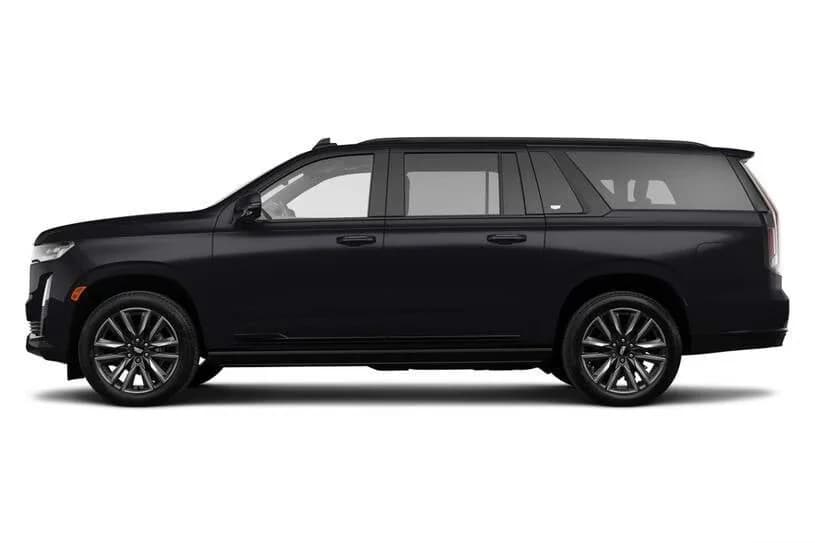
Run the classic Camas case: two families, one shared vacation, seven days, two cars to PDX. Parking: two economy stalls at $15 a day is $210 for the week. Mileage: two cars over the round trip adds roughly $76 of true vehicle cost. Total, about $286, unbilled and therefore invisible, for the privilege of two drivers, two garages navigated with luggage, and a return-day car retrieval nobody enjoys. The Escalade ESV runs the same trip as one $250 booking each way for up to six, and the Sprinter carries both families together. The convoy's advantage was never price; it was that nobody added it up.
| Group plan | Parking, 7 days | True mileage | Week total |
|---|---|---|---|
| 1 car, economy | $105 | ≈ $38 | ≈ $143 |
| 2-car convoy, economy | $210 | ≈ $76 | ≈ $286 |
| 3-car convoy, economy | $315 | ≈ $114 | ≈ $429 |
| Escalade ESV, both ways | $0 | included | ≈ $540 for six, door to door |
| Sprinter, both ways | $0 | included | ≈ $660 for up to fourteen |
Computed from PDX posted parking rates, the IRS 76-cent mileage rate on a ~50-mile Camas round trip per car, and our published hourly rates at two booked hours per direction. The chauffeured rows include the chauffeur, the door-to-door leg, and nobody's uncle retrieving a car at midnight.
03 The Troop And The Team
Youth Travel Is Already The
Biggest Line. Spend It Well.
The data says what every Camas sports parent suspects: the Aspen Institute's Project Play survey puts average family spending at $1,016 per child's primary sport, up 46 percent in five years, with travel the single largest line item, ahead of equipment, lessons, and registration. Scouting's own financial principles point units toward earning their way with knowable trip costs. Both facts argue the same direction: groups that already budget travel carefully should buy it as one flat, splittable number, not as a convoy of untracked receipts.
Team managers and troop treasurers: dispatch quotes the whole trip in one line, on letterhead if you need it: (503) 706-8662.
The Papermaker calendar
Camas High's programs compete across the Greater St. Helens League in a dozen-plus sports, and tournament season means airport runs for the trips that fly: one Sprinter, one manifest, fourteen athletes and their gear, with the per-seat cost under what most families spend on a tournament weekend's meals.
The treasurer's favorite quote
Volunteer organizations run on receipts a spreadsheet can hold: one vehicle at one rate divides evenly across the roster, survives the audit, and never generates the reimbursement thread where someone's gas claim meets someone else's opinion. The flat rate is bookkeeping mercy as much as transportation.
The chaperone arithmetic
A three-car volunteer convoy consumes three adults as drivers; one hired vehicle returns them to actual chaperoning, eyes on kids instead of mirrors. For youth travel that trade is worth more than the dollars, and the vetting questions parents should ask any operator are covered on the Lake Oswego shuttle guide.
A town built for group trips
This is a place where the city let school kids pick the new treehouse playground at Crown Park; the two-family vacation and the troop weekend are the local unit of travel. The group math in this guide is not a niche; in Camas it is simply how trips happen.

04 The Per-Seat Truth
Where The Break-Even
Actually Falls.
The Sprinter's typical Camas transfer books at about $400; divide honestly and the seat prices fall fast: $47 at seven riders, $33 at ten, $27.50 at twelve, under $24 full. Set that against the two-car convoy's $286 week and the three-car's $429, remembering the chauffeured number already includes both directions' driving and zero parking, and the break-even lands around seven or eight same-schedule travelers for week-long trips, earlier for short ones where parking days dominate. Below that, drive and park with our blessing; the solo math has its own honest guide on this site. At or above it, the group that convoys is paying extra to be separated. Matching the cabin to bags and bodies runs through the PDX vehicle selection guide.
The reunion case
Twelve relatives arriving for a Camas wedding weekend is the per-seat table's easiest win: $27.50 a seat, one arrival wave, grandparents delivered to the door instead of navigating a rental counter. The family that prices it stops debating it.
The two-family sweet spot
Eight to ten people across two households is Camas's modal group, and it sits exactly at the crossover: the Sprinter costs about what the convoy truly costs, and buys back two drivers, two parking hikes, and the return-day retrieval. Price-equal and effort-cheaper is still a win.
Short trips flip faster
A three-day trip shrinks the parking bill and with it the convoy's penalty, but the mileage and the chauffeurs remain, and the chauffeured round trip stays flat. Short group trips are decided less by dollars than by whether anyone wants to start a weekend with garage logistics; most groups, once asked, do not.
Booking the split
One organizer books, the confirmation shows the flat number, and the group splits it however families split things; we will itemize per-seat on request for treasurers. Rates hold across the fleet, Sprinter $165 per hour, ESV $135, S90 $110, and standing group arrangements run through Camas limo service.
Frequently Asked
Questions, Answered.
How much would it cost to leave my car at the airport for a week?
At PDX's posted rates, $105 in the economy lot at $15 a day, $168 in the long-term garage, $210 short-term. The group version doubles or triples it: two family cars in economy run $210 for the week, three cars $315, before a single mile of driving is counted. Convoys pay parking per vehicle, which is the quiet budget leak this guide itemizes.
Where is the cheapest place to park at the Portland airport?
The economy lot, at $15 per day by the airport's posted rates, with a shuttle ride to the terminal included in the bargain. For one car on a short trip it is the honest winner. The math this page cares about is what happens when a group brings two or three cars to that same lot for a week.
How to divide gas money on a road trip?
The clean method is the federal one: multiply miles by the IRS rate, 76 cents as of mid-2026, and split the result, because that number bakes in fuel, wear, and depreciation rather than just the pump. AAA's independent ownership data works out to about 77 cents a mile, a penny apart, so whichever source your group trusts, the answer matches.
How to split family vacation rental costs?
Most extended families settle on per-adult or per-room splits for lodging, and the same discipline works for ground travel: one shared vehicle, one receipt, divided by seats. A Sprinter to the airport at about $400 splits to $27.50 across twelve riders, which is easier arithmetic and fewer awkward texts than reconciling three cars' gas, parking, and who drove.
What does a scout troop pay for, and what do families pay for?
Scouting's own financial principle is that units earn their way, with trip costs met from unit money-earning projects and scouts' personal savings rather than open-ended parent billing. That structure rewards transportation that quotes one knowable number per trip, which is exactly what a flat-rate group vehicle is and a volunteer convoy is not.
When should a Camas group lock in its airport Sprinter?
For an ordinary date, 24 to 48 hours ahead is plenty, but group vehicles are the fleet's scarcest seats, so give tournament weekends, spring break, and holiday waves as much runway as the roster allows. One organizer books, everyone else just shows up. Same-day group requests go through (503) 706-8662 and run subject to availability, honestly better odds for the six-seat Escalade than for the fourteen-seat Sprinter.
About the Author
Ilyas Khairi runs Marquee Chauffeur under Portland Bureau of Transportation certification held since 2018, with $1 million in commercial liability and W-2 chauffeurs on payroll. He has quoted enough Camas group trips to know the convoy never loses the argument; it just never gets invited to one, which is what the tables in this guide are for.
Verified Google Reviews
What Portland clients say about Marquee Chauffeur.
I spent six hours touring the Columbia River Gorge with the owner of this service, and I was really impressed with his professionalism, attentiveness, and local knowledge. As he says, they really are like a chauffeur/concierge, not just taking you from one place to another but providing a full experience. I look forward to riding with them again on my next trip.
Edris — has absolutely hands down have to be the best driver ever. I would absolutely recommend his service! He's so professional, so efficient. On time and so respectful!
These guys are terrific. Two thumbs up. Found them online and got excellent personal service. Used them to get from PDX to about two hours away …. And then back to PDX a few days later. On time. Super professional drivers. Vehicles in spectacular shape. Brand new. They will be out go to service. We recommend them highly.
Marquee Chauffeur holds a 5.0 rating across 198 Google reviews. Read every review on Google.
Reserve Your Chauffeur
Reserve a Portland
Chauffeur Now.
Price the group trip in one line: (503) 706-8662, available 24/7. One flat quote for the whole party, itemized per seat on request for treasurers and team managers. Mercedes-Benz Sprinter at $165 per hour for up to fourteen, Escalade ESV at $135 for six, every Camas group booking with FlightAware tracking and a 30-minute arrival grace window (45 on international arrivals), under Portland private-for-hire permitting since 2018 with $1 million in commercial liability.