

The Day-Of Failure Modes
Battle Ground WA Airport Transfer Service Travel Day Is Too Late To Find Out.
Every mistake in this guide is discovered at the worst possible time: 4:30 a.m. with a flight boarding, or midnight at the airport with a phone at four percent. None of them are booking errors; the reservation was fine. They are day-of failures, the scheduled ride that was never actually promised, the ride home improvised from a garage at midnight, the GPS pin that has never once found your driveway, the buffer sized to free-flow instead of the hour, the plow schedule that doesn't include your road, and each one has a fine-print paper trail we can quote and a dispatch habit that prevents it.
By Ilyas KhairiFounder, Marquee ChauffeurLicensed and permitted since 2018
- Licensed & Permitted
- $1M Insured
- 5.0 / 198 Reviews
- W-2 Chauffeurs
- 35-Point Inspection
Last updated: September 23, 2026
By Ilyas Khairi, Founder of Marquee Chauffeur · Licensed and permitted since 2018 · Updated September 23, 2026
TL;DR
Uber's own pages say the quiet parts: scheduling a ride doesn't guarantee a driver, Reserve may not be available for your pickup location (their Battle Ground page, verbatim), scheduled trips run to the airport but not when leaving one, and misplaced pins with errors in rural areas are a documented category. The run itself is 18.8 miles and about 31 free-flow minutes. Our answer to all of it: a vehicle assigned the night before, an address confirmed in words, a flat quote near $185 in the S90.
The booking-form traps live on the fine-print guide, the pricing machinery behind the average app fare near $70 on the pricing guide, and the rural pickup craft itself on the rural pickup guide.
01 Mistake One
Treating A Scheduled Ride
As A Promise Anyone Made.
The most common day-of disaster begins the night before, with a confirmation screen that confirms less than it implies. Uber's own help page states it flatly: scheduling a ride in advance doesn't guarantee you'll be connected with a driver, and the premium Reserve product's own footnotes agree: Uber doesn't guarantee that a driver will accept your ride request. For this town specifically, Uber's Battle Ground-to-PDX route page adds the local verdict, Reserve may not be available for your pickup location, beneath an average fare near $70 for the 18-mile run. The mistake is not using the apps; it is believing a request became a reservation. Nobody was assigned. Nothing was promised. The fine print said so all along.
The 4:30 a.m. market failure
The Quora question says it all: when I have a 6 a.m. flight, why is it so hard to get an Uber at 4:30? Because the request enters a market, and the predawn market near Battle Ground is a handful of distant drivers weighing an unpaid twenty-mile approach. Markets clear when they feel like it; flights board when they said they would.
The driver's side of the no-show
The driver forums run the mirror-image complaint, scheduled 6 a.m. airport rides where the rider no-shows, which completes the picture: neither side of a scheduled app ride is committed, and each plans around the other's unreliability. A system where both parties hedge is not a system to bet a flight on.
What confirmed actually means
Uber's Reserve terms locate the moment of truth precisely: your ride is confirmed once you receive your driver details. Hold every ground arrangement to that standard. A booking whose vehicle and chauffeur were assigned on last night's dispatch board has driver details by definition; a request pending a marketplace does not.
The notification that arrives too late
We'll notify you in the rare case you're not connected with a driver, the help page promises, and the notification is punctual: it arrives exactly when no alternative remains. Rare is a city-wide statistic; your street is not a statistic. Plan the unmissable trips on commitments, not on odds.
02 Mistake Two
Assuming The Ride Home
Works Like The Ride Out.
Here is the asymmetry almost nobody reads before their trip: Uber's scheduling page states that you can schedule trips to the airport, but not when leaving an airport, so the feature that covered the outbound leg does not cover the way back. The stage for that gamble also moved: PDX now connects rideshare riders with drivers inside Level 1 of the short-term parking garage, the Transportation Plaza, guided there by the apps and airport signage. So the traveler who meticulously scheduled the outbound leg lands at midnight to discover the ride home was never part of that arrangement, must be summoned by app from a garage, and prices at the hour's mood, with a twenty-mile destination that thins the accepting pool further. The ride out was planned; the ride home was always going to be improvised.
The midnight supply problem
Late arrivals meet the return-leg gamble at its worst: airport-origin demand, thin overnight supply, and a Battle Ground destination whose empty return miles belong to the driver. The forums' unavailable-in-your-area screenshots cluster at exactly these hours, and the red-eye guide's drowsy-driving data explains why self-rescue by driving is its own mistake.
The garage and the four-percent phone
The new pickup geography is app-guided by design, with signage pointing the way, but the summons is your phone's job, which makes the day's last four percent of battery a single point of failure. The travelers asking the forums what happens when the phone dies mid-pickup already know: the system's answer is nothing good.
How a booked return differs
A pre-booked pickup inverts every term: the vehicle was assigned before you flew, the chauffeur tracks the flight rather than waiting for a summons, the meeting point is agreed in words at booking, and a dead phone changes nothing because the plan does not live on it. The 30-minute grace window (45 on international arrivals) absorbs the schedule's slop.
Book both legs in one breath
The operational habit that retires this whole section: reserve the return when you reserve the outbound, one call, both directions, flat quotes each way. The trip's hardest leg, midnight, tired, twenty miles from bed, becomes its most solved, which is the correct place for solved to live.

03 Mistake Three
Trusting The Pin
With A Rural Address.
The pin problem has an engineering explanation and a paper trail. As a veteran forum answer put it, the app does not transfer your address as entered, it transfers coordinates, and Uber's own address-correction page catalogs the issues it asks riders to report: wrong house numbers, misplaced pins, addresses assigned to the wrong road in areas with multiple access points, and errors in rural areas. Meanwhile your actual address is a precision instrument, Clark County's site-address system feeds CRESA's 911 dispatchers and Washington's emergency call routing, meaning the county can find your driveway in a crisis with a rigor the consumer pin never inherits. The mistake is trusting the least accurate copy of your address on the most important morning; the fix is a human who confirmed the driveway, the gate, and the approach in words.
Our booking notes carry exactly that confirmation, once, forever: (503) 706-8662.
The cancellation-fee insult
The Quora grievance, why do you get charged when the driver can't find your house, is the pin problem completing its arc: driver reaches the coordinates, waits at the wrong gate, cancels, and the fee logic bills the rider as a no-show. Two honest parties, one wrong pin, and the countryside pays the fee.
The long-driveway file
Rural pickups have craft the apps cannot hold: which entrance the county road actually serves, the gate code, where a Sprinter turns around, whether the porch light means ready. Our rural pickup guide documents the discipline; the day-of translation is that all of it was written down before the morning it mattered.
The battery habit
Researchers studying two-thousand-plus smartphone users have documented low-battery anxiety as a real behavioral force, and travel day is its natural habitat. The habit worth keeping: charge to full before leaving, carry the cable, and book ground service whose plan survives a dead phone entirely, because the best battery strategy is not needing one.
Words beat coordinates
Every failure in this section shares one cure: the address confirmed as language, street, gate, landmark, approach, between two humans who both care that the morning works. It is the least technological fix in this guide and the most reliable, which is a pattern worth noticing in ground transportation generally.

04 Mistakes Four And Five
The Missing Buffer
And The Unplowed Assumption.
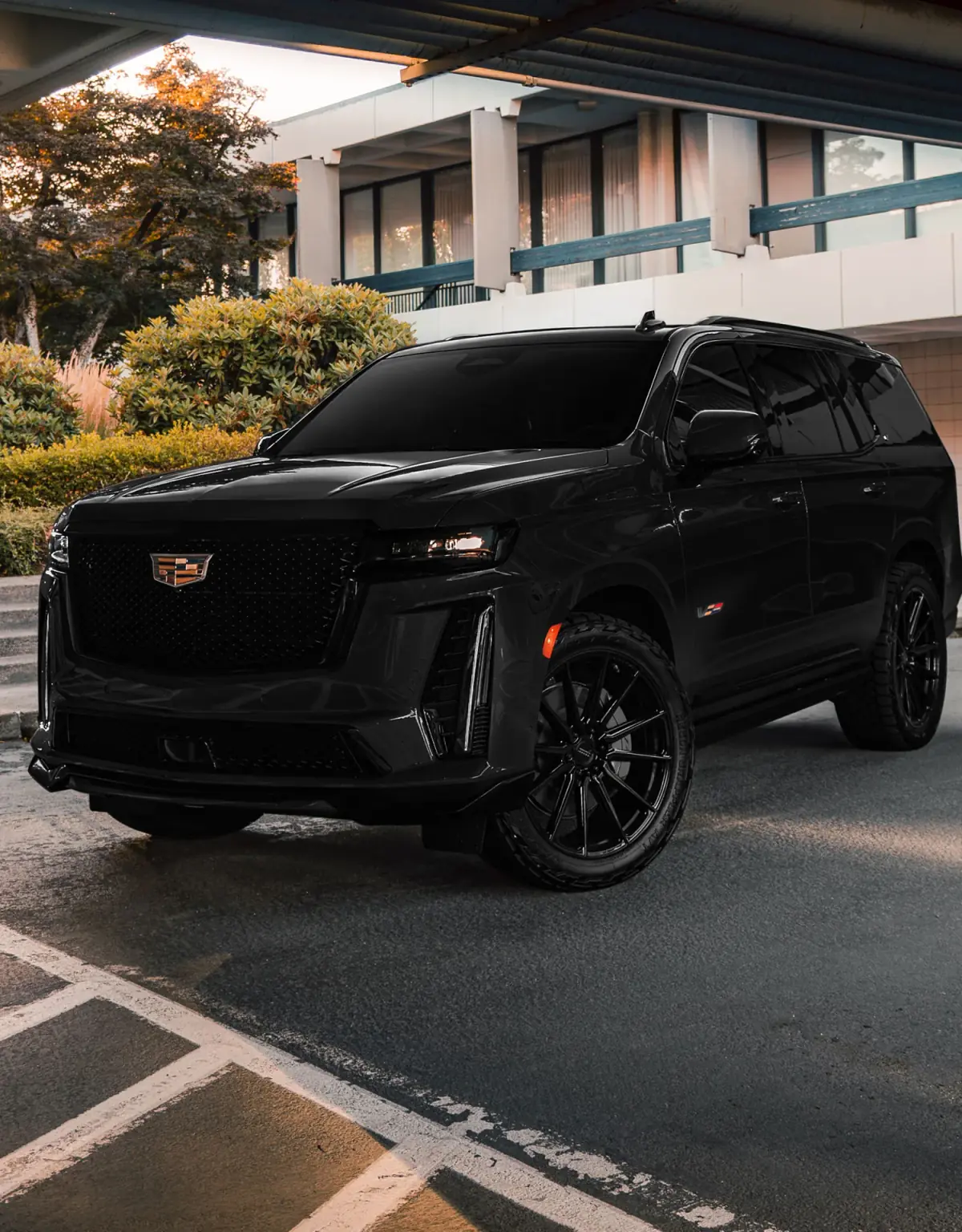
The last two errors are arithmetic and meteorology. The run itself is 18.8 miles and about 31 minutes free-flow by our computed routing, SR 503 south to I-205, but free-flow is the floor, and travelers who budget the floor donate their margin to the first slow light on the way out. Winter compounds it: Clark County's winter-response policy prioritizes arterials and collectors for plowing and salt-brine pretreatment, and states plainly that the county is not responsible for snow and ice on private driveways or roads, meaning the hardest yards of a rural departure are officially nobody's job but yours. The fix for both is the same professional habit: buffers sized to the hour and the season, vehicles that stage early on weather mornings, and a dispatcher whose plan already read the plow map. North county parties larger than the Escalade ESV's six seats price the PDX airport shuttle service before booking two cars. Exit 24 to the terminal curb is walked through in the final approach into PDX from Battle Ground.
Buffer math, done honestly
Work backward from the airline's cutoff clocks, add the 31-minute floor, add the hour's multiplier and the season's, and the correct Battle Ground pickup time is earlier than instinct suggests, which is precisely why instinct should not set it. Our punctuality guide runs the full equation; dispatch runs it for every booking automatically.
Weather-morning protocol
On brine-and-plow mornings the plan changes shape before dawn: earlier staging, the arterial-first routing the county's own priorities imply, and a driveway conversation the night before if the last quarter mile is the risk. Improvisation is the mistake; the professional version happened yesterday.
The whole checklist, priced
Every prevention in this guide ships inside one flat quote: about $185 in the Volvo S90 for the Battle Ground transfer, $270 in the Escalade ESV, $430 in the Sprinter, vehicle assigned the night before, address confirmed in words, flight tracked, buffers sized, both legs bookable in one call. The app average near $70 buys none of those sentences.
The standing rural file
North county households that fly regularly keep the whole prevention list on file through Battle Ground limo service: driveway notes, gate codes, preferred buffers, winter instructions. Day-of mistakes are what happens to plans made day-of; theirs were made in advance, once.
Frequently Asked
Questions, Answered.
Will my scheduled Uber show up?
By Uber's own help page, scheduling a ride in advance doesn't guarantee you'll be connected with a driver; the company notifies you in the rare case no one accepts. In a dense city that caveat rarely bites. Twenty miles out, where the driver pool is thin at 4:30 a.m., it bites exactly when the stakes are highest. A scheduled request is a request; a confirmed booking with an assigned vehicle is a different product entirely.
How guaranteed is a scheduled Uber?
Read the fine print on Uber's own Reserve page: Uber doesn't guarantee that a driver will accept your ride request, and your ride is confirmed only once you receive driver details. For Battle Ground specifically, Uber's route page adds that Reserve may not be available for your pickup location at all. The guarantee level, in the company's own words, is none, which is worth knowing before a 6 a.m. flight depends on it.
What happens if there are no Ubers in your area?
Uber's guidance is to try a different product tier or ask the app to notify you when a driver becomes available, which is honest and unhelpful in equal measure when a flight is boarding in two hours. Thin-supply mornings are structural in the outer county: few drivers start their day near Battle Ground, and the empty miles to reach you are unpaid. The durable fix is a service whose vehicle was assigned the night before.
When I have a 6am flight, why is it so hard to get an Uber at 4:30am?
Because supply is a market, and at 4:30 a.m. the market is asleep: the travelers asking this on the forums are competing for the handful of drivers awake, most positioned near the city core, none obligated to accept a far-out pickup with an empty ride back. The predawn departure bank is when on-demand systems are weakest and when pre-assigned dispatch, staffed the evening before, is doing exactly what it was built for.
Why do you get charged if the Uber driver doesn't find your house and cancels on you?
Because the app transfers coordinates, not your address, and when the pin lands on the wrong side of a rural parcel the timer still runs: the driver arrives at the pin, waits, cancels, and the fee logic sees a no-show rider. Uber's own address-correction page acknowledges wrong house numbers, misplaced pins, and errors in rural areas. A dispatcher who confirms the actual driveway in words, once, retires the whole failure mode.
Uber lists an average near $70 from Battle Ground, so why does the S90 transfer run about $185?
Because the two numbers price different products. The average near $70 is a request into a marketplace that may decline you at 4:30 a.m.; the $185 is quoted firm at booking and staffs the whole checklist: vehicle and chauffeur assigned the night before, driveway confirmed in words, flight tracked, buffers sized, the 20 percent service fee included. Escalade ESV runs $270, Sprinter $430; gratuity is optional, never added.
Can a Battle Ground transfer still be booked the same day?
Yes, through dispatch at (503) 706-8662, subject to which vehicles remain unassigned; same-day is exactly when the thin predawn market in north Clark County bites hardest, so availability is honest, not promised. The standard ask is 24 to 48 hours, which lets the night-before assignment happen on schedule, and holiday weeks deserve longer still.
About the Author
Ilyas Khairi runs Marquee Chauffeur under Portland Bureau of Transportation certification held since 2018, with $1 million in commercial liability and W-2 chauffeurs on payroll. He has rescued more than one Battle Ground traveler from a scheduled ride that never materialized, reads app fine print recreationally, and considers the night-before vehicle assignment the single most valuable sentence in his operation.
Verified Google Reviews
What Portland clients say about Marquee Chauffeur.
I spent six hours touring the Columbia River Gorge with the owner of this service, and I was really impressed with his professionalism, attentiveness, and local knowledge. As he says, they really are like a chauffeur/concierge, not just taking you from one place to another but providing a full experience. I look forward to riding with them again on my next trip.
Edris — has absolutely hands down have to be the best driver ever. I would absolutely recommend his service! He's so professional, so efficient. On time and so respectful!
These guys are terrific. Two thumbs up. Found them online and got excellent personal service. Used them to get from PDX to about two hours away …. And then back to PDX a few days later. On time. Super professional drivers. Vehicles in spectacular shape. Brand new. They will be out go to service. We recommend them highly.
Marquee Chauffeur holds a 5.0 rating across 198 Google reviews. Read every review on Google.
Reserve Your Chauffeur
Reserve a Portland
Chauffeur Now.
Replace every day-of gamble with one confirmed booking: (503) 706-8662, available 24/7. Battle Ground transfers at about $185 in the Volvo S90, $270 in the Escalade ESV, $430 in the Sprinter, vehicle and chauffeur assigned the night before, driveway confirmed in words, both legs bookable in one call, FlightAware tracking with a 30-minute grace window (45 on international arrivals) on returns, under Portland private-for-hire permitting since 2018 with $1 million in commercial liability.