


North County's Calendar, Mapped
Battle Ground WA Airport Shuttle The Events Book The Vehicles.
Marquee runs the Battle Ground to PDX leg as a pre-arranged private vehicle, reserved ahead rather than hailed at the curb. Book an airport run at least 24 hours out; group and event dates need considerably more warning. Dispatch takes the call at (503) 706-8662. Battle Ground incorporated in 1951 with 742 residents, and its 75th-anniversary era finds a town whose calendar outgrew its transportation: a July festival that closes Main Street for a hundred-entry parade, a school district of nearly thirteen thousand students, a city event center booking a year out, and wedding barns in the hills where rideshare simply does not come. Every one of those is a group-vehicle problem, and this is the map of how north county actually solves them.
By Ilyas KhairiFounder, Marquee ChauffeurLicensed and permitted since 2018
- Licensed & Permitted
- $1M Insured
- 5.0 / 198 Reviews
- W-2 Chauffeurs
- 35-Point Inspection
Last updated: September 23, 2026
By Ilyas Khairi, Founder of Marquee Chauffeur · Licensed and permitted since 2018 · Updated September 23, 2026
TL;DR
Battle Ground's group travel is event-driven: Harvest Days each July with its parade and Main Street closures, a 20-school district whose teams and bands travel constantly, an Event Center holding four hundred, and rural venues from the grist mill to the wedding farms where residents themselves report rideshare flatly unavailable. In a town transit reaches in two-plus hours with transfers, the pre-arranged group vehicle is the event infrastructure.
The rural pickup craft lives on the rural pickups guide, the planning mistakes on the seven mistakes guide, and first-charter mechanics on the first-charter walkthrough.
01 The Festival
Harvest Days: One Weekend,
Every Vehicle In Town.
Each July the Battle Ground Festivals Association runs Harvest Days, a tradition reaching back to the 1950s: a Friday-night classic-car cruise on Main Street for vehicles 1995 and older, a Saturday parade of more than a hundred entries with Main Street closed through midday, a carnival and fireworks at the high school, and a Sunday car show, with the 2026 edition doubling as a 75th-anniversary celebration of the town's 1951 incorporation. Festival weekends invert the town's geography: the streets everyone uses become the streets nobody can, and households hosting fly-in relatives discover the parade and the PDX run compete for the same morning.
Festival-weekend staging
Closure maps go in the dispatch file the week they publish: pickups near Main Street move to agreed corners outside the footprint, the high-school carnival end of town gets padded windows, and the airport run routes wide of the parade's morning entirely. Event craft is mostly knowing which Saturday it is.
The hosting-family pattern
Anniversary summers pull diaspora home, and the hosting household's real need is arrival waves: relatives landing across the festival week, collected at PDX and delivered to a town mid-celebration. One family file, several pickups, zero of them navigating closures in a rental car.
The group night out
Cruise night and the car show are exactly the occasions neighbors share a vehicle for: one Sprinter, a pickup circuit, everyone at the rope line together, and a return sweep when the fireworks end. The festival's own drop-off logic, no parking twice just to attend, is the whole argument.
Every town has its weekend
Harvest Days is the calendar's peak, and the pattern repeats at smaller scale all year, school celebrations, the fairgrounds season with its own free-shuttle traditions, holiday events at the Event Center. The vehicle plan that works in July works in December with warmer coats.
02 The District
Thirteen Thousand Students
Generate Constant Travel.
Battle Ground Public Schools is north county's quiet giant: federal education data counts 12,754 students across 20 schools, a district stretching from town across the rural north. Its two big high schools split the classifications, Battle Ground High in the 4A league, Prairie in 3A, which means two full athletic calendars, two band programs, and a district rivalry whose home games are the town's biggest regular gatherings. Tournament flights, festival send-offs and booster-funded trips run here at district scale, with the added north county twist that the families themselves live down gravel lanes the team van has to find at 4:45 a.m.
The two-school calendar
Tigers and Falcons travel in different leagues, so tournament weekends stack rather than share, and the district's group-vehicle demand doubles in the same seasons. Programs that book their send-off runs when brackets publish get the calendar; the rest get the waitlist.
The rural-roster twist
A team pickup circuit here crosses the addressing problem north county is known for: long driveways, pins that miss houses, roads without lights. The school-run version consolidates at known points, the school lot, the park-and-ride corner, because fourteen rural doors before dawn is a route, not a pickup.
The vetting, standing
Parent groups here ask the same seven questions the vetting guide arms Lake Oswego with, and the answers travel: permits, screening, inspections, insurance certificates, chaperone seating. District-adjacent work gets the packet unasked, because booster boards deserve paperwork before persuasion.
Graduation, north county style
June brings the familiar fly-in mechanics, relatives arriving through PDX for ceremonies, family dinners bridging the night, at two high schools' scale. The family file with arrival waves is the booking; the geography just adds miles.
03 The Venues
From The Event Center To The
Grist Mill: The Booking Map.
The town's venue map runs from civic to historic. The city's own Event Center on East Main holds four hundred across its lodge-style halls and books up to a year out, hosting everything from weddings to candidate forums. North and east sit the heritage sites: the 1876 Cedar Creek Grist Mill, Washington's only water-powered stone-grinding mill still true to its original structure, Pomeroy Farm's wedding and festival grounds outside Yacolt, and Moulton Falls, 387 acres of waterfalls and bridges with exactly 49 parking spaces. Every one of them is beautiful, booked, and beyond rideshare's reliable reach, which is the entire shuttle thesis of this town in one sentence.
Venue coordinators and couples: the closure calendars and parking counts are already in our file: (503) 706-8662.
The 49-space problem
Moulton Falls' parking count is the county's politest way of saying carpool: a family gathering or photo-day group that arrives as one vehicle simply attends, while the convoy circles. Rural venue capacity is measured in stalls, and the shuttle is how groups outnumber them.
The barn-wedding reality
Local wedding groups tell the story verbatim: venue owners warning couples that app drivers will not serve the site, hosts scrambling for guest shuttles a week out. The planning forums' rule holds, where rideshare cannot reach, hosts provide, and the loop playbook's wave math prices it in one call.
Heritage-site outings
Mill open-hours, cider pressings, Pumpkin Lane, and farm Christmases run on volunteer schedules and country roads, ideal club-outing territory for the senior groups and families the first-charter walkthrough serves. One vehicle, one afternoon, and the driving stays with someone paid to love it.
The Event Center wave
A four-hundred-person hall in a town without transit depth means every large event is also a transportation event: hotel waves for out-of-town guests, senior pickups, end-of-night sweeps. The Event Center itself books up to a year out, and coordinators who reserve vehicles when they reserve the hall mirror that calendar.
04 The Gap
Why Events Here Need
Vehicles More Than Most Towns.
Because residents themselves keep saying so, in public, verbatim: the transit trip to the airport runs two and a half hours with three transfers, rideshare pickups north of Vancouver get flatly ignored, and a Brush Prairie household asking for shuttle recommendations opens by explaining how hard an Uber is to get. None of that is complaint fodder here; it is the operating environment. A town whose events fill a four-hundred-person hall, whose festival closes Main Street, and whose venues sit up gravel roads runs its group life on pre-arranged vehicles, and the ones that plan earliest run it best. Arrivals into PDX pair with the PDX meet-and-greet service so a named greeter is waiting at the carousel.
The resident consensus
Forum threads about north county travel converge on the same three findings: transit cannot, rideshare might not, and the fare when it does starts at forty dollars a direction. Event organizers who plan against that consensus, rather than against a city's assumptions, plan once.
The PDX thread, north county
Every event on this map eventually touches PDX, fly-in relatives, honeymoon departures, team flights, and the airport craft is documented across this program: booking walkthroughs, rural pickups, planning mistakes. The event geography just decides who is riding and when.
Group rates, north county honest
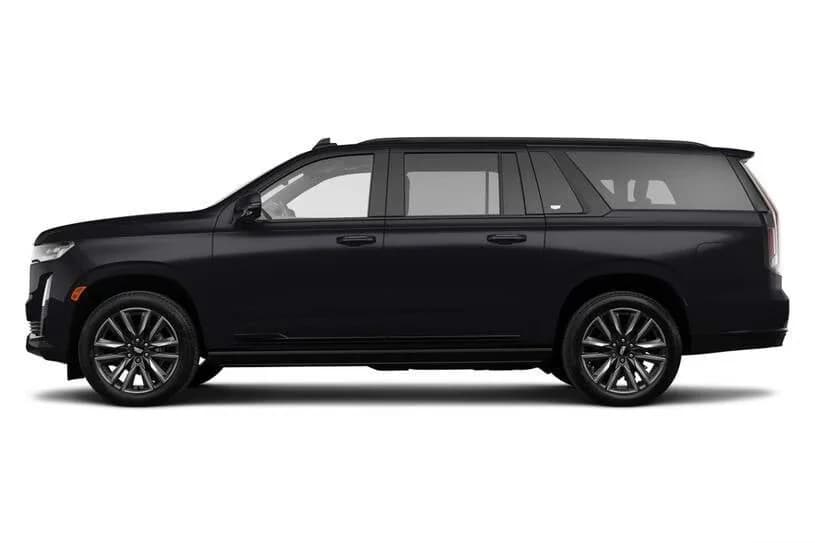
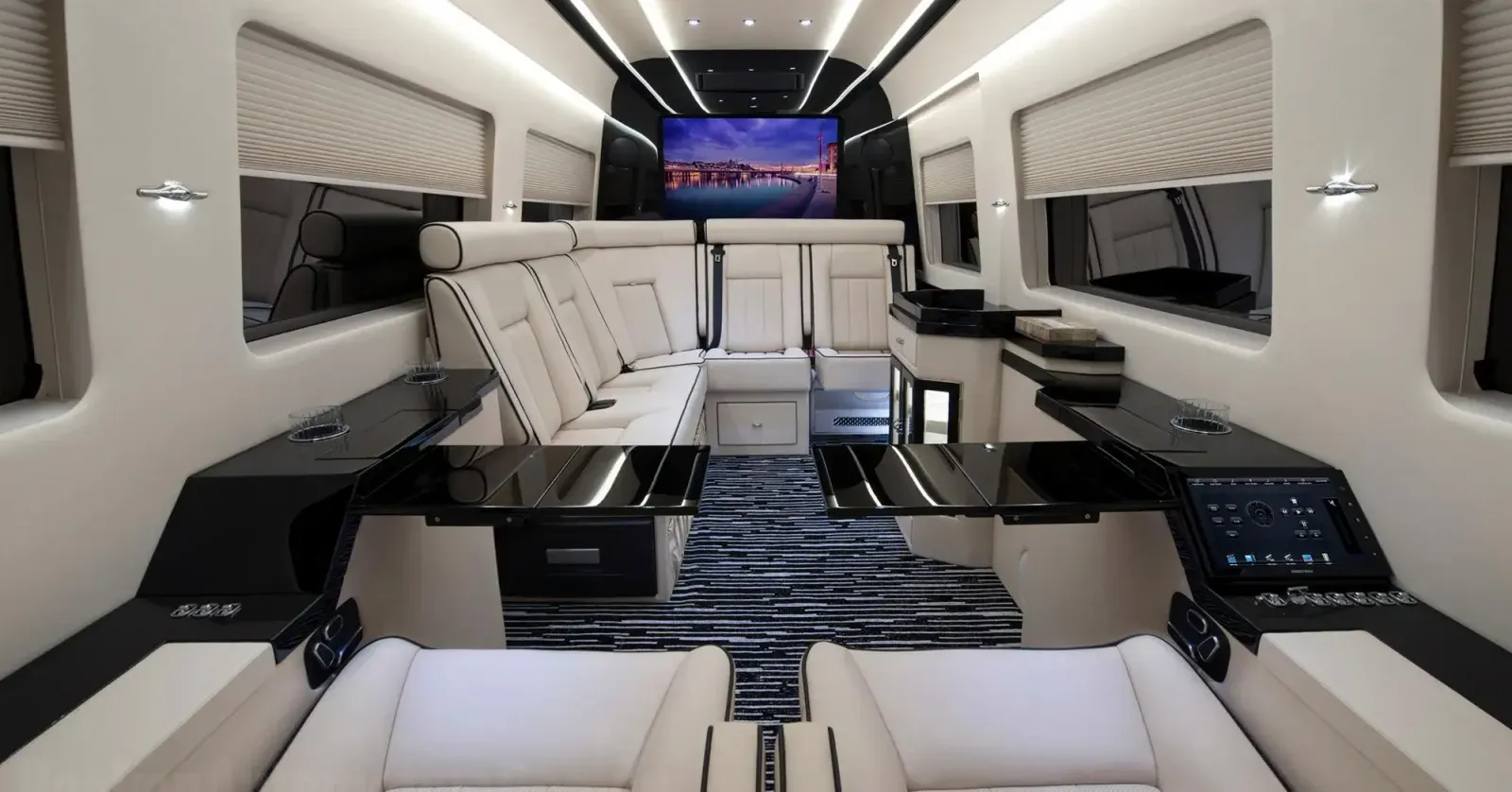
Sprinter at $165 per hour for fourteen, Escalade ESV at $135 for six, S90 at $110, with no rural surcharge and the closure calendars already filed. Per seat, the festival night out or the wedding wave costs less than the parking it replaces, math the group cost guide itemizes. The three-hour minimum applies to hourly bookings only; a one-way transfer is quoted flat, with the 20 percent service fee already inside both.
The standing town file
Battle Ground's dispatch file is a small civic archive by now: the parade footprint, the Event Center's loading doors, the mill road's width, which venues brief their couples honestly. Book any event through Battle Ground limo service and the file does half the planning before the first question.
Frequently Asked
Questions, Answered.
Is an airport shuttle cheaper than a taxi?
From Battle Ground the comparison is mostly academic: no scheduled shuttle serves the town, and residents report rideshare and taxi coverage thinning badly north of Vancouver, with fares of $40-plus each way when a car does come. The real choice is drive-and-park, a family favor, or a pre-arranged vehicle, and the group version of that math favors the shared private vehicle fast.
What is the cheapest ride to the airport?
For one Battle Ground traveler, honestly, your own car and the economy lot at $15 a day. The calculation flips with headcount: a fourteen-passenger Sprinter, quoted point-to-point at about $430 for the run, beats almost everything per seat. Cheapest depends entirely on how many of you there are.
How much tip do you give a shuttle driver?
A 20 percent service fee is already inside every Marquee rate, and gratuity is never added to the fare or receipt, so no separate tip is required on a Battle Ground group charter. Anything extra is optional and goes to the chauffeur directly. Check the confirmation first; ours states gratuity handling plainly so the organizer budgets it once.
Should I provide transportation for my guests to and from the wedding?
At a rural venue, the planning forums are unanimous: if rideshare cannot reliably reach the site, the hosts should. North county's barns and farms sit exactly in that category, venue owners themselves warn couples that app drivers will not come, so the guest shuttle stops being a luxury line and becomes the parking plan, the bar plan, and the goodnight plan in one.
Is there a bus from Battle Ground to the airport?
No direct service exists; the local transit trip runs well over two hours with multiple transfers by residents' own accounting, and the on-demand zone cannot leave city limits. For a town of this size that gap defines group travel: events, teams, and traveling families solve the airport with pre-arranged vehicles or not at all.
How much notice does a group shuttle for a Battle Ground wedding or festival weekend need?
Standard airport runs confirm on 24 to 48 hours' notice. Group Sprinter work needs about two weeks: Harvest Days weekends, Event Center dates, and wedding waves put fourteen seats against a finite Sprinter calendar. Peak-season Saturdays between May and September go 8 to 12 weeks out on the Sprinter fleet, and the Event Center books its halls up to a year ahead. Same-day requests reach dispatch at (503) 706-8662, subject to availability.
About the Author
Ilyas Khairi has run Marquee Chauffeur since 2018 under Portland Bureau of Transportation certification, carrying $1 million in commercial liability, Washington-side permits, and W-2 chauffeurs on payroll. The Battle Ground file in this guide is real and growing, parade footprints, venue quirks, gravel-road widths, because a town's event calendar deserves an operator who keeps its notes.
Verified Google Reviews
What Portland clients say about Marquee Chauffeur.
I spent six hours touring the Columbia River Gorge with the owner of this service, and I was really impressed with his professionalism, attentiveness, and local knowledge. As he says, they really are like a chauffeur/concierge, not just taking you from one place to another but providing a full experience. I look forward to riding with them again on my next trip.
Edris — has absolutely hands down have to be the best driver ever. I would absolutely recommend his service! He's so professional, so efficient. On time and so respectful!
These guys are terrific. Two thumbs up. Found them online and got excellent personal service. Used them to get from PDX to about two hours away …. And then back to PDX a few days later. On time. Super professional drivers. Vehicles in spectacular shape. Brand new. They will be out go to service. We recommend them highly.
Marquee Chauffeur holds a 5.0 rating across 198 Google reviews. Read every review on Google.
Reserve Your Chauffeur
Reserve a Portland
Chauffeur Now.
Put your event on the town file: (503) 706-8662, available 24/7. Festival-weekend pickups routed around the closures, wedding waves priced by the loop math, team send-offs with the vetting packet included, and every airport leg tracked through FlightAware with a 30-minute grace window (45 on international arrivals). Sprinter at $165 per hour, Escalade ESV at $135, S90 at $110, under Portland private-for-hire permitting since 2018 with $1 million in commercial liability. Hourly rates carry a three-hour minimum and include the 20 percent service fee; airport transfers are quoted flat point-to-point.