

Departure Day, Long-Haul Edition
West Linn Airport Drop Off The International Send-Off, Walked.
A fourteen-hour trip begins with a fourteen-minute ceremony at a kitchen table: passport open to the photo page, expiration date checked against a rule most travelers learn at the worst counter in the world. This guide walks international departure day end to end from West Linn, the document pre-check at home, the 50-pound scale moment and its $100 consequences, the three-hour question the forums argue in 700-comment threads, and the ten international nonstops PDX actually flies, so the biggest trips of the year start with their calmest hour.
By Ilyas KhairiFounder, Marquee ChauffeurLicensed and permitted since 2018
- Licensed & Permitted
- $1M Insured
- 5.0 / 198 Reviews
- W-2 Chauffeurs
- 35-Point Inspection
Last updated: September 23, 2026
By Ilyas Khairi, Founder of Marquee Chauffeur · Licensed and permitted since 2018 · Updated September 23, 2026
TL;DR
Check the passport when you book, some countries, especially in Europe, want six months of validity beyond your dates, and the airline counter enforces it. Weigh bags at home: 50 pounds is the standard line, and overweight tiers run $100 to $200. The three-hour guidance is just the airline clocks added up: check-in opens at 180 minutes, bags close at 60, gates at 45 and 15. PDX flies ten international nonstops including Amsterdam, London, and Frankfurt, and the send-off from West Linn books flat at about $155 in the S90.
The international arrival, customs and all, lives on the customs guide, the overnight domestic cousin on the red-eye guide, and the fine-print booking traps on the fine-print guide.
01 The Night Before
Documents On The Table,
Rules Checked At Home.
The international send-off begins twelve hours before the car does. The passport check comes first, and the rule that surprises people is destination-specific: the State Department's own checklist advises checking expiration as soon as you start planning, warns that some countries, especially in Europe, require your passport be valid at least six more months after your travel dates, and notes that children's passports run only five years. The airline counter is where the rule bites, carriers face penalties for boarding travelers a border will refuse, so the kitchen-table check is the cheap version of a check that will happen either way. Add the free extras while the documents are out: STEP enrollment, the State Department's twenty-minute emergency-contact registration, and the airline app's document pre-check where offered, some carriers now verify passports from home entirely.
Which document rules which leg
The security checkpoint accepts REAL ID-compliant licenses; the international trip does not, the passport governs the counter, the border, and everything abroad. Carry both, but plan around the passport, because it is the document with the expiration math and no same-day replacement.
Visas and the destination file
The same checklist session covers entry requirements: visas, electronic travel authorizations, and the destination's own validity rule, some regions run three months rather than six. Ten minutes on the State Department's country pages the day you book converts every counter surprise into old news.
The printing question, retired
The forums' perennial do-I-print worry misses the real event: most international itineraries involve a counter stop for document verification regardless, where agents print passes freely. Mobile passes work; paper backups cost nothing; and the passport in your hand is the only document the morning genuinely cannot proceed without.
The pocket ritual, upgraded
Our send-off errors guide teaches pockets-passport-phone at every curb; the international edition adds the folder: passport, printed itinerary, visa confirmations, one card kept separate. It rides the front seat pocket to the airport and transfers by hand, never packed, never in the trunk that drives away.
02 The Scale Moment
Fifty Pounds Is A Line
With A $100 Toll Behind It.
Every international counter stages the same small drama: the bag swings onto the scale and a number decides the next five minutes. The standard is 23 kilograms, 50 pounds, Air Canada's published maximum per bag alongside a 62-linear-inch size cap, and the tolls above the line are real: Alaska's current table charges $100 for a bag at 51 to 70 pounds and $200 from 71 to 100, atop the standard $45 first-bag fee, while Air Canada sends anything past 70 pounds to cargo outright and asks overweight-bag travelers to arrive 120 minutes early. The home scale is the whole defense: weigh, redistribute, and let the counter's scale confirm what your bathroom already knew. The terminal-floor repack, belongings spread across the tile while a line watches, is the scene this section exists to prevent.
The bathroom-scale method
Weigh yourself, weigh yourself holding the bag, subtract: accurate to a pound, free, and available the night before when fixes are easy. The travelers asking how to judge fifty pounds without a scale are asking the wrong question; the scale exists, it is just in the wrong room.
The redistribution game
Long-haul carry-on allowances are the overweight bag's escape valve: books, chargers, and dense shoes migrate to the cabin bag, and the checked bag ducks under the line. Pack with two pounds of headroom, gifts and souvenirs will spend it on the return, a fact every holiday traveler relearns annually.
The cargo cliff
Past seventy pounds some carriers stop selling exceptions and start refusing: Air Canada routes such bags to its cargo division entirely, a different building and a different day. The practical ceiling for a suitcase is lower than the fee table implies, and the ski-bag or instrument case deserves a call to the airline before departure week.
Where the bags ride to PDX
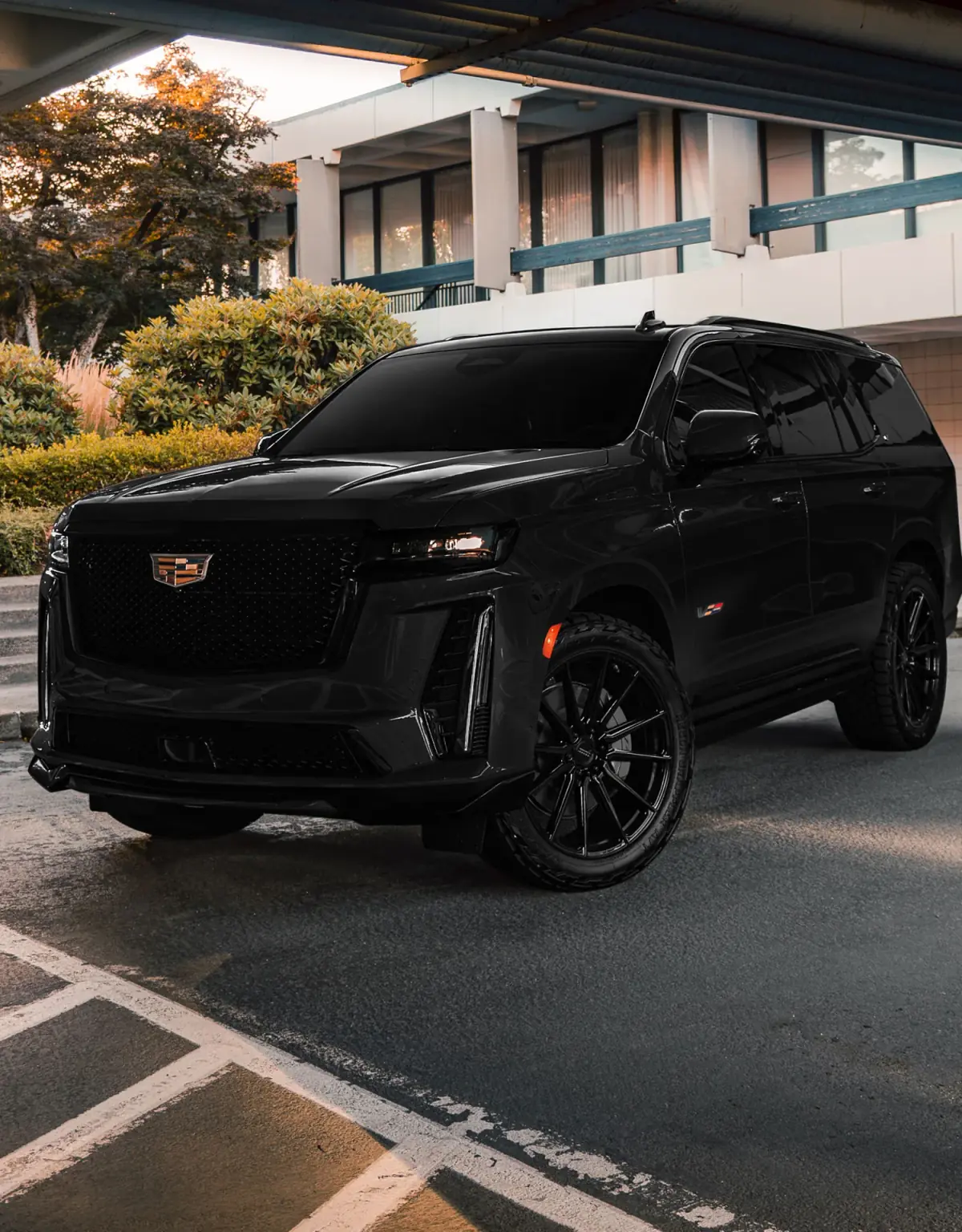
The send-off vehicle is part of the weight strategy: the Escalade ESV and Sprinter swallow the two-bags-per-traveler international load a sedan cannot, loaded in exit order at the house. The underground journey those bags are about to take is our bag-journey guide's whole story; the curb handoff is where you finish your part well.

03 The Three-Hour Question
The Forums Argue It.
The Airline Clocks Settle It.
The 700-comment debate about international timing dissolves the moment you add up the published clocks. Take Air Canada's international schedule, representative of the class: check-in and bag drop open 180 minutes before departure, bags close at 60 minutes with the counter's warning that once it closes no more bags are accepted, the boarding-gate deadline is 45 minutes, and the gate closes at 15 with reserved seats and reservations themselves forfeit past it. Industry color adds the detail seasoned flyers know: many international counters simply do not open until the three-hour mark, so arriving earlier buys a bench, not a head start. The arithmetic is now trivial: arrive when the counter opens, clear documents and the scale in the first half hour, and every downstream clock becomes generous. PDX's own guidance of three hours for international departures is not caution; it is addition.
The West Linn doorbell time falls out of the same math, drive included, computed backward: (503) 706-8662.
Why international runs earlier
The extra hour over domestic buys the document check, the heavier bag flow, and the airlines' own earlier cutoffs, 60-minute bag closures against the domestic 45s our punctuality guide catalogs. Nothing mystical inflates the guidance; international departures simply have more sequential gates to clear.
The 45-minute gate trap
The clock travelers forget is the gate deadline: international boarding often closes to late passengers 45 minutes out, a full half hour before the door. The traveler lingering in a duty-free line at T-minus-40 is already in forfeit territory while feeling perfectly early, which is exactly how the system takes its victims.
Checkpoint, not customs
A common outbound misconception: there is no U.S. exit customs to clear at PDX, just the ordinary security checkpoint; the passport theater happens at the airline counter and the destination's border. The three hours cover counters and screening, and whatever remains becomes the calmest coffee of the trip.
The two-hour gamble, priced
Arriving at two hours works until any single stage runs long, and international rebooking is not a shuttle to the next departure, the next seat to Amsterdam may be tomorrow's. The margin costs sixty minutes of terminal time; the miss costs a day of the trip. Long-haul stakes make the conservative answer the cheap one.

04 The Network
Ten International Nonstops,
And The Send-Off They Deserve.
The destinations this send-off serves are concrete: by the Port of Portland's route data, retrieved July 2026, PDX flies ten international nonstops, Amsterdam on KLM and London on British Airways year-round, Frankfurt on Condor and Reykjavik on Icelandair seasonally, Vancouver BC on both Air Canada and Alaska, Calgary on WestJet, and a Mexico set of Cancun, Los Cabos, and Puerto Vallarta on Alaska with Guadalajara on Volaris year-round, seasonal flags shifting with the schedule. Everything farther connects through the hubs, and the connection strategy inherits this guide's whole arithmetic at the transfer airport. The send-off craft scales with the stakes: the three-hour doorbell math from West Linn, the garage walk-in grade for the family seeing off a semester abroad, the folder in the seat pocket, and the return leg, customs and all, booked in the same call under the tracking watch and grace window our arrival guides describe. The inbound half of the trip pairs with the PDX meet-and-greet service for a named greeter at the carousel.
The Amsterdam-hour doorbell
The transatlantic departures cluster where long-haul departures always do, and the backward math from a three-hour target plus the West Linn drive sets doorbells earlier than instinct likes. The consolation is structural: the long-haul send-off is the one drop-off where nobody ever regrets the margin.
The connection alternative
Destinations beyond the ten route through Seattle, Denver, San Francisco, and the eastern hubs, and the honest planning note is that the connection airport's minimum times are part of your itinerary's risk budget. Our punctuality guide's cascade logic applies doubly to the trip whose second flight leaves the continent.
The semester send-off
Study-abroad departures are the international send-off's emotional maximum: the garage walk-in grade, the family at the checkpoint line, the Sprinter for the entourage. The college-calendar guide maps when these land; this guide is how they should feel, which is unhurried.
Both ends of the long haul
The round trip books in one conversation through West Linn town car service: the three-hour send-off out, and the arrival pickup home with the customs-aware timing our international arrival guide details, at about $155 in the S90, $215 in the Escalade ESV, $345 in the Sprinter, flat both directions.
Frequently Asked
Questions, Answered.
Do I really need to be 3 hours early for international flights?
The 700-comment forum debates land where the airline clocks do: international check-in typically opens 180 minutes out and often not before, bags close at 60 minutes, gate deadlines run 45, and the gate itself closes at 15 with your seat and reservation on the line. Three hours is not superstition; it is the sum of the published clocks plus a margin for the counter's document check. Arrive at two and you are spending your margin before anything has gone wrong.
What happens if checked luggage is over 50 lbs?
The scale moment gets expensive fast: on Alaska's current fee table, a bag at 51 to 70 pounds costs $100, and 71 to 100 pounds costs $200, on top of the standard checked-bag fee, while Air Canada routes anything over 70 pounds to cargo entirely. Airlines that accept overweight bags often want you there earlier for them, Air Canada's guidance says 120 minutes. The cheap fix weighs the bag at home; the expensive fix repacks it on the terminal floor.
How to tell if a suitcase is over 50 lbs without scale?
The bathroom-scale method beats guessing: weigh yourself, weigh yourself holding the bag, subtract. The one-arm lift test, if you cannot lift it comfortably with one hand it is probably past 50, is folklore with decent accuracy, but at $100 per overweight bag the folklore is underpriced insurance. Weigh at home, redistribute into a carry-on if needed, and the counter scale becomes a formality instead of a verdict.
What happens if I don't print my boarding pass?
For most international itineraries, nothing dire, because the counter visit was never optional anyway: many international trips require a document check at check-in, where agents verify your passport and any visas, and they can print passes on the spot. Mobile passes work at most airlines, though a paper backup costs nothing and survives a dead phone. What actually matters at the counter is the passport; the boarding pass is the easy part.
Can airlines enforce the six month passport rule?
Yes, and they are the ones who do: airlines face fines for boarding passengers a destination will refuse, so the check happens at the departure counter, not at a foreign border. The rule itself is destination-specific, the State Department's own phrasing is that some countries, especially in Europe, require six more months of validity, and some regions run three-month rules instead. Check your destination the day you book, because the counter checks it the day you fly.
When should an international send-off from West Linn be booked?
Book 24 to 48 hours ahead for a standard departure, and give peak dates, holiday weeks and summer Saturdays, a longer runway. The useful part happens at booking: dispatch computes the doorbell time backward from the three-hour target plus the West Linn drive, then puts it in writing. Same-day send-offs run through (503) 706-8662 when a plan collapses, and the customs-aware return leg books in the same call.
About the Author
Ilyas Khairi runs Marquee Chauffeur under Portland Bureau of Transportation certification held since 2018, with $1 million in commercial liability and W-2 chauffeurs on payroll. He has driven hundreds of transatlantic send-offs, asks about passport expiration at booking as a matter of policy, and considers the unhurried three-hour departure the closest thing ground transportation offers to a gift.
Verified Google Reviews
What Portland clients say about Marquee Chauffeur.
I spent six hours touring the Columbia River Gorge with the owner of this service, and I was really impressed with his professionalism, attentiveness, and local knowledge. As he says, they really are like a chauffeur/concierge, not just taking you from one place to another but providing a full experience. I look forward to riding with them again on my next trip.
Edris — has absolutely hands down have to be the best driver ever. I would absolutely recommend his service! He's so professional, so efficient. On time and so respectful!
These guys are terrific. Two thumbs up. Found them online and got excellent personal service. Used them to get from PDX to about two hours away …. And then back to PDX a few days later. On time. Super professional drivers. Vehicles in spectacular shape. Brand new. They will be out go to service. We recommend them highly.
Marquee Chauffeur holds a 5.0 rating across 198 Google reviews. Read every review on Google.
Reserve Your Chauffeur
Reserve a Portland
Chauffeur Now.
Start the fourteen-hour trip with its calmest hour: (503) 706-8662, available 24/7. International send-offs from West Linn at about $155 in the Volvo S90, $215 in the Escalade ESV, $345 in the Sprinter, flat-quoted with three-hour doorbell math, two-bag-per-traveler cargo space, the document-folder handoff, and the customs-aware return pickup bookable in the same call, under Portland private-for-hire permitting since 2018 with $1 million in commercial liability.