

Rail Meets Air, Nine Miles Apart
Portland Airport Transfers The Union Station Connection.
Portland's two great terminals have never been formally introduced. The train station downtown has run continuously since 1896 under its neon Go By Train sign; the airport sits nine miles northeast; and between them stretches a connection no institution owns, a two-line rail transfer with luggage, a fifty-dollar cab, or a pre-arranged car. Every week, travelers stitch trains to planes across that gap with real money on both tickets. This guide is the connection craft: the current schedules, the official buffers, and the math that protects both timetables at once.
By Ilyas KhairiFounder, Marquee ChauffeurLicensed and permitted since 2018
- Licensed & Permitted
- $1M Insured
- 5.0 / 198 Reviews
- W-2 Chauffeurs
- 35-Point Inspection
Last updated: September 23, 2026
By Ilyas Khairi, Founder of Marquee Chauffeur · Licensed and permitted since 2018 · Updated September 23, 2026
TL;DR
Union Station to PDX is nine miles, 20 to 40 minutes by road, with no scheduled shuttle between them. The Cascades runs five Seattle round trips daily, first out at 6:45 a.m., last in at 11:15 p.m., exactly the bookend hours when transit transfers turn hostile. Stack the official buffers honestly, 30 to 45 minutes for the train, two hours for the flight, and the connection day rewards one pre-arranged car holding both clocks.
The transfer-versus-hourly product logic lives on the booking products guide, the shared-shuttle landscape on the shuttle reality check, and every Portland option on the airport transportation guide.
01 The Two Terminals
An 1896 Landmark And An Airport,
Formally Unacquainted.
The rail half deserves its introduction: Portland Union Station has operated continuously since 1896, its 150-foot clock tower keeping Seth Thomas time, its blue-and-gold Go By Train neon burning since 1948, the whole building on the National Register since 1975 and owned by the city itself. Amtrak's station at 800 NW Sixth offers checked baggage, storage, and a Metropolitan Lounge. Nine miles northeast sits PDX, and the city's own tourism bureau, whose airport guide lists Marquee Chauffeur by name among its private car options, prices the road connection at 20 to 40 minutes and about $50 by taxi before tip. Nobody schedules the gap. Somebody has to.
Who makes this connection
Coastal travelers riding the Cascades to catch international flights, Seattle visitors ending Oregon trips by air, families splitting a vacation between rail romance and flight efficiency, and the forum's recurring case: someone landing at 4:40 p.m. praying to make a 5:50 train across rush hour. All of them are stitching institutions together by hand.
The transit transfer, honestly
The MAX connects the two, cheaply and indirectly: from the station area it takes one line to a mid-route transfer point, then the Red Line onward, a two-train journey with every bag you own. Light packers with slack time ride it happily. Connection days with real luggage and real stakes deserve better odds.
The car-seat gap
The liveliest recent thread on this route is a parent asking how to move a toddler between PDX and Union Station when apps offer no car seat. The pre-arranged answer is unglamorous and complete: tell dispatch the child's age at booking and the seat is installed before the vehicle rolls. Fifty comments of workarounds, one sentence of solution.
The heritage detour
The station rewards ten spare minutes: the neon, the tower, the great waiting hall, a restaurant older than most airlines. Connection transfers with slack get offered the pause, because delivering a traveler under the Go By Train sign with time to look up is one of this route's quiet pleasures.
02 The Rail Clock
The Cascades Schedule, And
The Buffers Amtrak Publishes.
The current Cascades schedule runs five daily Seattle round trips through Portland plus the Coast Starlight, with two trains continuing to Eugene and buses filling the rest. The bookends define the connection problem: the first northbound leaves at 6:45 a.m., the last southbound arrives at 11:15 p.m., both hours when the transit transfer is least pleasant and app availability least certain. Amtrak's own arrival guidance stacks the buffers: 30 minutes before departure, 45 with checked bags, a full hour for Vancouver BC trains, and the baggage rules themselves, two free carry-ons at fifty pounds, checked service at staffed stations, are gentler than airlines but not free of clocks.
The 6:45 problem
Catching the first train with checked bags means the station by six, which means leaving most of the metro before 5:30, before hotel breakfasts, before comfortable transit. It is structurally identical to the predawn flight this program has engineered for years, and it books the same way: assigned the night before.
The 11:15 problem
The last arrival empties a train of tired travelers into a station at the hour the two-line transfer stops being a reasonable ask and curbside options thin. A pre-booked car meeting the platform-side clock is the difference between a trip that ended in Seattle and one that ends at your door.
Rail's gentle on-ramp
First-time rail riders ask the forums whether trains have a TSA, and the happy answer is no: arrive thirty minutes out, board like a civilized person. The train is the easy half of any connection day, which is exactly why the planning effort belongs on the other half.
The lounge and the layover
Long gaps between train and flight have a civilized answer at each end: the station's Metropolitan Lounge sells day passes, and the airport's post-security amenities are their own reward. The transfer between them books to the schedule, not the panic, and the layover becomes the trip's quietest hours.
03 The Stacked Buffers
The Train-To-Plane Day,
Added Up Honestly.
Here is the arithmetic nobody assembles: a Seattle traveler connecting to a PDX flight stacks Amtrak's 45-minute checked-bag buffer, the roughly three-hour-and-five-minute run south, the nine-mile transfer, and the airport's two-hour domestic guidance, before adding a single minute of slack for the train running late, which trains do. Booked tightly, the day has five failure points and no institution watching more than one of them. The connection transfer's whole job is to be the institution: dispatch tracks the train's actual progress the way it tracks flights, the car meets the platform side at the real arrival, and the buffer between rail and air belongs to a professional instead of a prayer.
Connection day on the calendar? Read dispatch both tickets and get the whole day's timeline back: (503) 706-8662.
Track the train like a flight
Amtrak publishes live status the way airlines do, and a connection booking uses it: the pickup floats on the train's actual arrival, not its scheduled one, with the same logic our airport work applies through FlightAware. The traveler steps off the platform to a car that already knew.
The rush-hour verdict
The forum's 4:40 landing chasing a 5:50 train is the connection at its tightest, and the honest professional answer is that seventy minutes across rush hour is a gamble no vehicle can guarantee. What a pre-arranged car offers is the best version of the attempt plus a dispatcher already holding plan B, which is more than any app will bring to the platform.
Luggage, both rulebooks
A rail-air day answers to two baggage regimes, Amtrak's generous fifty-pound allowances and the airline's stricter ones, and the transfer is where the reckoning happens comfortably: bags counted once at the station curb, repacked in the cabin if the second rulebook demands it, no scale surprises at either counter.
Beyond the rails
The same connection craft serves the city's other handoffs: hotel-to-terminal transfers bracketing tour packages, event-venue pickups timed to red-eyes, the cruise-bound groups this program documents elsewhere. Wherever two schedules meet with luggage in between, the file is the same shape.
04 The Booking
How The Connection File
Actually Works.
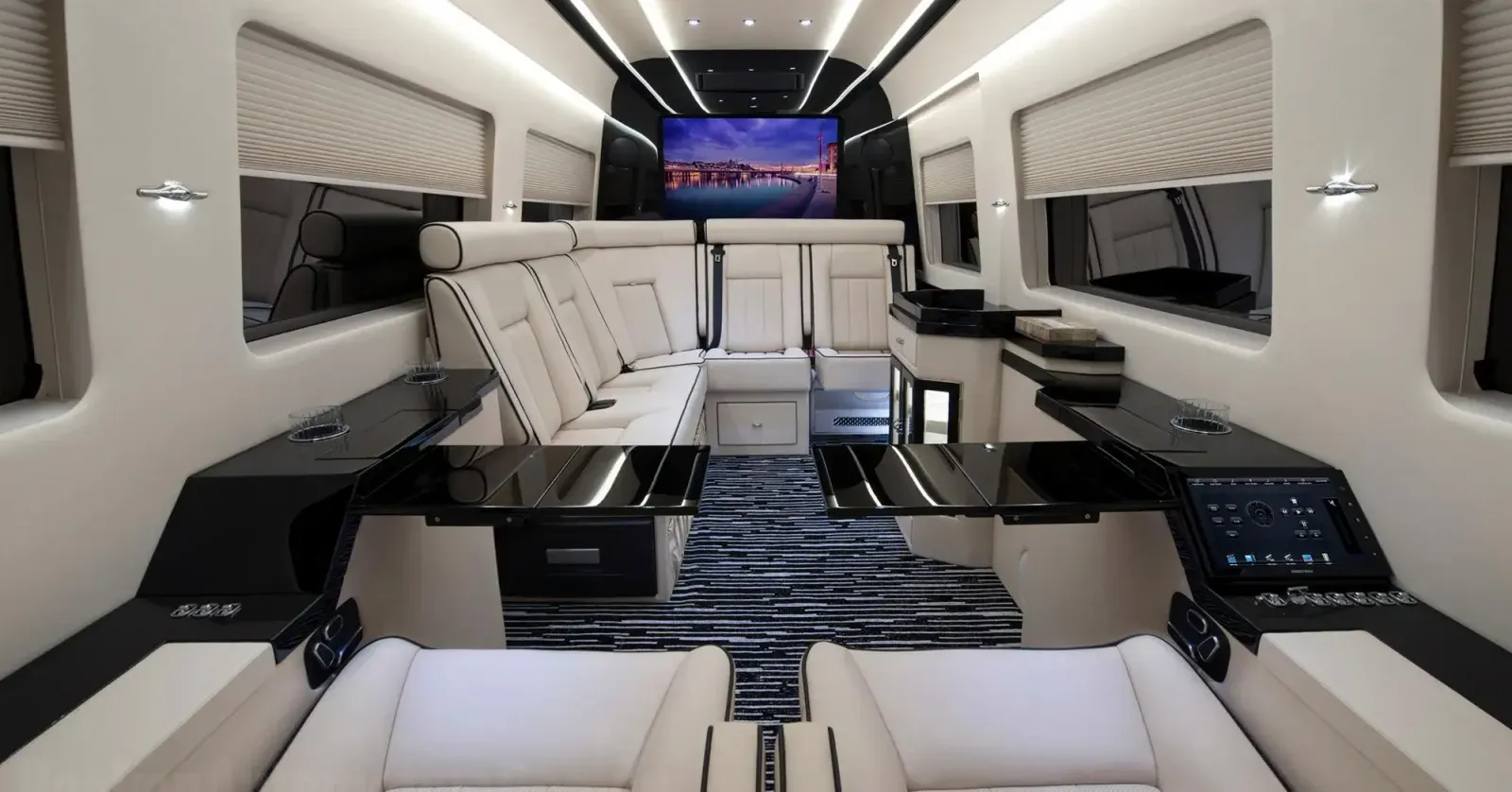
A connection booking opens with both tickets: train number and flight number on one file, dispatch tracking each against its own clock. The vehicle stages to the first arrival, platform side or carousel side, holds the crossing at a locked rate, S90 at $110 per hour, Escalade ESV at $135, Sprinter at $165 for the group version, and delivers to the second departure with its buffer intact. Car seats install with notice, luggage plans are stated at booking, and the 30-minute grace window (45 on international arrivals) covers the late train or the slow carousel the way it covers everything else. Two institutions, one accountable connection: that is the entire product, and Portland has needed it since 1896. The PDX airport shuttle for groups page covers the Sprinter tier for full crews.
One file, two timetables
The connection file's power is unified accountability: when the train slips twenty minutes, the pickup slips with it and the flight buffer recalculates, one dispatcher holding the whole chain. Split the legs across providers and the slip belongs to nobody, which is how connection horror stories start.
The group connection
Rail groups, families off the Coast Starlight, teams meeting a charter flight, ride the Sprinter version: fourteen seats, the luggage of a long journey, one platform meet. The group craft documented across this program transfers whole; only the meeting point moved indoors under a clock tower.
When transit is the answer
Light bag, loose schedule, daylight hours: ride the MAX with our blessing and keep the fare. The connection transfer earns its rate at the margins, the bookend hours, the luggage days, the tickets that cannot miss, exactly where every product on this site earns its place.
The listed operator
Travelers vetting options can note the city tourism bureau's own airport guide names Marquee among its private car services, third-party listing, not our claim, and the vetting guides on this site show how to verify any operator past a listing. Trust is checkable here; that is the point of the whole program.
Frequently Asked
Questions, Answered.
Is there a shuttle from Portland Union Station to PDX?
No scheduled shuttle links them; the choices are the MAX with a two-line transfer, a rideshare or taxi at roughly $50 before tip by the tourism bureau's own figure, or a pre-arranged car. The station-to-terminal run is about nine miles and 20 to 40 minutes by road, and the connection craft in this guide is about protecting both timetables at once.
How far is Union Station from PDX airport?
About nine miles by the official count, northeast across the river, typically 20 to 40 minutes by car depending on the hour. The distance is trivial; the timing is not, because a train schedule and a flight schedule meet in the middle with no institution responsible for the handoff except whoever you hire to make it.
Does Amtrak Cascades offer checked baggage?
Yes, at staffed stations including Portland, Seattle, Salem, Albany, and Eugene: two bags free and two more at $20 each, fifty pounds apiece, alongside two free carry-ons and a personal item. The operational catch is the clock, Cascades asks checked-bag passengers to arrive 45 minutes early, which belongs in any train-to-plane day's arithmetic.
How early should I arrive for the Amtrak Cascades?
Thirty minutes for carry-on travel by Amtrak's own guidance, 45 if checking bags, and a full hour for anything crossing to Vancouver BC, the schedule says so explicitly. Rail boarding is gentler than airport security, but the buffers are real, and they stack against flight buffers on a connection day.
So how does taking the Amtrak work?
Gently, compared to flying: no security theater, seats without a scrum, arrive half an hour early and walk aboard. First-timers on the forums ask exactly this question, and the honest answer is that the train is the easy half of any rail-air day; the connection between station and terminal is where the planning belongs.
How does the connection transfer price compare with a taxi?
The tourism bureau's own figure puts a station-to-airport taxi near $50 before tip. The chauffeured crossing books hourly instead: $110 for the Volvo S90, $135 for the Escalade ESV, $165 for the Sprinter, quoted before the train leaves Seattle, with the 20 percent service fee included and gratuity optional, never added. The difference buys a tracked train, a platform-side meet, and the 30-minute grace window (45 on international arrivals).
What notice does a Union Station connection booking need?
Twenty-four to 48 hours once both tickets exist, because the file opens with the train number and flight number together and dispatch tracks each against its own clock from then on. Summer Fridays and holiday weeks argue for booking earlier. A same-day connection still places through (503) 706-8662 when a vehicle is open, and the pickup floats on the train's actual arrival either way.
About the Author
Ilyas Khairi runs Marquee Chauffeur under Portland Bureau of Transportation certification held since 2018, with $1 million in commercial liability and W-2 chauffeurs on payroll. He considers the Go By Train sign the best-lit landmark on his dispatch map, and the nine unowned miles between it and the airport a product his company was built to own.
Verified Google Reviews
What Portland clients say about Marquee Chauffeur.
I spent six hours touring the Columbia River Gorge with the owner of this service, and I was really impressed with his professionalism, attentiveness, and local knowledge. As he says, they really are like a chauffeur/concierge, not just taking you from one place to another but providing a full experience. I look forward to riding with them again on my next trip.
Edris — has absolutely hands down have to be the best driver ever. I would absolutely recommend his service! He's so professional, so efficient. On time and so respectful!
These guys are terrific. Two thumbs up. Found them online and got excellent personal service. Used them to get from PDX to about two hours away …. And then back to PDX a few days later. On time. Super professional drivers. Vehicles in spectacular shape. Brand new. They will be out go to service. We recommend them highly.
Marquee Chauffeur holds a 5.0 rating across 198 Google reviews. Read every review on Google.
Reserve Your Chauffeur
Reserve a Portland
Chauffeur Now.
Put both tickets on one file: (503) 706-8662, available 24/7. Train tracked like a flight, flight tracked like always, the nine miles between them held at a locked rate with car seats installed on notice and the 30-minute grace window (45 on international arrivals) covering the late arrival. Volvo S90 at $110 per hour, Escalade ESV at $135, Sprinter at $165, under Portland private-for-hire permitting since 2018 with $1 million in commercial liability.