
Wedding Planning
Should You Book a Limo For Your Wedding?
A limousine on the wedding day is not automatically worth the spend. For some couples it solves real logistics problems and pays for itself in guest-coordination headaches avoided. For others it is a line item that eats into the catering budget without moving the day forward. This post walks through both sides honestly so you can run the math for your own guest count, venue layout, and wedding-party size before you put down a deposit.
Last updated: April 21, 2026
Bottom line: For a 50-plus guest wedding with multiple venues and a wedding party of 6 or more, a limousine pays off on per-head math against parking, rideshare surge, and designated-driver headaches. For a 20-guest single-venue ceremony, the family SUV plus a rideshare account usually wins. The decision hinges on guest count, venue spread, wedding-party size, and whether the reception runs past 10 p.m.
01The Case For
Logistics Coordination, Photo Backdrop,
And Wedding-Party Transport.
The argument for booking a chauffeured vehicle on your wedding day rests on three concrete benefits. Dedicated logistics coordination removes the scramble of who drives whom between ceremony and reception. The vehicle itself works as a photo backdrop during the couples shoot. And moving the full wedding party together keeps the timeline intact when one late rider would otherwise stall the processional.
These upsides are real, but they only matter if your day actually has the complexity that needs solving. A small guest list at a single address rarely generates enough coordination to justify the Sprinter. A 50-guest wedding with a winery ceremony and a downtown reception almost always does. You should weigh each of these three factors against your own day rather than against a generic wedding brochure.
Logistics coordination
A wedding day runs on a tight sequence of pickups, drops, and photo windows. The chauffeur holds the timeline when the getting-ready suite runs 20 minutes behind, when the first-look location shifts to a backup because of rain, and when the reception is 35 minutes from the ceremony site. Your day-of coordinator coordinates people. The driver coordinates the vehicle. Splitting those two roles removes the common failure mode where a bridesmaid drives the bride and then cannot find parking near the ceremony door.
Photo backdrop
A clean black Cadillac Escalade ESV or the Mercedes-Benz Sprinter produces a usable photo frame during the couples shoot. Photographers often stage a door shot, a wide arrival frame, and a detail shot of the bouquet on the hood. This is a genuine value add for the photography but only if your photographer actually plans to use it. Ask your photographer before booking. Some shoot almost entirely at the venue and never use the vehicle as a frame, in which case this benefit drops off your scorecard.
Wedding-party transport
Moving 8 to 14 wedding-party riders together in the Sprinter keeps the group on one timeline rather than five separate driveways. Nobody gets stuck in traffic alone. Nobody has to park and walk in heels. The officiant arrives with the bride rather than in a separate car that might get routed to the wrong lot. If your bridal party is 3 people and you all live in the same neighborhood, this benefit shrinks. If it is 10 people staying at different hotels, it is often the single strongest argument on the list.
02The Case Against
DIY Cost, Vehicle Size,
Parking, And Last-Leg Gaps.
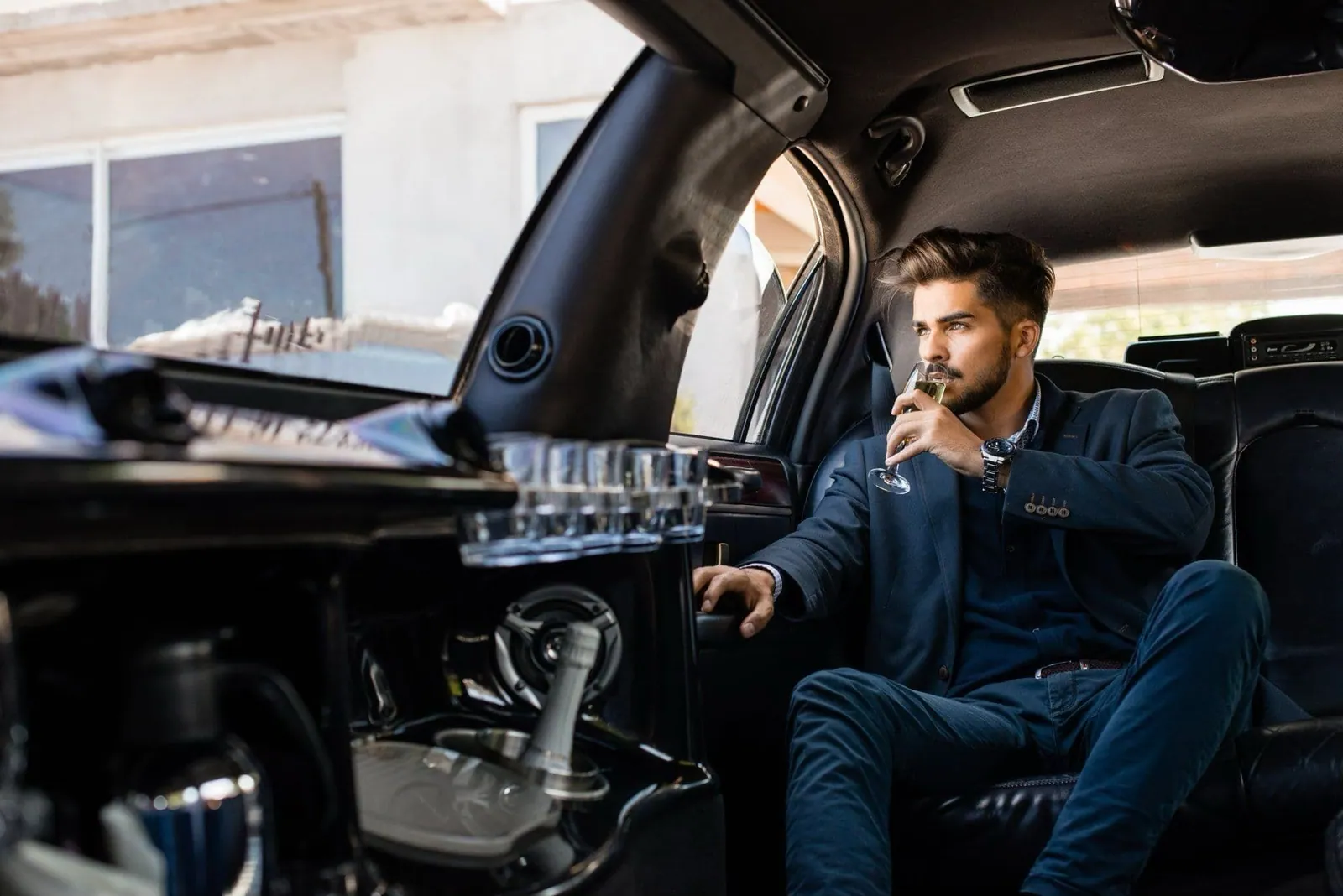
The honest case against a wedding limousine rests on four friction points that planners rarely name in a sales pitch. The hourly rate compared against a family SUV and a rideshare account sometimes loses the math. A Sprinter sized for 14 can feel hollow with 4 riders. Parking at some venues restricts vehicle length. And the final guest-dispersal leg of the night, when the newlyweds head to the hotel, is not always what a standard block covers.
These cons do not mean you should never book a limo. They mean the decision is conditional rather than automatic. Reading through the four points below should help you see which ones apply to your wedding and which are non-issues. If three out of four hit, the answer is probably no. If one hits and the others do not, the case is still open.
Cost vs DIY transport
Run the numbers before you book. A 5-hour Sprinter block at $280 per hour lands at $1,400 plus gratuity. Compare that against a family SUV driven by a sober friend, three rideshare credits at surge rate, and a parking validation at the reception venue. For a small wedding the DIY path can land under $300 all in. For a large wedding the rideshare path often exceeds the Sprinter total once surge pricing kicks in on a Saturday evening. The answer is not universal. It depends on your actual day.
Vehicle size for small parties
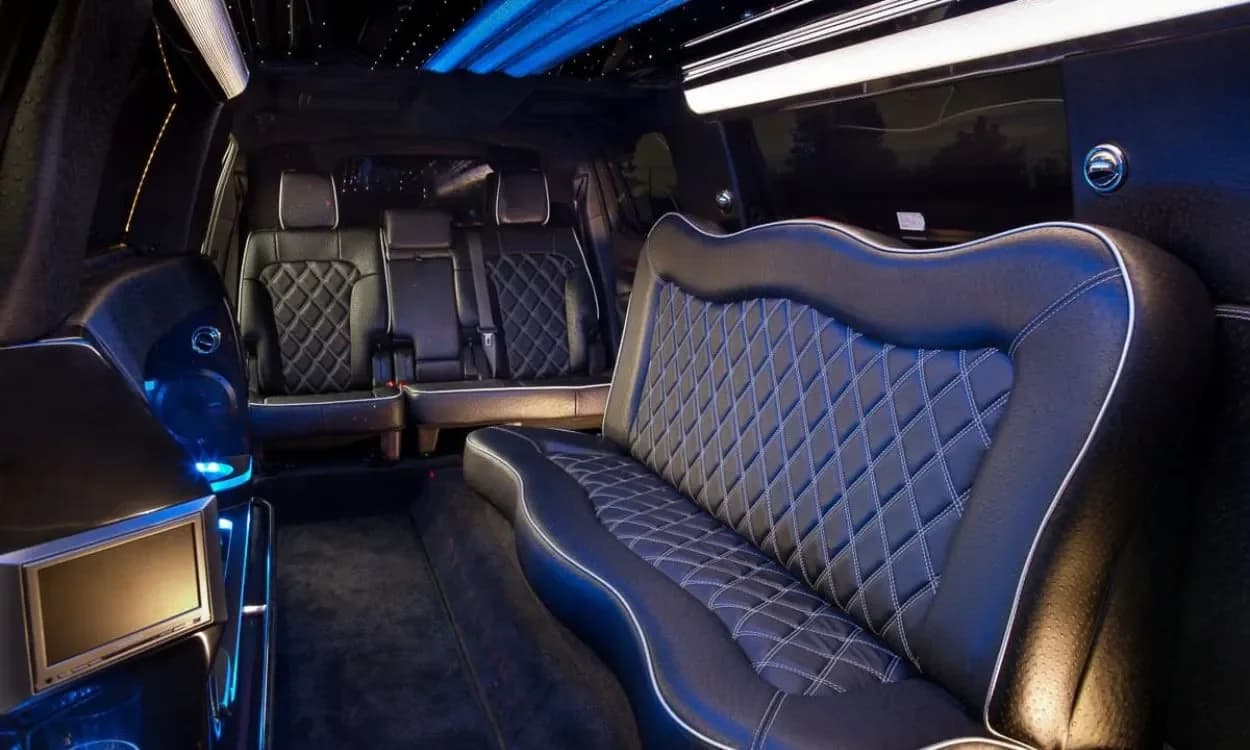
The Mercedes-Benz Sprinter seats 14 and feels right with 10 or more riders. With 4 riders it can feel empty, and the photos read differently than a compact vehicle would. The Cadillac Escalade ESV at 6 passengers is a better fit for a couple plus parents or a couple plus a small bridal-party group. Couples sometimes book the Sprinter because the brochure showed the Sprinter, then ride with 5 people and wonder why it looks vacant. Pick the vehicle that matches your rider count rather than the one with the biggest interior.
Parking at the venue
Some venues have tight loading lanes, low overhead clearance, or neighborhood parking restrictions that matter for a Sprinter. A downtown Portland hotel with a covered porte-cochere usually fits the Escalade but may clear the Sprinter only at specific door approaches. A wine-country estate with a gravel drive and a narrow gate can block a stretched limousine entirely. Confirm the venue's vehicle access specs before you commit to a size. Dispatch can swap the vehicle if the physical site needs something smaller.
Last-leg availability
The standard wedding block usually covers pickups through the reception arrival. What it may not cover is the late-night run from the reception venue to the couple's hotel at 11:30 p.m. Some couples assume the limo waits all night for this final leg and are surprised when the booking ended at 7 p.m. Decide up front whether you want the vehicle held through the last-guest-out window or whether a rideshare to the hotel suffices. Extending the block is available but should be on the quote, not a surprise line item.
03When It's Worth It
Guest Count, Multi-Venue Days,
Large Parties, Heavy Logistics.
Four conditions move the needle from optional to almost certainly worth booking. A guest count over 50 pushes the odds of coordination problems high enough that a dedicated vehicle earns its keep. A multi-venue day with ceremony at one address and reception at another adds a logistics layer that a driver simplifies. A wedding party of more than 6 riders exceeds what most family SUVs can carry. And a logistics-heavy day with photo stops, parent pickups, and officiant coordination gains more from a chauffeur than a smaller day would.
More than 50 guests
A guest list over 50 usually pulls in grandparents, out-of-town family staying at hotels, and bridal-party members with mismatched arrival times. The parent pickup alone can eat an hour across two hotels. The Escalade ESV at $150 per hour handles the parent-and-grandparent transport cleanly, and the Sprinter covers the bridal party in parallel. Below 50 guests the coordination load is usually small enough for family cars and rideshare. Above 50 the odds tip toward a dedicated vehicle for at least one leg of the day.
Multiple venues
Separate ceremony and reception addresses add a transfer leg in the middle of the day. A winery ceremony in Newberg with a Portland reception adds 45 minutes of drive time plus photo stops. The chauffeur handles the route, the timing, and the guest-vehicle staging so the bridal party is not leading a 30-car procession through unfamiliar rural roads. A single-site wedding where the ceremony and reception happen at the same venue rarely needs this solve. A two-site day almost always benefits from it.
More than 6 wedding-party riders
The Escalade ESV caps at 6 passengers. Above that number, you either book the Sprinter for 14 or split the bridal party across two vehicles. Splitting means half the party arrives earlier than the other, which breaks the group photo window and stresses the timeline. The Sprinter at $280 per hour for 14 riders often works out to a lower per-head number than two Escalades booked in parallel. If your bridal party is 7 to 14 people, the Sprinter is usually the cleaner answer.
Logistics-heavy day
Some wedding days carry more logistics than others. A first-look session at a park, a ceremony at a church, a family photo stop at a landmark, and a reception at a fourth address is a four-stop day that benefits from a chauffeur who knows the Portland traffic pattern and the parking at each stop. A single-venue afternoon with no first-look and a walkable reception is a one-stop day that rarely needs one. Count the stops before you price the vehicle.
04How to Decide
Count Vehicles, Cross-Check Pricing,
Check Licensing, Lock The Deposit.
Once you have weighed the pros and cons, the decision process runs through four practical checks. Count how many vehicles the day actually needs based on rider distribution. Cross-check the quoted pricing against the hourly math rather than the flat-rate package. Verify the operator's insurance and licensing so a cancellation on the day is not a legal exposure. And understand the deposit window so your money is held responsibly through the booking lead time.
Count vehicles needed
Map out your day before you price anything. Who rides with whom? Where does each group start and end? Parents from a downtown hotel, bridal party from the getting-ready suite, and out-of-town grandparents from a different hotel may need separate vehicles running separate routes. A couples-only booking might use a single Escalade. A full-party booking might use a Sprinter plus an Escalade. The right starting point is the rider map, not the vehicle catalog.
Cross-check pricing
Hourly pricing is transparent. The Volvo S90 at $138 per hour, the Escalade ESV at $150 per hour, and the Sprinter at $280 per hour each run on a two-hour minimum. A flat wedding package that bundles 5 hours should land near the hourly math, not far above it. If a competing quote is significantly cheaper than the hourly rate, ask what is excluded. Fuel surcharges, gratuity, and overtime rates often hide in the fine print and surface on the final invoice after the wedding is over.
Check insurance and licensing
Oregon Public Utility Commission licensing separates a legitimate for-hire passenger carrier from a gig-app driver using a personal car. Marquee Chauffeur has held PUC licensing since 2018 with continuous renewal and $1 million in commercial liability coverage on every vehicle. Ask the operator for the PUC certificate and the certificate of insurance before signing a contract. A wedding-day cancellation from an unlicensed operator leaves you with no recourse on a Saturday afternoon.
Deposit and booking window
A standard deposit holds the specific vehicle and vetted chauffeur on your wedding date. Summer Saturdays between May and October book 4 to 8 weeks out for the Sprinter and the Escalade. Winter weekends are shorter at 2 to 4 weeks. The balance settles after the wedding once the actual hours are tallied against the quote. A reputable operator will not demand full payment months in advance. Dispatch at (503) 706-8662 handles the booking call and emails the written confirmation within 10 minutes.
Frequently Asked
Questions, Answered.
Reserve Your Chauffeur
Reserve a Portland Chauffeur Now.
Ready to run the numbers for your wedding? Call Marquee Chauffeur at (503) 706-8662 for a straight answer on whether the Sprinter, Escalade ESV, or a small Volvo S90 block actually fits your guest count and venue layout. vetted chauffeurs, Oregon PUC licensing since 2018, $1 million liability, and hourly pricing without surprise line items on the final invoice after the wedding.