

Gorge Day Trip
Oneonta Gorge Chauffeured From Portland.
Oneonta Gorge is a basalt slot canyon at Exit 35 on I-84, tucked between Multnomah Falls a half-mile west and Horsetail Falls a quarter-mile east. A log-jam blocks the canyon mouth at creek level, and Lower Oneonta Falls drops 100 feet into a green pool at the head of the slot. Two routes lead to the same waterfall: the famous wading hike upstream through the canyon, and the dry-shoe Lower Oneonta Falls trail off the Historic Columbia River Highway. Access has run on year-by-year Forest Service status since the 2017 Eagle Creek Fire, so every booking opens with a morning advisory check on the dispatch side. Marquee Chauffeur covers the operational layer a self-drive rental leaves to you. That means the morning Forest Service and ODOT TripCheck read, the half-day or full-day pairing with Multnomah Falls, Vista House, and Crown Point, the dry-change cargo for the wading return, and weather routing across the Gorge corridor.
By Ilyas KhairiFounder, Marquee ChauffeurLicensed and permitted since 2018
- Licensed & Permitted
- $1M Insured
- 5.0 / 198 Reviews
- W-2 Chauffeurs
- 35-Point Inspection
Last updated: September 14, 2026
By Ilyas Khairi, Founder of Marquee Chauffeur · Licensed and permitted since 2018 · Updated September 14, 2026
TL;DR
Oneonta Gorge is a slot canyon at Exit 35 on I-84 between Multnomah Falls and Horsetail Falls. The summer-only wading hike through the slot depends on Forest Service status checked that morning, while the Lower Oneonta Falls trail above the canyon is the dry-shoe option that holds open more consistently. The half-day Gorge trip fits a four-hour booking at $440 on the Volvo S90 or $540 on the Cadillac Escalade ESV. The full-day loop pairs Oneonta with Multnomah Falls, Horsetail Falls, Vista House, and the Crown Point overlook inside a 6-to-8-hour booking.
Planning the wider route? See the Columbia Gorge Multnomah Falls private tour or our PDX airport car service for inbound visitors.
01 The Place
What Oneonta Gorge Actually Is,
And Where It Sits On The Map.
Oneonta Creek cut this basalt slot canyon over millions of years on the Oregon side of the Columbia River Gorge. The canyon sits at Exit 35 on I-84, about 35 miles east of downtown Portland, with Multnomah Falls a half-mile west and Horsetail Falls a quarter-mile east. Where the Historic Columbia River Highway crosses the canyon mouth, you reach the 1914 Oneonta Tunnel, which ODOT reopened in 2009 after restoration. About a mile up at the head of the slot, Lower Oneonta Falls drops 100 feet into a green pool framed by basalt walls and old-growth Douglas fir.
The wading hike that put Oneonta on every Pacific Northwest hike list works upstream through the canyon itself. A log-jam blocks the canyon mouth at creek level, so hikers scramble over the wet logs, drop into the creek, and wade upstream through chest-deep pools to the base of the falls. If that is not your appetite, the Lower Oneonta Falls trail off the Historic Columbia River Highway is the dry-shoe alternative: a graded path that climbs above the canyon to a viewpoint with no water entry. The chauffeur drops at the same Exit 35 pull-out for either route. For the broader Gorge pattern, see Columbia Gorge Multnomah Falls private tour.
Exit 35 on I-84, 35 miles east
A downtown Portland hotel to the Exit 35 pull-out runs 40 to 50 minutes one-way on I-84 east. The chauffeur clears downtown through the I-405 to I-84 transition, then drops to 55 mph inside the National Scenic Area. At the ramp the exit feeds straight onto the Historic Columbia River Highway. Returning the same direction through Exit 22 west keeps the trip clean of the Cascade Locks turn-around.
Wedged between Multnomah and Horsetail
Along the Historic Columbia River Highway, Oneonta sits a half-mile east of Multnomah Falls and a quarter-mile west of Horsetail Falls. The half-day chauffeur loop folds both into the same booking inside an extra 20 minutes of driving. For fuller itineraries, the Bridal Veil Falls trailhead a few miles further west adds a third short hike.
The 1914 Oneonta Tunnel
The tunnel at the canyon mouth is a surviving piece of the original Historic Columbia River Highway, the first scenic highway in the United States. ODOT closed it in 1948 when I-84 opened the modern east-west route, then reopened it in 2009 as a pedestrian and bicycle pass-through. A short walk from the trailhead, it works well as a quick photography stop. Highway info at oregon.gov/odot/tripcheck.
Lower Oneonta Falls at the head
A 100-foot single-plunge fall pours into a green pool framed by basalt and old-growth Douglas fir. The wading hike ends at the base of the fall, while the trail route ends at a viewpoint above. Flow runs heaviest in spring snowmelt through May, then settles to a steadier pace during the summer wading season. A wide-angle lens fits the full plunge and the canyon walls into one frame.
02 Access Status
The Forest Service Question
Every Gorge Booking Starts With.
Across six weeks in September, the 2017 Eagle Creek Fire burned 50,000 acres on the Oregon side of the Gorge and reshaped the access map for every trail east of Multnomah Falls. Oneonta Gorge sat inside the closure perimeter, then reopened on a partial schedule from 2018 forward while the Forest Service worked through the log-jam stability question and the post-fire trail rebuild. The wading entry has held tighter year-to-year status than the trail above. Some summers the slot opens for the wading window. Other summers the safety review keeps the slot closed while the trail above runs open. Rather than trusting last season's window, Marquee dispatch checks the official status on the morning of every booked Gorge trip.
That morning advisory check pulls three sources. The Columbia River Gorge National Scenic Area access page at fs.usda.gov/columbia controls trail and slot canyon access. The ODOT TripCheck advisory for Exit 35 and the Historic Columbia River Highway at oregon.gov/odot/tripcheck controls the highway corridor. If the slot shows closed on the booking morning, the chauffeur reroutes to the Lower Oneonta Falls trail or the Multnomah Falls and Vista House loop without resetting the trip shape, and the held-vehicle hourly rate covers the change at no extra charge.
The Eagle Creek Fire legacy
The Eagle Creek Fire ignited September 2, 2017 from a fireworks cause and burned 50,000 acres of the Oregon Gorge before containment, shutting every trail east of Multnomah Falls. Most reopened in stages between 2018 and 2022. Oneonta sat in the slower tier because the slot canyon walls and the log-jam fall under a separate review from the dry trails above. Of all the post-fire reopenings, the wading entry has held the tightest year-to-year status.
Morning advisory check
Status shifts between booking and trip date, especially across spring snowmelt and after Pacific storm fronts. So dispatch runs the advisory check on the morning of every Gorge trip, not at booking. Forest Service controls trail and slot access; ODOT TripCheck controls the highway corridor. The rider hears the morning status at the hotel curb with a route adjustment already drafted, instead of finding a closure note at the trailhead.
Reroute when the slot is closed
When the slot shows closed, the chauffeur reroutes on the held-vehicle rate. The closest fallback is the Lower Oneonta Falls trail above the canyon. Next comes the Multnomah Falls and Vista House loop, which holds open through almost every advisory. A further fallback carries the trip across the Bridge of the Gods to Skamania Lodge for a Washington-side day. Each option keeps the rider's day intact.
Permit and pass requirements
The National Scenic Area requires a Northwest Forest Pass at most trailheads east of Multnomah Falls. A day pass runs $5, an annual $30, and Marquee chauffeurs carry the annual on the windshield for every Gorge trip. Some seasons add a Multnomah Falls timed-entry permit between Memorial Day and Labor Day on weekends and holidays. For any Multnomah Falls Lodge stop, dispatch pulls that in advance.
03 The Two Routes
Wading Hike Through The Slot,
Or Lower Falls Trail Above.
The booking splits into two shapes based on the rider's appetite for the wading entry. The wading hike works upstream through the canyon: about a one-mile round trip through chest-deep pools, with dry-change cargo waiting at the trailhead. The Lower Oneonta Falls trail takes a graded path above to a viewpoint on standard hiking shoes, no water at all. Both routes end at the same fall from opposite sides.
The wading hike fits confident adults and older teens. The trail above fits families with kids, guests with mobility limits inside the standard hiking range, and anyone outside the summer wading window. Because the same vehicle covers both routes, the rider can switch at the trailhead on the morning weather read. The chauffeur stages dry clothes and towels in the Escalade or Sprinter cargo for the wading return.
The wading hike through the slot
The first obstacle is the log-jam at the canyon mouth, a 10-to-15-foot pile of wet timber against the basalt walls that takes both hands and a careful foot read. Past the jam, the hiker drops into Oneonta Creek and wades upstream through pools that sit waist to chest depth. Figure about one mile round trip, 1.5 to 2 hours with a photography stop at the falls. Summer-only.
The Lower Oneonta Falls trail
The trail leaves the same Exit 35 pull-out and climbs above the canyon, about 0.6 miles each way at a moderate grade through switchbacks lined with Douglas fir and bigleaf maple. The viewpoint sits at a level overlook with a clear sight line to the 100-foot plunge below. Standard hiking shoes do the job. It is the better choice when a guest wants the fall without the wading commitment.
Photography from the two routes
From the wading route, the camera sits at water level at the base of the fall framed by basalt walls, so a wide-angle 16-to-24mm and a dry bag earn their place. From the trail viewpoint, the camera looks down on the fall with the canyon profile in the foreground, which suits a standard 24-to-70mm and needs no dry bag.
Switching routes on the morning
Some bookings start the morning planning the wading route, then switch to the trail above on a weather or water-level read at the trailhead. The chauffeur folds that switch into the held-vehicle rate without resetting the booking. The dry-change cargo stays in place, and the wading attempt holds for a return visit.

04 Half-Day vs Full-Day
The Trip Shape,
And The Pairing With The Loop.
The Oneonta booking takes two standard shapes. The half-day pairs Oneonta with one or two adjacent waterfalls inside a 4-to-5-hour window, which fits a four-hour booking on the Volvo S90 at $440 or the Cadillac Escalade ESV at $540. The full-day loop adds the Multnomah Falls Lodge stop, the Horsetail Falls roadside view, the Vista House overlook on Crown Point, and a lunch or pre-departure stop on the I-84 return through Hood River. That full-day shape lands in a 6-to-8-hour booking on the held-vehicle hourly rate, so the rider sees the full Gorge in one day instead of stretching it into a return trip.
First-time visitors usually take the full-day shape, since the waterfalls cluster along the historic highway and make the loop efficient. Repeat visitors who already know Multnomah Falls often book the half-day Oneonta-only trip to focus on the slot canyon or the Lower Falls trail without the broader loop. Group bookings of 8 or more on the Sprinter tend toward the full-day shape too, because the larger vehicle's pull-out logistics work better at the staffed Multnomah Falls parking and the Vista House loop than at the smaller Oneonta trailhead pull-out. For the airport inbound protocol that opens most visitor weeks, see PDX airport car service.
Half-day Gorge trip (4-5 hours)
The half-day shape leaves the hotel at 9 AM, runs the 40-to-50-minute drive to Exit 35, holds 1.5 to 2 hours at Oneonta on either route, pairs Multnomah or Horsetail for a 30-minute second stop, and returns by 1 to 2 PM. Price it from the Volvo S90 $330 minimum or the Escalade ESV $405 minimum. It suits guests who want Oneonta without the broader loop, along with repeat visitors.
Full-day Gorge loop (6-8 hours)
The full-day shape opens at Multnomah Falls Lodge with the lower viewing platform and an optional Benson Bridge climb, drops to Oneonta, lunches at the Lodge or a Hood River pull-out, takes the afternoon at Vista House on Crown Point with the Latourell Falls roadside view, and returns by 4 to 6 PM. At 8 hours the booking runs $1,080 on the Escalade or $1,320 on the Sprinter.
Pairing with Multnomah Falls
Multnomah sits a half-mile west of Oneonta and is the most-visited waterfall in Oregon. At 620 feet, the two-tier fall is the second-tallest year-round waterfall in the United States. The Lodge dining room is the standard mid-trip lunch stop, and the Benson Bridge across the lower fall is the classic photography spot. Memorial Day through Labor Day weekends require a timed-entry permit, which dispatch pulls in advance.
Pairing with Vista House on Crown Point
Vista House is a 1918 stone-and-tile observatory perched 733 feet above the Columbia River with a 30-mile sight line east, and the upper observation deck delivers the postcard view. Sitting at Exit 22 off I-84, it makes the standard last stop on the return loop with afternoon light across the river basin. Plan on 30 to 45 minutes including the upper deck climb.

05 The Manifest
Vehicle Picks For Gorge Mileage,
And The Dry-Change Cargo.
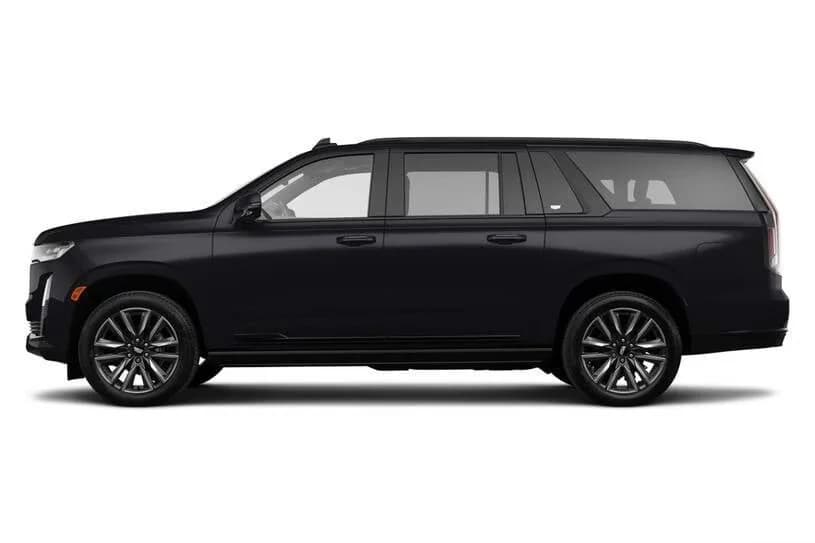
Three vehicle profiles cover Gorge bookings. The Volvo S90 at $110 per hour fits one or two riders. The Cadillac Escalade ESV at $135 per hour holds a family of four on captain seats and is the standard first-time-visitor pick. The Mercedes-Benz Sprinter at $165 per hour seats 8 to 14 for multi-family trips and inbound visitor groups.
The dry-change cargo is the real operational difference from a self-drive rental. The wading hike returns the rider in wet shoes, soaked pants, and often a damp upper layer, so the chauffeur pre-stages towels, the dry-change bag, and a tarp on the cargo floor for the wet items. Both the Escalade and the Sprinter have the cargo geometry to absorb that. When the rider flags the wading route, the pre-staging is built into the booking.
| Vehicle | Hourly | Typical booking | Best for |
|---|---|---|---|
| Volvo S90 | $110 / hr | $440 half-day (4 hr) | Couple or 2-3 |
| Cadillac Escalade ESV | $135 / hr | $540 half-day, $1,080 full-day | Family of 4-6 |
| Passenger Sprinter | $165 / hr | $660 half-day, $1,320 full-day | Group of 8-14 |
The 20 percent service fee is already included. Held-vehicle rate covers the wait. Marquee holds Portland private-for-hire permitting (since 2018) and $1 million commercial liability.
Volvo S90 ($110 per hour)
Fits one or two riders. The trunk holds a single dry-change bag and a pair of wet shoes on a tarp. The three-hour Gorge minimum at $330 sets the floor for the half-day shape, with trailhead wait inside the rate. Its lower stance reads quieter through the historic highway curves, which some couples prefer for the slower Gorge cruise. For broader town-car bookings, see Portland town car service.
Cadillac Escalade ESV ($135 per hour)
The standard Gorge day-trip vehicle for families and small groups. A four-hour block at $540 covers the half-day shape, and 8 hours at $1,080 covers the full-day loop. Cargo absorbs dry-change bags, water, jackets, snacks, and the wet-shoes tarp, while second-row captain seats fit a family of four with shoulder room. Multi-day visits hold the same Escalade for chauffeur and route continuity.
Mercedes-Benz Sprinter ($165 per hour)
A 14-passenger van with forward-facing bench seating for multi-family bookings and inbound visitor groups. A four-hour block runs $660 and 8 hours runs $1,320. Cargo absorbs dry-change bags for 8 to 14 riders without crowding. Pull-out logistics work better at staffed Multnomah Falls parking and the Vista House loop than at the smaller Oneonta pull-out, which shapes the route order on group bookings.
The held-vehicle hourly rate
All three vehicles run the held-vehicle rate on Gorge bookings, so the chauffeur stays at the trailhead during the hike instead of dropping and returning. Mobile coverage runs patchy through Eagle Creek and Oneonta, which makes the dispatch-cue model used in town unreliable here. When the rider walks out, the chauffeur, the cargo, and the post-hike towels are already waiting at the trailhead.
06 Weather and Season
Pacific Storms, Gorge Wind,
And The Summer Wading Window.
The Gorge works as a wind tunnel between Pacific marine air on the west and the high-desert plateau on the east, so weather inside often diverges from downtown Portland by 15 to 20 degrees and 30 mph of wind. The chauffeur reads the Gorge forecast separately from the metro forecast, then adjusts the morning departure, route order, and layer recommendation before pickup. The wading window depends as much on canyon air temperature as on water level.
Wading season runs late June through early September, peaking in July and August. Outside that window the water and canyon air sit too cold for the trip. The Lower Falls trail and the Multnomah-Vista House loop hold open year-round whenever the highway is open. Spring snowmelt through May puts the falls at maximum flow and closes the wading entry, and fall foliage through October is the photographer's preferred shoulder-season window.
Summer wading window (June-September)
The wading window opens in late June when snowmelt drops the water level, then closes in early September when canyon shade chills the water back into uncomfortable territory. July and August are peak. Saturday and Sunday peak-season bookings tighten Sprinter availability against the wedding and excursion calendar, so larger groups should land about two weeks ahead. Weekday lead time runs 1 to 2 weeks.
Spring snowmelt (March-May)
Spring snowmelt puts every Gorge waterfall at maximum flow, with Multnomah, Wahkeena, Horsetail, Latourell, and Bridal Veil all hitting peak volume. The wading entry sits closed because the water level runs too high and the current too strong. Spring bookings shift to the Lower Falls trail and the Vista House loop.
Fall foliage (October-November)
Fall foliage colors the bigleaf maple, vine maple, and Douglas-fir understory along the canyon walls against the basalt. By this point the wading entry has usually closed. The trail above and the Crown Point overlook under low autumn light deliver one of the year's strongest photography windows.
Winter Gorge (December-February)
The historic highway closes on snow and ice events, and the wading entry sits shut. The Multnomah-Vista House loop becomes the winter standard, with the falls partly frozen and the river basin under fog. Dispatch monitors ODOT TripCheck through the morning before pickup. Weather-driven cancellations carry no penalty and reschedule into the next clear window.
07 The Packing List
What To Bring,
And What The Chauffeur Stages.
The packing list shifts between the wading hike and the trail above, but the chauffeur side of the staging stays the same. The rider brings the personal items. The chauffeur handles the trailhead pass, the cargo logistics, and the post-hike comfort items that make the return drive workable. That split keeps the rider's planning load light and lets the trip leave the hotel cleanly without a morning gear-check delay.
What the rider brings (wading route)
Quick-dry shorts or pants, a base layer plus fleece or shell, water shoes or older sneakers with grip, a small dry bag for phone and keys, a full dry change of clothes for the return drive, a towel, and a refillable water bottle. The slot sits in shade most of the day, so sun protection stays light. Wallet and ID ride with the chauffeur in the cargo during the hike.
What the rider brings (trail route)
Hiking shoes or trail runners, a base layer plus a canyon layer, a refillable water bottle, sun protection for the Vista House stop, and a camera or phone. The trail route skips the dry change and water shoes. Trekking poles help guests with knee or balance limits on the moderate switchback grade.
What the chauffeur stages
Northwest Forest Pass on the windshield, the Multnomah Falls timed-entry permit on peak weekends, a dry tarp for the cargo floor, fresh towels, trail snacks, a phone charger, and bottled water. On top of that comes the morning ODOT TripCheck and Forest Service advisory read, so the rider hears access status at the hotel curb instead of finding it at the trailhead.
What stays at the hotel
Heavy jewelry, watches, and anything the rider does not want to risk on the wading entry stay in the hotel safe. Loose glasses, hats, and lighter cameras carry a higher loss rate on the wading approach than on a normal trail. Leaving them behind keeps the trip clean of the loss-and-recovery question.
08 Booking Window
Lead Time, Same-Week Adds,
And The Inbound Visitor Pattern.
Oneonta Gorge bookings shift with the season on lead time. Peak summer Saturday bookings tighten 4 to 6 weeks out, since the Sprinter and the Escalade run thin against the wedding, brewery crawl, and wine country calendar at the same time. Weekday peak summer bookings run 1 to 2 weeks of lead time. Spring and fall shoulder bookings hold on shorter notice. Winter bookings on the Multnomah Falls and Vista House loop confirm on same-week timing because the wading question drops out of the planning. Same-week additions confirm through the 24/7 dispatch line at (503) 706-8662, usually inside 15 minutes during off-peak hours.
The standard inbound visitor pattern runs PDX arrival Monday, downtown Portland hotel Tuesday, Gorge day Wednesday, a wine country day Thursday, and PDX departure Friday across a five-day Pacific Northwest visit. On a corporate or family booking, dispatch holds the same chauffeur and the same vehicle across the full window, which gives the visitor a single named chauffeur and one direct cell number for the trip. The Gorge day folds into the visit on the held-vehicle hourly rate. To book the trip end-to-end through a guided form instead of the dispatch line, see book Portland chauffeur service.
Peak summer (June-September)
Peak Saturday bookings on the Sprinter or Escalade need about two weeks of lead time. The Gorge calendar competes with the Willamette Valley wedding and wine country day-trip calendars, so larger vehicles fill faster than the Volvo S90. Weekday lead time runs 1 to 2 weeks. Dispatch locks the named-chauffeur assignment inside the lead window.
Shoulder season (April-May, October)
Shoulder bookings hold on shorter lead times because the wading calendar sits cold and Sprinter competition loosens. Figure 1 to 2 weeks on most weekday bookings and 2 to 3 weeks on weekends. Spring delivers the heaviest waterfall flow while fall delivers the foliage window. Both work for visitors avoiding peak summer crowds.
Winter (December-February)
Winter Gorge bookings confirm on same-week timing. The wading question drops, the Sprinter calendar opens, and the Multnomah-Vista House loop holds the standard winter shape. Here morning weather controls the trip more than booking lead time. Weather-driven cancellations carry no penalty and reschedule into the next clear window.
Inbound visitor pattern
The standard PDX inbound pattern runs airport arrival, downtown hotel transfer, a Gorge day mid-week, a wine country day later, and a Friday or Saturday departure. On a corporate or family booking, the full visit holds the same chauffeur and vehicle. FlightAware reflows the pickup window on weather-delayed flights without a phone call.
Frequently Asked
Questions, Answered.
Is Oneonta Gorge open right now?
Access status to Oneonta Gorge changes year to year. The slot canyon was closed for most of the post-Eagle Creek Fire recovery window from 2017 forward, with seasonal partial reopenings tied to log-jam stability and US Forest Service safety review. The Lower Oneonta Falls trail off the Historic Columbia River Highway has run on a more consistent open status than the wading-hike entry into the slot canyon itself. Marquee dispatch checks the Columbia River Gorge National Scenic Area access page at fs.usda.gov/columbia and the ODOT TripCheck advisory for Exit 35 on the morning of every booked Gorge day trip. If the gorge is closed on the booking day, the chauffeur reroutes the itinerary to Multnomah Falls, Horsetail Falls, and the Vista House loop without resetting the booking.
How long does a Portland-to-Oneonta-Gorge chauffeur day trip take?
The half-day Gorge loop runs 4 to 5 hours total, which fits inside a four-hour booking for the Cadillac Escalade ESV at $135 per hour or the Volvo S90 at $110 per hour. The drive from a downtown Portland hotel to Exit 35 on I-84 runs 40 to 50 minutes one-way depending on weather and Gorge wind. The full-day loop pairing Oneonta Gorge with Multnomah Falls, Horsetail Falls, Vista House, and the Crown Point overlook runs 6 to 8 hours, which fits the standard full-day Gorge booking pattern. Add a lunch stop at Multnomah Falls Lodge or the Skamania Lodge dining room across the bridge in Stevenson WA and the trip lands in the 7-to-9-hour window.
How much does a chauffeured Oneonta Gorge day trip cost?
The Volvo S90 at $110 per hour with the three-hour Gorge minimum starts at $330 for one or two riders. The Cadillac Escalade ESV at $135 per hour fits the same trip from $405 and gives the second-row captain seats for a four-person family or a small group. The Mercedes-Benz Sprinter at $165 per hour across a four-hour block runs $660 and holds 8 to 14 riders for a multi-family or extended-family Gorge trip. A full-day 8-hour Gorge loop on the Escalade runs $1,080 with the 20 percent service fee included. Wait time during the wading hike or the Lower Falls trail is built into the held-vehicle hourly rate. There is no extra mileage charge inside the metro service area.
Can I do the Oneonta Gorge trip in winter?
Winter access to Oneonta Gorge depends on the same Forest Service status that governs the rest of the year, plus weather. The wading hike through the slot canyon is a summer trip by design because the water runs cold and the log-jam scramble at the entry is harder when the rocks freeze. The Historic Columbia River Highway sections through the Gorge often close on snow and ice advisories, which the chauffeur monitors through ODOT TripCheck before the morning departure. Winter Gorge bookings often shift to the Multnomah Falls and Vista House loop, which holds open more reliably. The Crown Point overlook in fresh snow with the river basin under fog is one of the better photography stops in the region, and the chauffeur knows the pull-out timing.
What should I wear for the Oneonta Gorge wading hike?
If the slot canyon is open and the booking includes the wading entry, the standard outfit is quick-dry shorts or pants you can roll above the knee, a base layer plus a fleece or shell for the temperature drop inside the canyon, water shoes or older sneakers with grip rather than open sandals, and a small dry bag for phone and keys. The water inside the slot runs at chest height in spots and stays cold all summer. The log-jam scramble at the entry is a 10-to-15-foot climb over wet logs that requires both hands. The Lower Oneonta Falls trail off the historic highway is a regular dry-trail walk and runs on standard hiking shoes. The chauffeur stages a dry change of clothes and towels in the cargo area for the return drive.
Is Oneonta Gorge accessible for guests with mobility needs?
The wading-hike entry through the log-jam into the slot canyon is not accessible. The scramble over the wet logs at the canyon mouth and the chest-deep water through the slot rule out wheelchair, walker, and limited-mobility access. The Lower Oneonta Falls trail off the Historic Columbia River Highway is a short flat path with a modest grade and works for guests who want to see the falls from the trail-head viewpoint without the canyon entry. For accessible Gorge viewing, the chauffeur routes the booking to the Vista House overlook on Crown Point with the elevator to the upper rotunda, the paved viewing platform at Multnomah Falls Lodge, and the Latourell Falls roadside pull-out, which together cover the iconic Gorge views without trail demand.
Is the Oneonta Gorge trip family-friendly?
The Lower Oneonta Falls trail and the broader Gorge waterfall loop run as a strong family day trip for kids who can handle a 30-to-40-minute walk on a graded path. The wading-hike entry into the slot canyon is a different question and depends on the kid. The log-jam climb at the canyon mouth and the chest-deep water through the slot are not appropriate for children under 8 or for any kid who is not a confident swimmer. For families with younger children, the chauffeur routes the booking through Multnomah Falls Lodge for the lower viewing platform, the Wahkeena Falls roadside view, the Latourell Falls trail, and the Vista House overlook. The Escalade ESV at $135 per hour fits a family of four with the second-row captain seats and the cargo area for jackets, water, and snacks.
What lunch or dinner pairing works with the Oneonta Gorge trip?
Lunch at Multnomah Falls Lodge inside the historic stone-and-timber dining room is the standard mid-trip stop. The lodge runs a sit-down menu with Pacific Northwest dishes and the falls visible from the dining room windows. For a heavier dinner pairing, the Skamania Lodge dining room across the Bridge of the Gods in Stevenson WA runs the white-tablecloth Cascade Room with a Columbia River view and the Riverview Grille for a less formal option. The Pendleton Underground Tours is too far for a day trip, but the Hood River fruit-loop wineries and the pFriem Family Brewers tasting room run as a strong pre-departure stop on the I-84 return to Portland. The chauffeur folds the lunch and dinner stops into the held-vehicle hourly rate without resetting a fresh ride between locations.
When should I book the Oneonta Gorge day trip?
Peak Gorge season runs late June through early September when the slot canyon water level allows the wading hike and the highway weather holds open. Saturday bookings in July and August tighten Sprinter availability across the wedding and excursion calendar at the same time, so larger group bookings should land about two weeks ahead. Weekday bookings in shoulder season run 1 to 2 weeks of lead time. Same-week additions confirm through the 24/7 dispatch line at (503) 706-8662 with same-day turnaround usually within 15 minutes during off-peak hours. Winter Gorge bookings on the Multnomah Falls and Vista House loop run on shorter lead times because the wading-hike question drops out of the planning.
Do you handle Oneonta Gorge for inbound visitors flying into PDX?
Yes. The standard inbound pattern runs PDX to a downtown Portland hotel on arrival day, the Gorge day trip on a session day, and the return PDX leg on departure. FlightAware feeds live wheels-down data into Marquee dispatch on every PDX inbound, so a weather-delayed flight reflows the pickup window without a phone call from the rider. The same Volvo S90, Escalade ESV, or Sprinter holds across the full inbound-to-departure window on a held-vehicle hourly rate, which gives the visitor a single named chauffeur and one direct cell number for the trip. For the airport inbound protocol in detail, see the PDX airport car service page. For a full Gorge waterfall loop on a private tour, see the Columbia Gorge Multnomah Falls private tour page.
About the Author
Ilyas Khairi is the founder of Marquee Chauffeur, a Portland luxury black car and chauffeur service operating under Portland Bureau of Transportation certification since 2018 with $1 million in commercial liability coverage. He and his team of fully employed, background-checked chauffeurs run Oneonta Gorge and Columbia River Gorge waterfall day trips from Portland through every season.
Verified Google Reviews
What Portland clients say about Marquee Chauffeur.
I spent six hours touring the Columbia River Gorge with the owner of this service, and I was really impressed with his professionalism, attentiveness, and local knowledge. As he says, they really are like a chauffeur/concierge, not just taking you from one place to another but providing a full experience. I look forward to riding with them again on my next trip.
Edris — has absolutely hands down have to be the best driver ever. I would absolutely recommend his service! He's so professional, so efficient. On time and so respectful!
These guys are terrific. Two thumbs up. Found them online and got excellent personal service. Used them to get from PDX to about two hours away …. And then back to PDX a few days later. On time. Super professional drivers. Vehicles in spectacular shape. Brand new. They will be out go to service. We recommend them highly.
Marquee Chauffeur holds a 5.0 rating across 198 Google reviews. Read every review on Google.
Reserve Your Chauffeur
Reserve a Portland
Chauffeur Now.
Book your Oneonta Gorge day trip from Portland now. Call Marquee Chauffeur at (503) 706-8662, available 24/7. Volvo S90 at $110 per hour for solo and couple bookings on the half-day Oneonta trip, Cadillac Escalade ESV at $135 per hour for families and small groups across the full Gorge loop, Mercedes-Benz Sprinter at $165 per hour for multi-family or extended-family bookings of 8 to 14 riders. Half-day Gorge trip lands in the 4-to-5-hour window, full-day Gorge loop pairs Oneonta with Multnomah Falls, Horsetail Falls, Vista House, and the Crown Point overlook in a 6-to-8-hour booking. Morning Forest Service and ODOT TripCheck advisory check on every booking with held-vehicle hourly rate covering the route reroute when the slot canyon shows closed. Northwest Forest Pass and Multnomah Falls timed-entry permit pre-staged in the vehicle. Licensed and permitted since 2018, $1 million commercial liability, 35-point pre-trip inspection, fully employed chauffeurs on payroll.